Best Energy Efficient Dehumidifier in 2026 — ENERGY STAR and Most Efficient Picks, Compared in Liters per kWh

Best Energy Efficient Dehumidifier in 2026

ENERGY STAR and Most Efficient Picks, Compared in Liters per kWh

5 picks compared · prices, ratings and stock checked October 12, 2026

Our Top Pick

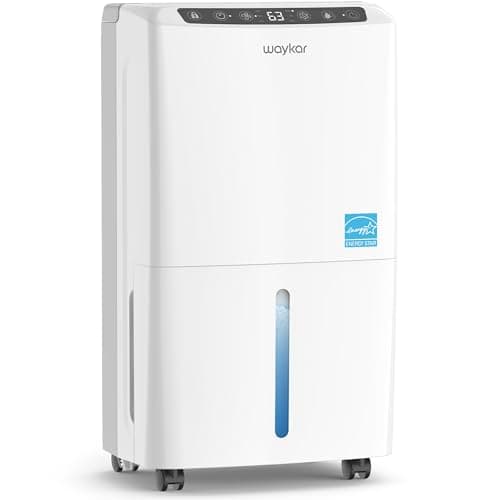
For a basement or large living area, the AEOCKY RHEA-001 80 Pint, listed as ENERGY STAR Most Efficient 2025 and rated 56 pints a day at 86°F and 80% RH. For one floor or a large room, the Waykar 34 Pint ENERGY STAR Most Efficient 2025 carries the same top-tier label in a mid-size body.

4.5 on Amazon · 7,140 ratings

Quick answer

The most energy efficient dehumidifier for most homes is an ENERGY STAR model that also meets the Most Efficient criteria, sized so it cycles off instead of running nonstop; for a basement or large living area, that is the AEOCKY RHEA-001 80 Pint, listed as ENERGY STAR Most Efficient 2025 and rated 56 pints a day at 86°F and 80% RH. ENERGY STAR says certified units use 20% less energy than conventional ones. Compare models in liters per kWh: on ENERGY STAR's list, portables run from 1.70 to 2.24. Then set the humidistat near 50%, not at its lowest setting.

Our Picks at a Glance

Every pick below is currently stocked — ratings and stock read from Amazon on 12 October 2026.

How this page was made: we compare the current Amazon listings, the makers' published specs and what verified buyers report, then rank by fit for the job. Ratings, review counts and stock are read from Amazon and dated. We earn a commission on purchases through our links; it does not change the order. Reviewed by Marcus Reed, IICRC-certified Water Restoration Technician.

Full Reviews

Each pick in detail: what the listing states, what buyers report, and where it falls short.

#1
Best Overall (Most Efficient 2025)

Check price

on Amazon ↗

Listing verified 13 Oct 2026

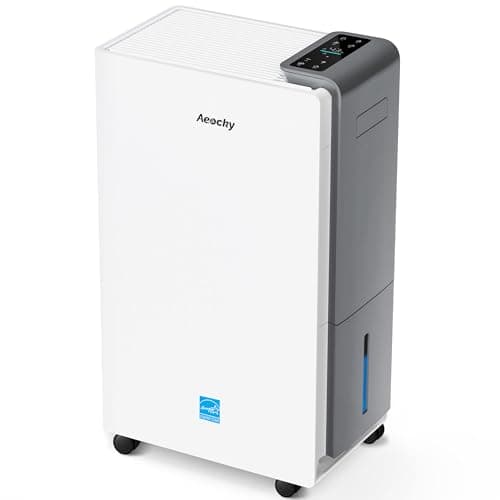
AEOCKY RHEA-001 80 Pint ENERGY STAR Most Efficient 2025 Dehumidifier (56 Pints at 86°F, 80% RH)See it on Amazon ↗

Quick Verdict

AEOCKY RHEA-001 80 Pint: listed as ENERGY STAR Most Efficient 2025 and rated 56 pints/day at 86°F, 80% RH, for damp basements.

Key Specs

Capacity (stated)

80 pints/day at 95°F, 95% RH; 56 pints/day at 86°F, 80% RH

Efficiency (stated)

ENERGY STAR Most Efficient 2025

Coverage (claimed)

Up to 5,500 sq ft

Noise (stated)

44 dB at the lowest fan speed

Coil

7 mm copper tubing with hydrophilic aluminum fins

Cold weather

Defrost sensors; no minimum operating temperature stated

Pros

  • Claims the Most Efficient 2025 tier, which ENERGY STAR reserves for the best performers among certified models
  • States a second, cooler capacity figure, 56 pints at 86°F and 80% RH, beside the headline, which makes sizing more honest
  • A large-capacity unit, and on ENERGY STAR's list larger portables score higher in liters per kWh than small ones
  • Quoted at 44 dB on its lowest fan speed

Cons

  • Drainage options are not described in the listing's bullets, so confirm a hose outlet before you plan a gravity drain
  • The savings figures in its bullets assume nonstop running all year against non-ENERGY STAR units, so a real bill will show less
  • No minimum operating temperature is stated, so check the manual before using it in a cold basement

Suited to

A basement or large open floor that stays damp for months at a time

Our take

Efficiency pays back in proportion to running hours, which is why it matters most on a large machine in a basement that is damp all summer. The RHEA-001's listing claims ENERGY STAR Most Efficient 2025 and, helpfully, gives two capacity figures: 80 pints at 95°F and 95% humidity, and 56 pints at 86°F and 80%. Size from the second. ENERGY STAR's certified list does include AEOCKY RHEA models that meet the Most Efficient criteria, but the listing's name is a marketing label, so match the model number on the unit's rating plate in ENERGY STAR's product finder while the return window is open. Ignore the savings claims in the bullets: they assume round-the-clock running all year against an inefficient unit.

Check today's price on Amazon →

Affiliate link — commission at no extra cost to you

Compare elsewhere

These open a search for this model. We quote prices only where we can verify them — Amazon, Sylvane and eBay.

#2
Best Most Efficient Pick for One Floor

Check price

on Amazon ↗

Listing verified 13 Oct 2026

Waykar 34 Pint ENERGY STAR Most Efficient 2025 Dehumidifier (Rotary Compressor, 30%–80% Setting)See it on Amazon ↗

Quick Verdict

Waykar 34 Pint ENERGY STAR Most Efficient 2025: a mid-size, top-tier unit with a 30%–80% set point, for one damp floor.

Key Specs

Capacity (stated)

34 pints/day at 95°F, 90% RH

Efficiency (stated)

2025 ENERGY STAR Most Efficient; DOE and TUV listed

Humidity setting

30% to 80%

Fan

2 speeds; low quoted at 38 dB

Drainage

0.62 gal tank, or the included 3.3 ft hose

Coverage (claimed)

Up to 2,000 sq ft

Pros

  • The Most Efficient 2025 label in a mid-size body, for one floor or a large open room
  • Holds any set point from 30% to 80%, so it can run at 50% and cycle off rather than chase the floor
  • A detachable, washable filter, and a clean filter keeps airflow close to what the rating assumed
  • Power outage memory restores the setting after a cut instead of a factory default

Cons

  • The listing's energy-saving percentage is set against unnamed traditional models, not ENERGY STAR's baseline
  • In a very wet basement a mid-size unit runs more hours than a large one, which eats into the efficiency gain
  • Dimensions and weight are not in the listing's bullets

Suited to

A main floor, finished basement room or large apartment that is damp through the summer

Our take

The useful thing about a Most Efficient label is that it belongs to a model number you can check. Waykar lists this unit as ENERGY STAR Most Efficient 2025, and ENERGY STAR's certified list does show several Waykar models meeting those criteria, so read the model number off the rating plate and look it up. The entry gives the unit's liters per kWh and estimated annual kWh, which this listing does not print. For a mid-size space, the bigger saving comes from how you run it. Set 50% on the 30% to 80% dial, keep the room's doors and windows shut as ENERGY STAR advises, and rinse the filter so the fan is not pulling against dust. The 34 pints are quoted at 95°F and 90% humidity, so room-temperature output is far lower.

Check today's price on Amazon →

Affiliate link — commission at no extra cost to you

#3
Best Small ENERGY STAR Unit

Check price

on Amazon ↗

Listing verified 13 Oct 2026

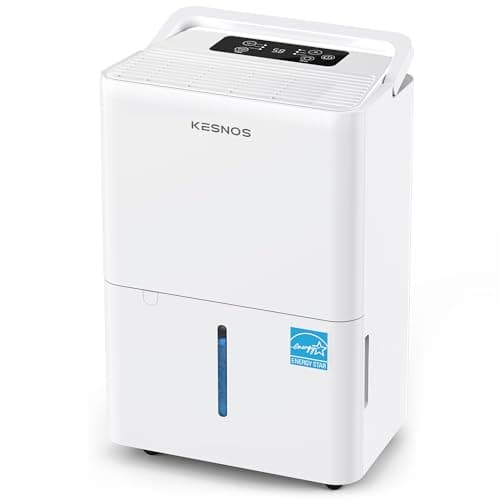
Kesnos 30 Pint ENERGY STAR Dehumidifier (2025 Certified, 36 dB, Memory Restart)See it on Amazon ↗

Quick Verdict

Kesnos 30 Pint ENERGY STAR Dehumidifier: a small certified unit quoted at 36 dB, for one damp room or a small apartment.

Key Specs

Capacity (stated)

30 pints/day at 95°F, 90% RH

Efficiency (stated)

2025 ENERGY STAR certified; ETL, CEC and DOE listed

Humidity floor (stated)

Down to 30% RH

Modes

Comfort, Dry, Continuous, Turbo

Noise (stated)

36 dB

Drainage

0.39 gal tank, or the included 3.3 ft hose

Pros

  • ENERGY STAR certified at a size that suits a bedroom, a home office or a small apartment
  • Quoted at 36 dB, quiet enough to share a room
  • Memory restart keeps your humidity setting after a power cut

Cons

  • The listing's 35% lower power figure compares against non-certified models and runs above the 20% ENERGY STAR itself cites
  • Not labeled Most Efficient, and small units score lower in liters per kWh than large ones on ENERGY STAR's list
  • Continuous mode runs regardless of humidity, so save it for drying laundry

Suited to

A bedroom, home office or single damp room where noise matters as much as the power bill

Our take

Small dehumidifiers are the hardest to make efficient, and ENERGY STAR's list shows it: in the class up to 25 pints a day, measured at the federal 65°F test, certified models start at 1.70 liters per kWh, against 2.01 in the next class up. That is no reason to buy a large machine for a small bedroom, since ENERGY STAR's sizing table starts at 20 to 30 pints for a small-to-medium room. It is a reason to run a small unit well. Use a set humidity rather than Continuous, close the door, and give it the hose so a full 0.39-gallon tank never stops it mid-afternoon. The listing's 35% saving is measured against non-certified models, which is a softer comparison than it sounds.

Check today's price on Amazon →

Affiliate link — commission at no extra cost to you

#4
Best Default Setting Out of the Box

Check price

on Amazon ↗

Listing verified 13 Oct 2026

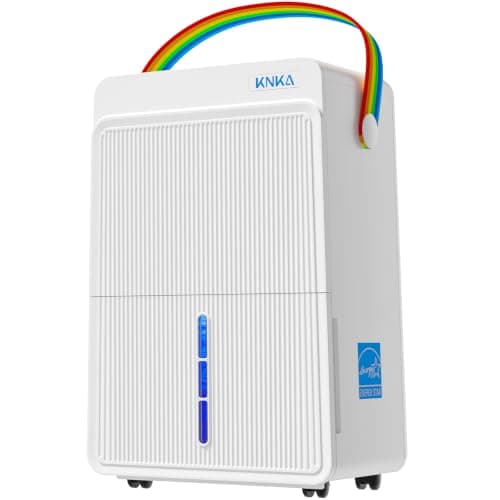
KNKA 80 Pint ENERGY STAR Dehumidifier (56 Pints at 86°F, Auto Mode Holds 50%, 6.56 ft Hose)See it on Amazon ↗

Quick Verdict

KNKA 80 Pint ENERGY STAR: 56 pints/day at 86°F, 80% RH, AUTO at 50% out of the box, and a 6.56 ft hose.

Key Specs

Capacity (stated)

56 pints/day at 86°F, 80% RH; 80 pints/day at 95°F, 95% RH

Efficiency

ENERGY STAR certified, per the listing

Humidity control

AUTO mode defaults to 50% RH; Setting mode 30%–80%

Drainage

1.45 gal tank, or continuous drain through the included 6.56 ft hose; optional 2.64 gal external tank

Noise (stated)

40–45 dB

Timer

12-hour

Pros

  • AUTO mode defaults to 50%, the top of the 30–50% range ENERGY STAR and EPA recommend, which keeps running hours down
  • The longest hose on this page, 6.56 ft, makes a gravity drain easier to reach
  • Quotes the same 56 pints at 86°F and 80% RH as the AEOCKY, so the two compare directly
  • Display and indicator lights can be switched off at night

Cons

  • ENERGY STAR certified but not labeled Most Efficient
  • Needs to stand upright for 24 hours before first use, per the listing
  • Its built-in humidity reading is taken at the air inlet, which the listing notes may differ from the room

Suited to

A basement or large room where you want a sensible default and a gravity drain with reach

Our take

This is the efficiency pick for people who will never touch the settings. Out of the box, AUTO mode holds 50% relative humidity, the upper edge of the range EPA calls ideal, and that matters more to the bill than most spec-sheet differences: every point lower means more water to pull and more hours on the compressor. KNKA quotes 56 pints at 86°F and 80% humidity, the same figure the AEOCKY gives at that condition, so on capacity the two are level; the AEOCKY carries the Most Efficient label and this one does not. What KNKA adds is drainage: a 1.45-gallon tank, a 6.56 ft hose and an optional external tank. The 12-hour timer can also move running hours to cheaper off-peak rates if your utility offers them.

Check today's price on Amazon →

Affiliate link — commission at no extra cost to you

#5
Best for Large Open Basements

Check price

on Amazon ↗

Listing verified 13 Oct 2026

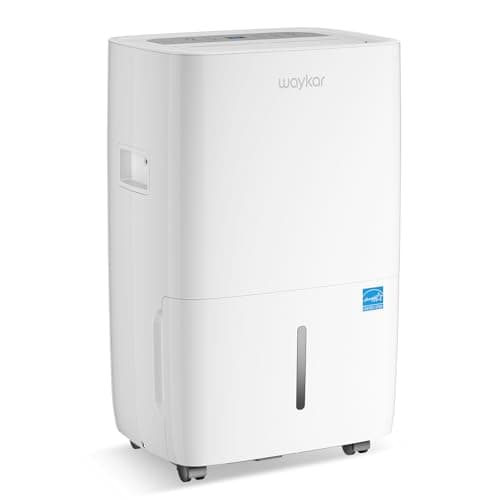
Waykar 80 Pint ENERGY STAR Dehumidifier (5,000 Sq Ft, 90° Swing Airflow, Drain Hose)See it on Amazon ↗

Quick Verdict

Waykar 80 Pint ENERGY STAR: swing airflow and a 30%–80% set range for a large open basement, without the Most Efficient label.

Key Specs

Capacity (stated)

80 pints/day at 95°F, 90% RH

Efficiency

ENERGY STAR certified and DOE compliant, per the listing

Humidity setting

30% to 80%

Airflow

90° auto swing

Noise (stated)

Around 42 dB

Drainage

1.14 gal tank, or the included 3.3 ft hose with a 3/4 in garden-hose connection

Pros

  • A 90° swing spreads dry air across a wide basement instead of one corner
  • A standard 3/4 in garden-hose thread, so any garden hose extends the drain
  • The 24-hour timer can shift running hours if your utility charges less at night
  • Two years of coverage once registered, per the listing

Cons

  • Only one capacity figure, at 95°F and 90% RH, which makes it harder to size than the two 80-pint units that also state an 86°F number
  • Not labeled Most Efficient
  • The 3.3 ft hose needs a garden-hose extension to reach most floor drains

Suited to

A large open basement where even air movement matters as much as capacity

Our take

This is a plain, established ENERGY STAR 80-pint machine, and its efficiency case rests on two features rather than a label. The 90° swing spreads dry air over a wide area, so one unit can hold a long open basement more evenly instead of drying the corner it stands in while the far wall stays damp. The 30% to 80% set range lets you run it at 50% and leave the humidistat to cycle it. It lacks a Most Efficient label and quotes its 80 pints only at 95°F and 90% humidity, so for sizing, lean on ENERGY STAR's room table rather than the headline figure. Screw a garden hose onto the 3/4 in thread to reach the drain.

Check today's price on Amazon →

Affiliate link — commission at no extra cost to you

Buyer's Guide

What to know before you buy.

Liters per kWh: The Number That Measures Efficiency

ENERGY STAR rates dehumidifier efficiency as an Integrated Energy Factor: liters of water removed per kWh of electricity, where higher is better. The federal test behind it is deliberately cool, 65°F and 60% relative humidity for portable units and 73°F and 60% for whole-home units, so the figures are lower than any listing headline. On ENERGY STAR's certified list as read on 12 Oct 2026, portables rated up to 25 pints a day run from 1.70 to 2.05 liters per kWh, portables from 25 to 50 pints run from 2.01 to 2.24, and ducted whole-home units reach 3.26. Notice the ceiling: no portable on the list is rated above 50 pints a day at that test, even though listings advertise 80, 120 and 150. Those bigger numbers are taken in hot, saturated air.

What It Costs to Run, Worked in kWh

Running cost is water removed divided by efficiency, times your rate. Say a damp basement needs 20 pints pulled a day, which is about 9.5 liters. At 1.70 liters per kWh, the low end of ENERGY STAR's small class, that takes about 5.6 kWh a day. At 2.20, the lowest figure among Most Efficient models in the larger portable class, it takes about 4.3 kWh. Over a 30-day month, that is roughly 167 kWh against 129 kWh, a gap of about 38 kWh. Multiply by the rate on your bill to put it in money. Two things move the total more than the label does: how many pints the space really needs, which falls once leaks and wet soil are fixed, and the humidity you ask for, since a lower target means more water and more hours.

ENERGY STAR vs Most Efficient, and Reading Listing Claims

ENERGY STAR says certified dehumidifiers use 20% less energy than conventional models while removing the same moisture. Most Efficient is a further tier inside the certified list, and as read on 12 Oct 2026, 129 of the 559 certified dehumidifiers met its criteria. The current specification took effect on October 1, 2025, so older certifications can drop off. Listings blur all this. The listings read for this page claim 35%, 40%, 45% or 50% lower energy use, each against an unnamed or non-certified model, and two of them quote yearly dollar savings that assume the unit runs 24 hours a day all year. AEOCKY's own listing warns about lookalike phrases such as ENERGY STAR 25. The fix is simple: find the model number on the rating plate and look it up in ENERGY STAR's product finder.

Set the Humidistat Where It Saves the Most

Every ENERGY STAR dehumidifier has a built-in humidistat that cycles the unit to hold the level you set, and the setting is the one efficiency upgrade that costs nothing. EPA advises keeping indoor humidity below 60%, ideally between 30% and 50%, and ENERGY STAR gives the same 30–50% band, with 30–40% in colder seasons to stop window condensation. In a summer basement, a target of 45% to 50% keeps you inside the healthy range without forcing the compressor to chase the last few points. Keep the doors and windows to the space closed while it runs. Give the unit room at the sides unless it blows air out of the top. Check the reading with a separate hygrometer, since a sensor on the machine reads the air right beside it.

Thermoelectric Mini Units Are Not the Efficient Choice

A small Peltier unit draws little power, which makes it sound efficient, but efficiency is water per kWh, not watts. TABYIK's listing for its 35 oz mini unit gives at most 16 oz, about 450 ml, a day in a closed room at 86°F and 80% humidity, on no more than 1 kWh a day. A certified compressor unit at ENERGY STAR's lowest small-class figure of 1.70 liters per kWh would remove that 450 ml with about 0.26 kWh, and its figure comes from a cooler, harder test. By that arithmetic the mini can use up to about four times the electricity for each ounce of water. Every model on ENERGY STAR's dehumidifier list carries a refrigerant charge, so thermoelectric units are not among them. They suit a closet or a small bathroom where quiet matters and the water load is tiny.

Who Should Not Buy a Dehumidifier to Save Energy

The most efficient dehumidifier is the one you do not need to run. If a hygrometer already reads below 50% most of the year, skip it. If the water comes from outside, fix the source first; ENERGY STAR's own list starts with extending downspouts, clearing gutters, sloping soil away from the house, venting the dryer outdoors, running bath and kitchen fans, and repairing leaky outdoor faucets. If the space sits below 65°F, ENERGY STAR notes coils can frost, so a standard portable will defrost often and remove little. If humidity stays above 55% throughout a house with central air, ENERGY STAR points to a whole-home unit instead, and those reach the highest efficiency figures on its list. And after a leak or burst pipe, wet materials need professional drying, not a portable left running for weeks.

Frequently Asked Questions

Are ENERGY STAR dehumidifiers worth it?

YesWhen the unit will run for months each year. ENERGY STAR says certified models use 20% less energy than conventional ones to remove the same moisture, and the saving grows with running hours.

For a unit that runs a few weeks a year, the difference is small, so choose on size, drainage and noise first. Check the model number in ENERGY STAR's product finder rather than trusting a listing's wording.

How much electricity does a dehumidifier use?

It dependsOn how much water it removes and its liters-per-kWh rating. Removing 20 pints a day takes about 5.6 kWh at 1.70 liters per kWh and about 4.3 kWh at 2.20.

Most of the year a unit with a humidistat cycles off once the room reaches its target, so real use is usually well below nonstop running. ENERGY STAR's product finder lists an estimated annual kWh for each certified model.

What does ENERGY STAR Most Efficient mean on a dehumidifier?

It means the model meets ENERGY STAR's extra Most Efficient criteria on top of standard certification. ENERGY STAR describes these as the best of the certified products for energy savings, and on its list read on 12 Oct 2026, 129 of 559 dehumidifiers qualified.

Listings sometimes use lookalike phrases, so confirm the exact model number on ENERGY STAR's list before you buy.

What humidity should I set my dehumidifier to save energy?

Set it near 50% in summer and lower only if a hygrometer shows a problem. EPA advises keeping indoor humidity below 60%, ideally 30% to 50%, and ENERGY STAR suggests 30% to 40% in colder seasons to prevent window condensation.

Each step lower makes the compressor pull more water and run longer, so the bottom of the dial costs the most for the least benefit.

Is a bigger dehumidifier more energy efficient?

Usually, per liter of water. On ENERGY STAR's certified list, portables rated 25 to 50 pints a day reach 2.01 to 2.24 liters per kWh, against 1.70 to 2.05 for those up to 25 pints.

ENERGY STAR also advises that it is better to oversize than undersize. A larger unit reaches the target and cycles off, while an undersized one runs nonstop and may never get there.

Do thermoelectric dehumidifiers use less electricity?

They draw fewer watts but use more electricity for each ounce of water removed. A mini unit's own listing can state at most 16 oz a day on up to 1 kWh, while a certified compressor unit at 1.70 liters per kWh would remove that much with about a quarter of the energy.

They make sense only for a closet or small bathroom, where the water load is tiny.

Who do I call right now for water damage?

Call (888) 840-6512. The line is answered 24 hours a day, seven days a week, and connects you with an IICRC-certified water damage restoration company that serves your area. A recorded menu picks up first: choose water damage or mold, key in your 5-digit ZIP code, and hold through the short silence while the call is passed to the company.

Describe what you can see — where the water is coming from, how long it has been there, and whether it smells — the more specific you are, the faster the right company is on the line. If the source is a pipe or an appliance, shut the main water valve first. Have four things ready and the call goes quickly: the address, when the water started, what is wet now, and whether you have filed an insurance claim.

Still not sure which of these is your situation? (888) 840-6512 · toll-free · answered 24/7

Sources

  1. ENERGY STAR — Dehumidifiers
  2. ENERGY STAR — Most Efficient
  3. EPA — A Brief Guide to Mold, Moisture, and Your Home
  4. ENERGY STAR — Dehumidifier Testing and Capacity

Methodology: How we source and verify data · Report an error

How we chose these picks

  • Every pick is a current listing. Stock, star ratings and rating counts are read from Amazon by script and carry the date they were read.
  • Nothing under 4.0 stars makes the list, and the top pick needs a large rating count, so one good week of reviews cannot put it there.
  • Specs are quoted from the listing or the maker, with the test condition behind the number where there is one, and sized against the job rather than the room on the box.
  • We do not run lab or field tests. Where a spec matters, we say what it is measured under and what it cannot tell you.

Free 2-day shipping

Amazon Prime members pay no shipping on restoration equipment

Dehumidifiers, air movers, and moisture meters qualify for free Prime delivery — bulk items that otherwise cost $15–$40 to ship.

Try Prime free →

Affiliate link — HearthDry earns a bounty if you sign up; costs you nothing extra.

Also Worth Comparing

Best Dehumidifier for Home in 2026 — Sized by Room, Dampness and Drain

The right dehumidifier for a home depends on the size of the space and how damp it is, and the pint number on the box depends on which test produced it. These five picks run from a 22-pint single-room unit to an 80-pint machine for a whole basement, compared on the figures their listings actually state.

Read the comparison

Best Dehumidifier for Basement Use in 2026 — Drain Hose, Built-In Pump and Honest Pint Ratings

Most basement dehumidifier disappointment comes from two numbers nobody reads properly: the pint rating, measured at warm test conditions a 60°F basement never reaches, and the drainage method. Five units are compared here on those two points first, from a garden-hose drain to a built-in pump with a stated 15 ft lift.

Read the comparison

Best Whole House Dehumidifiers in 2026 — Installed, Ducted and Sized to the Home

A whole house dehumidifier is installed, drains itself and, in most homes, is ducted into the heating and cooling system so it dries every room the air reaches. Three AprilAire E-series units carry the strongest buyer record in a category with far fewer ratings than portables, and one large portable is here for the open basement that does not need ducts.

Read the comparison

Best Hygrometers for Home in 2026 — Indoor Humidity Monitors That Tell You When a Room Is Too Damp

A hygrometer is the small, inexpensive instrument that tells you whether a room needs a dehumidifier, a humidifier or nothing at all. These picks are judged on the accuracy each listing states, how easily you can read them, and whether they can warn you about a damp basement before you smell it.

Read the comparison

Dehumidifier Rental Cost in 2026 — What a Rental Really Costs, and When Buying Is Cheaper

Nobody prices a dehumidifier rental for fun. The floor is wet today, and the question is whether to drive to a rental counter or order a machine that arrives tomorrow. The honest answer depends on two numbers nobody puts in front of you: how many days the dry will actually take, and what the counter quotes per day at your branch this week. Multiply the first by the second and compare it with the purchase price on the listings below — the arithmetic decides it, not the advice.

Read the comparison