

Best Mold Removers for Car Interiors in 2026 — What to Use on Seats, Carpet and Trim After a Leak, and When a Car Is an Insurance Call

Best Mold Removers for Car Interiors in 2026

What to Use on Seats, Carpet and Trim After a Leak, and When a Car Is an Insurance Call

5 picks compared · prices, ratings and stock checked October 12, 2026

Our Top Pick

For treating seats, carpet and hidden corners, the Concrobium Mold Control Aerosol. For lifting the stains it leaves behind on fabric, the Chemical Guys Citrus Foaming Fabric & Carpet Cleaner with its drill brush.

4.2 on Amazon · 2,507 ratings

Quick answer

The best mold remover for a car interior is one whose label lists fabric, used after a HEPA vacuum and followed by full drying; for most cars that is the Concrobium Mold Control Aerosol, rated 4.2 stars across 2,507 Amazon ratings, which is EPA-registered, bleach-free and lists fabric among its surfaces. If a stain stays after treatment, clean the seats and carpet with an upholstery cleaner. Dry the cabin within 24 to 48 hours and find the leak first, or the mold will come back. A car flooded to the dash is an insurance call, not a cleaning job.

Our Picks at a Glance

Every pick below is currently stocked — ratings and stock read from Amazon on 12 October 2026.

Best for Leather and Vinyl
Chemical Guys Total Interior Cleaner & Protectant (16 oz, Leather, Vinyl, Plastic)
4.6 from 44,839 Amazon ratings · checked 12 OctBest Seller

Best for: Cleaning light mold off leather seats, a vinyl dash and door panels without drying them out

Type:
Spray-and-wipe interior cleaner and protectant
Surfaces (stated):
Leather, vinyl, plastic, rubber and glass; dashboards, door panels, seats, trim and screens

Listing verified 13 Oct 2026

How this page was made: we compare the current Amazon listings, the makers' published specs and what verified buyers report, then rank by fit for the job. Ratings, review counts and stock are read from Amazon and dated. We earn a commission on purchases through our links; it does not change the order. Reviewed by Marcus Reed, IICRC-certified Water Restoration Technician.

Full Reviews

Each pick in detail: what the listing states, what buyers report, and where it falls short.

#1
Best Overall

Check price

on Amazon ↗

Listing verified 13 Oct 2026

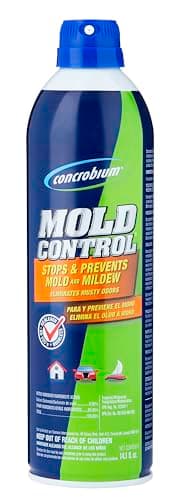
Concrobium Mold Control Aerosol (14.1 oz, EPA-Registered, Bleach-Free, Lists Fabric)See it on Amazon ↗

Quick Verdict

Concrobium Mold Control Aerosol: an EPA-registered, bleach-free mold treatment that lists fabric, though it leaves stains for a cleaner.

Key Specs

Type

Aerosol mold control spray

Registration (stated)

EPA-registered for mold control when used as directed

Surfaces (stated)

Drywall, wood, tile, grout, concrete, fabric and more; test in a hidden spot first

Free of (stated)

Bleach, ammonia and VOCs; odorless

Application (stated)

Fine aerosol mist for tight spaces, corners and hidden areas

Stain removal

Not intended as a stain remover, per the listing

Pros

  • Lists fabric among its surfaces, so it can go on seats and carpet after a spot test
  • No bleach, ammonia or VOCs and no odor, per the listing, which matters in a closed cabin
  • The aerosol mist reaches under seats, along seat rails and into trunk corners
  • EPA-registered for mold control

Cons

  • Not a stain remover, so dark marks on fabric need a separate cleaner
  • An aerosol mist in a small cabin needs every door open while you spray
  • One 14.1 oz can suits spot work, not a whole soaked interior

Suited to

Treating moldy seats, carpet, trunk liners and hidden corners once the leak is fixed

Our take

Concrobium suits a car because of what it leaves out. The listing states no bleach, no ammonia and no VOCs, and a closed cabin is the last place you want strong fumes or a bleach that fades dyed fabric. It is EPA-registered for mold control, and fabric is on its list of surfaces. Use it after a HEPA vacuum, not instead of one: mist the affected seat, carpet or trunk liner, let it dry, then brush or vacuum the residue off, since dead mold can still trigger allergies. The listing says plainly that it does not remove stains, so plan on a fabric cleaner for any dark marks. Spot test first on a hidden patch, such as the carpet under a seat.

Check today's price on Amazon →

Affiliate link — commission at no extra cost to you

Compare elsewhere

These open a search for this model. We quote prices only where we can verify them — Amazon, Sylvane and eBay.

#2
Best for Seats and Carpet

Check price

on Amazon ↗

Listing verified 13 Oct 2026

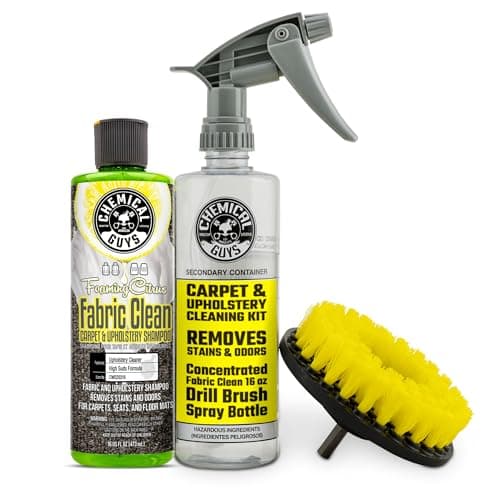
Chemical Guys Citrus Foaming Fabric & Carpet Cleaner with Drill Brush (16 oz, HOL315)See it on Amazon ↗

Quick Verdict

Chemical Guys Citrus Foaming Fabric & Carpet Cleaner: the foam and drill brush that get mold stains out of car fabric.

Key Specs

Type

Foaming fabric and carpet cleaner with a drill brush attachment

Surfaces (stated)

Vehicle carpets, floor mats and upholstery; synthetic and natural fibers

Method (stated)

Spray, agitate with the drill brush or by hand, then blot or vacuum

Scent (stated)

Citrus

Kills mold

Not claimed on the listing; it is a cleaner and deodorizer

Size

16 oz

Pros

  • Made for car carpet, mats and seats, and states it is safe on synthetic and natural fibers
  • The drill brush attachment saves a lot of hand scrubbing on carpet
  • The foam lifts the stains and residue that a mold treatment leaves behind
  • A blot or vacuum finish keeps the seat from getting soaked

Cons

  • Does not claim to kill mold, so it pairs with a treatment rather than replacing one
  • The citrus scent can hide a lingering musty smell
  • A drill brush can fray older or delicate upholstery, so start on a low speed

Suited to

Lifting mold stains and residue out of fabric seats, carpet and floor mats after treatment

Our take

This is the cleaning half of the job. Chemical Guys does not claim the foam kills mold, and that is fine, because EPA's own advice for mold on hard surfaces is to scrub it off with detergent and water and dry completely; getting the growth out matters more than killing it. On fabric, foam is the right format. It sits on top of the fibers, the drill brush works it in, and you blot or vacuum it out instead of soaking the seat down to the foam underneath. Use it after the mold treatment to lift the gray stains and residue, then dry the area fully. One caution: the citrus scent can cover a musty smell that would otherwise tell you the padding is still damp.

Check today's price on Amazon →

Affiliate link — commission at no extra cost to you

#3
Best for Hard Trim and Mats

Check price

on Amazon ↗

Listing verified 13 Oct 2026

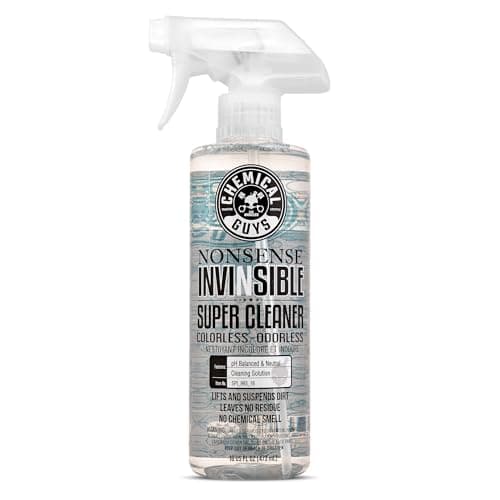
Chemical Guys Nonsense Odorless All-Purpose Cleaner (16 oz, Vinyl, Plastic, Rubber, Carpet)See it on Amazon ↗

Quick Verdict

Chemical Guys Nonsense Odorless All-Purpose Cleaner: an unscented wipe-down for hard trim that leaves your nose free to judge the result.

Key Specs

Type

Odorless, colorless all-purpose cleaner

Surfaces (stated)

Vinyl, rubber, plastic, carpet and upholstery; interior and engine bay

Scent (stated)

None; described as odorless and invisible

Method (stated)

Spray and wipe; foaming action

Kills mold

Not claimed on the listing

Size

16 oz

Pros

  • No scent, so your nose can still tell you whether the musty smell is gone
  • Covers vinyl, rubber and plastic as well as carpet and upholstery, per the listing
  • Spray-and-wipe use on door panels, seat rails, rubber mats and the dash

Cons

  • Not a mold killer; it removes growth and residue rather than treating it
  • An all-purpose formula, so test it on soft-touch trim before a whole panel

Suited to

Wiping mold off vinyl, plastic and rubber trim, seat tracks and rubber floor mats

Our take

Hard trim is the easy part of a moldy car, and EPA's method for hard surfaces is plain: scrub the mold off with detergent and water, then dry. Nonsense does that job on door panels, seat tracks, rubber mats and the plastic around the center console. Its best feature for this use is what it lacks. With no fragrance, it does not mask anything, so once the car is clean and dry your nose is a fair test: if the musty smell is still there, water is still somewhere it should not be. Wipe with a microfiber towel, turn the towel often so you are not spreading spores from panel to panel, and bag the used towels for the wash.

Check today's price on Amazon →

Affiliate link — commission at no extra cost to you

#4
Best for Leather and Vinyl

Check price

on Amazon ↗

Listing verified 13 Oct 2026

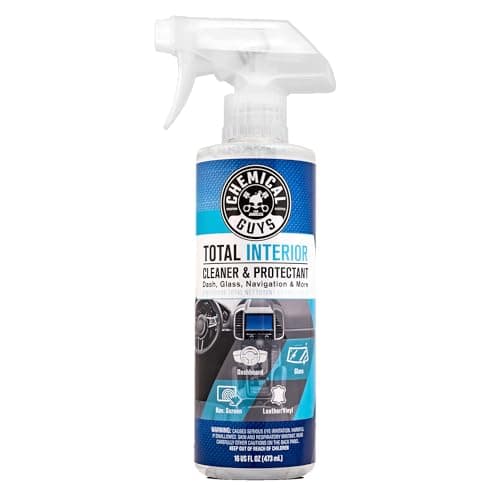
Chemical Guys Total Interior Cleaner & Protectant (16 oz, Leather, Vinyl, Plastic)See it on Amazon ↗

Quick Verdict

Chemical Guys Total Interior Cleaner & Protectant: a leather-safe way to wipe light mold off seats and trim.

Key Specs

Type

Spray-and-wipe interior cleaner and protectant

Surfaces (stated)

Leather, vinyl, plastic, rubber and glass; dashboards, door panels, seats, trim and screens

Rinse (stated)

No rinsing or extra buffing

Finish (stated)

Natural sheen, not greasy

Kills mold

Not claimed on the listing

Size

16 oz

Pros

  • Names leather on the listing, the car surface most mold sprays can damage
  • Cleans and leaves a protective layer in one pass on seats and trim
  • Also listed for infotainment screens and glass

Cons

  • Not a mold treatment, so it suits light growth only
  • Not made for fabric seats or carpet
  • Leather with deep or returning growth needs a leather specialist

Suited to

Cleaning light mold off leather seats, a vinyl dash and door panels without drying them out

Our take

Leather is where a car mold cleanup most often goes wrong. Bleach, full-strength vinegar and many household mold sprays dry it out or leave pale patches, and the damage shows long after the mold is gone. This Chemical Guys spray lists leather, vinyl, plastic and rubber, and it cleans and leaves a protective layer in one pass. On leather, the method is gentle and repeated: vacuum the seams with a soft brush attachment, wipe the growth off with the spray on a microfiber towel, change to a clean towel often, and let the seat dry in the shade with the doors open. It does not claim to kill mold, so if spots return within days, the foam under the leather is likely damp.

Check today's price on Amazon →

Affiliate link — commission at no extra cost to you

#5
Best for Preventing Regrowth

Check price

on Amazon ↗

Listing verified 13 Oct 2026

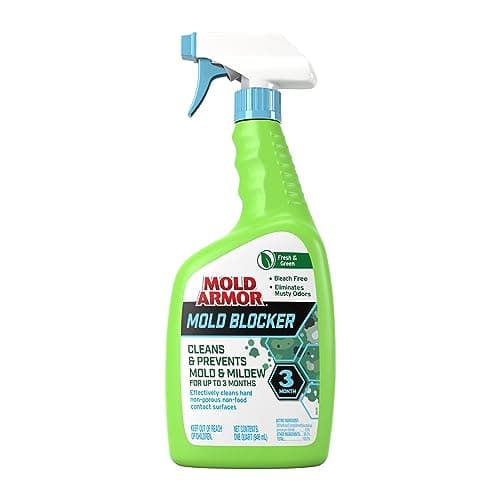
Mold Armor Mold Blocker (32 oz, Fabric, Carpet and Upholstery Mold Prevention Spray)See it on Amazon ↗

Quick Verdict

Mold Armor Mold Blocker: a fabric-safe preventive for a car that has been cleaned and dried, not a cure for live growth.

Key Specs

Type

Mold prevention spray, applied after cleaning

Surfaces (stated)

Fabrics, carpets, upholstery, linens, draperies and bathrooms; indoor and outdoor

Protection (stated)

Prevents mold growth for up to 3 months

Reapply (stated)

Every 3 months on fabric; every 7 days on hard, non-porous surfaces

Method (stated)

Spray until wet; allow to air dry

Kills existing mold

Not claimed; sold as a preventive

Pros

  • Upholstery and carpet are on its listed surfaces
  • Up to 3 months of stated protection on fabric between coats
  • Useful on carpet and trunk liners in a car that sits damp for weeks

Cons

  • Prevention only; it does not clean or kill existing growth
  • The label says spray until wet, which means drying the fabric again afterward
  • No spray replaces fixing the leak that let the water in

Suited to

Keeping a cleaned, dried interior from growing mold again in a humid climate

Our take

Mold Blocker is the last step, not the first. It is sold to stop new growth, with the listing claiming up to 3 months of protection on fabric and telling you to reapply on that schedule. In a car that sits outdoors in a humid climate, or one with a slow leak you are still tracking down, a coat on the carpet and trunk liner buys some margin. Spray it only after the interior has been cleaned and dried, because a blocker laid over live growth or damp padding solves nothing. The directions say to spray until wet and let it air dry, so treat it like any other wet step: doors open, a fan running, and fully dry before you close the car up.

Check today's price on Amazon →

Affiliate link — commission at no extra cost to you

Buyer's Guide

What to know before you buy.

Find the Water First: Where Cars Leak

Mold in a car means water got in and stayed. A cleaner removes the growth, but it does nothing about the leak, so the smell comes back after the next storm unless you find the source. Check these spots in order. Sunroof drains run down the pillars and clog with leaves, then spill into the headliner and footwells. Door and trunk seals tear or shrink with age. The cowl drains under the wipers fill with debris and push water toward the cabin. A blocked AC drain lets condensation pool on the passenger floor. A damp passenger carpet with a sweet smell can point to a heater core leak, which is coolant rather than water and needs a mechanic. To trace a leak, run a garden hose over one area at a time while a helper watches from inside.

Match the Cleaner to the Surface

Car interiors mix materials that react differently to cleaners. Fabric seats and carpet soak up liquid, so the cleaner has to be blotted or extracted back out, not just sprayed on and left. Vinyl and hard plastic wipe clean easily but can haze or fade under harsh chemicals. Leather dries out and discolors under bleach and strong solvents, so use a product whose label names leather. The headliner is the trap: its fabric is glued to a board, and soaking it can loosen the glue and make it sag, so mist a cloth and dab instead. Read the label for the surfaces the maker lists, then test on a hidden spot, such as under a seat or inside the trunk, before you treat a panel you can see. Keep chlorine bleach out of the cabin, since it fades dyed fabric.

Dry the Cabin Within 2 Days

EPA advises drying water-damaged areas and items within 24 to 48 hours to prevent mold growth, and a closed car can hold damp air far longer than a room. Pull the floor mats out and dry them on their own. Run a wet/dry vacuum over soaked carpet until no more water comes up. If the carpet was wet through, the padding under it holds water for days, so lift the carpet or have a detail shop pull it. Then park in a garage with the doors open and a fan blowing in, or run a small dehumidifier inside the car with a window cracked an inch for the cord. EPA also notes that porous materials such as carpet may have to be thrown away once they are moldy, and that goes for car carpet and seat padding too. Moisture absorbers keep a parked car drier afterward but are too slow to dry a soaked carpet.

Who Should Not Reach for a Spray: Flooded Cars and AC Smells

A car that sat in floodwater up to the seats or the dash is not a cleaning job. Floodwater carries sewage and silt into the carpet padding, the seat foam and the wiring under the floor, and many cars have airbag and seat electronics there. Call your auto insurer before you clean anything, because flood damage to a car is an insurance question first, and an adjuster may treat a car flooded to the dash as a total loss. Cleaning first can make the damage harder to document. A musty smell that only comes out of the vents when the AC runs is also beyond a surface spray. It usually means growth on the evaporator behind the dash, which calls for an evaporator cleaner or a shop visit, plus a clear AC drain.

Safety in a Small Space

A car cabin is small, so fumes and spores build up fast. Open every door and work outdoors or in an open garage. For mold cleanup, EPA suggests an N-95 respirator, long gloves and goggles without vent holes, and the same gear suits a car. HEPA-vacuum loose growth before you wet it, because scrubbing dry mold throws spores into the air and pushes them deeper into the fibers. Never mix chlorine bleach with products that contain ammonia, which includes many glass cleaners. Skip ozone machines too. EPA says ozone applied to indoor air does not effectively remove mold, and that ozone generators can push levels above public health standards even when used as directed. Let every surface dry fully, with the doors open, before you drive again.

Frequently Asked Questions

What kills mold in a car?

A cleaner labeled to kill mold on the surfaces it will touch, followed by fast and complete drying, is what works. Concrobium Mold Control, for example, is EPA-registered and lists fabric among its surfaces. Killing it is only half the job.

EPA notes that dead mold may still cause allergic reactions, so the growth has to be wiped, brushed or extracted out of the fabric afterward. If the carpet padding or seat foam stayed wet, the mold inside it will return until that material is dried or replaced.

How do you get mold out of car seats?

Vacuum the seat with a HEPA vacuum first, then treat it with an upholstery-safe mold cleaner and work it in with a soft brush. Blot or extract the liquid back out with a wet/dry vacuum or a spot cleaner rather than leaving the seat soaked.

Dry it with the doors open and a fan running. If the stain or smell returns after drying, the foam under the cover is probably still damp or growing mold.

Can I use vinegar to clean mold in my car?

YesFor light surface growth on fabric or plastic that tolerates it.

Diluted white vinegar is a common home method, and the smell fades as the cabin airs out. Test it on a hidden spot first, keep it off leather unless the leather maker allows it, and dry the area well afterward. Vinegar will not fix a soaked carpet pad or a leak, so find the water source either way.

Is it safe to drive a car that has mold in it?

Clean and dry it before regular use, especially if anyone who rides in it has asthma or allergies. EPA says mold can cause allergic reactions in sensitive people, can trigger asthma attacks in people with asthma who are allergic to mold, and can irritate the eyes, nose, throat and lungs.

Until the car is clean, drive with the windows down and the fan on fresh air rather than recirculate.

Does car insurance cover mold in a car?

It dependsOn the cause. Mold after a flood or storm is usually handled under the comprehensive part of an auto policy, if you carry it, while mold from a slow leak or a window left open is often treated as maintenance.

Call your insurer before cleaning a car that sat in floodwater, take photos of the water line and the interior, and ask whether an adjuster wants to inspect it first.

Why does my car smell musty when I turn on the AC?

Usually because mold or bacteria are growing on the evaporator, the cold coil behind the dash that collects condensation. A surface spray in the cabin cannot reach it.

Use a cleaner made for the evaporator and vents, replace the cabin air filter, and check that the AC drain under the car drips on hot days. Running the fan with the AC off for a few minutes before parking helps dry the coil.

Who do I call right now for water damage?

Call (888) 840-6512. The line is answered 24 hours a day, seven days a week, and connects you with an IICRC-certified water damage restoration company that serves your area. A recorded menu picks up first: choose water damage or mold, key in your 5-digit ZIP code, and hold through the short silence while the call is passed to the company.

Describe what you can see — where the water is coming from, how long it has been there, and whether it smells — the more specific you are, the faster the right company is on the line. If the source is a pipe or an appliance, shut the main water valve first. Have four things ready and the call goes quickly: the address, when the water started, what is wet now, and whether you have filed an insurance claim.

Still not sure which of these is your situation? (888) 840-6512 · toll-free · answered 24/7

Sources

  1. EPA — A Brief Guide to Mold, Moisture, and Your Home
  2. EPA — Mold Cleanup in Your Home
  3. EPA — Ozone Generators That Are Sold as Air Cleaners

Methodology: How we source and verify data · Report an error

How we chose these picks

  • Every pick is a current listing. Stock, star ratings and rating counts are read from Amazon by script and carry the date they were read.
  • Nothing under 4.0 stars makes the list, and the top pick needs a large rating count, so one good week of reviews cannot put it there.
  • Specs are quoted from the listing or the maker, with the test condition behind the number where there is one, and sized against the job rather than the room on the box.
  • We do not run lab or field tests. Where a spec matters, we say what it is measured under and what it cannot tell you.

Free 2-day shipping

Amazon Prime members pay no shipping on restoration equipment

Dehumidifiers, air movers, and moisture meters qualify for free Prime delivery — bulk items that otherwise cost $15–$40 to ship.

Try Prime free →

Affiliate link — HearthDry earns a bounty if you sign up; costs you nothing extra.

Also Worth Comparing

Best Mold Remover Sprays in 2026 — RMR-86, Mold Armor & Concrobium Compared

The three most-searched mold sprays do three DIFFERENT jobs: one erases stains, one disinfects, one kills and prevents. Using the wrong one is why 'the mold came back.' Here's which to use where — and the honest line where sprays stop working.

Read the comparison

Best Mildew and Mold Remover for Clothes and Fabric in 2026 — What Goes in the Wash, and What Belongs on the Patio

Mildew on clothes comes out mostly in the wash and the dry, so the product you buy is for the mark it leaves, and it has to suit the fabric: color-safe for clothes, a bleach cleaner only for outdoor fabrics labeled for it. These picks cover washable clothes, patio cushions, the washer gasket behind musty towels and the damp closet that started it.

Read the comparison

Best Moisture Absorbers in 2026 — For Cabinets, Storage Rooms, Cars and Bathrooms, and Where a Dehumidifier Wins

A moisture absorber is a no-power container of crystals or gel that draws water out of the air in a small, closed space. It is the right tool for a cabinet, a car or a boat and the wrong one for a basement or a room after a leak, so these picks are sorted by where they will sit.

Read the comparison

Best Wet/Dry Vacs for Home and Garage in 2026 — Sized by the Weight You Can Lift

A wet/dry vac is sized by what you can lift, not by what the label promises: water weighs about 8.3 lb a gallon, so a full 6-gallon drum is a 50 lb load. These five picks run from a cordless 2-gallon vac for the car to a 16-gallon drum with a drain port for the garage.

Read the comparison

Best Mold Killer for Water Damage 2026 — Three Antimicrobials Reviewed

After water damage, the right treatment helps keep mold from returning on framing and concrete once the cleanup is done. These are three products for water damage cleanup in 2026, compared on what each listing claims, bleach content and where each belongs in the cleanup.

Read the comparison