Santa Fe Dehumidifier Review 2026 — Compact70, Ultra V100, Advance Dry110 and UltraMD33 Compared from Their Listings

Santa Fe Dehumidifier Review 2026

Compact70, Ultra V100, Advance Dry110 and UltraMD33 Compared from Their Listings

5 picks compared · prices, ratings and stock checked October 12, 2026

Our Top Pick

For a crawl space, the Santa Fe Compact70 Complete Crawl Space Kit: built for low clearance, stated to run down to 49°F with auto defrost, with two-stage MERV 13 filtration. For a whole house that also needs fresh air, the Santa Fe Ultra V100 Ventilating Dehumidifier meets ENERGY STAR's Most Efficient criteria.

5 on Amazon · 4 ratings

Quick answer

Choose a Santa Fe by the space it has to dry, and for a crawl space that means the Santa Fe Compact70 Complete Crawl Space Kit, which its listing says runs down to 49°F with auto defrost and two-stage MERV 13 filtration. For a whole house that also needs fresh air, the Ultra V100 states 100 pints a day at 80°F and 60% RH, and ENERGY STAR lists it at 85.62 pints under the cooler federal test, at 2.45 liters per kWh. The Advance Dry110 suits a large ducted basement; the UltraMD33 mounts in a wall. None of these four listings describes a built-in pump, so plan the drain first.

Our Picks at a Glance

Every pick below is currently stocked — ratings and stock read from Amazon on 12 October 2026.

Most Efficient Pick for Whole-House Ventilation
Santa Fe Ultra V100 Ventilating Dehumidifier (100 Pints/Day at 80°F, 60% RH; 8-in Fresh-Air Port)

Best for: A tight or newer house that needs whole-house humidity control and fresh air through ductwork

Capacity (stated):
100 pints/day at 80°F, 60% RH
ENERGY STAR data:
85.62 pints/day and 2.45 L/kWh under the federal whole-home test (73°F, 60% RH); meets Most Efficient criteria (model 4047100)

Listing verified 5 Nov 2026

Best In-Wall Pick for Condos and Multi-Family
Santa Fe UltraMD33 In-Wall Dehumidifier (Up to 33 Pints/Day, Up to 1,200 Sq Ft, Drains to Plumbing)
4 from 4 Amazon ratings · checked 12 Oct

Best for: A condo, apartment building or finished basement where the owner wants hands-off humidity control without a portable unit

Type:
In-wall; drains directly into a hub drain or plumbing line
Capacity (stated):
Up to 33 pints/day; test condition not stated

Listing verified 5 Nov 2026

How this page was made: we compare the current Amazon listings, the makers' published specs and what verified buyers report, then rank by fit for the job. Ratings, review counts and stock are read from Amazon and dated. We earn a commission on purchases through our links; it does not change the order. Reviewed by Marcus Reed, IICRC-certified Water Restoration Technician.

Full Reviews

Each pick in detail: what the listing states, what buyers report, and where it falls short.

#1
Best for Crawl Spaces

Check price

on Amazon ↗

Listing verified 5 Nov 2026

Santa Fe Compact70 Complete Crawl Space Kit (Down to 49°F, Two-Stage MERV 13 Filtration)See it on Amazon ↗

Quick Verdict

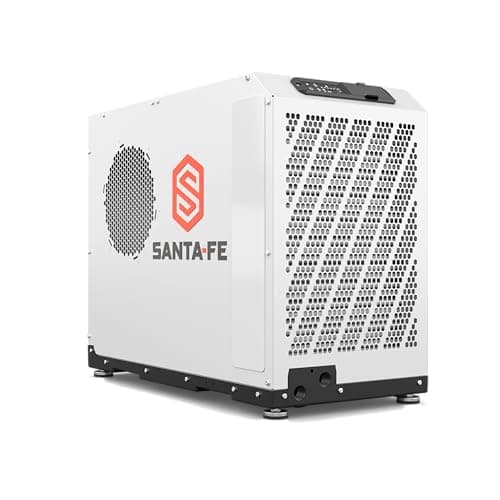
Santa Fe Compact70 Complete Crawl Space Kit: the low-clearance crawl space model, stated to 49°F with auto defrost and MERV 13 filtration.

Key Specs

Built for

Crawl spaces; sold as a complete crawl space kit

Humidity control

Simple dial with a built-in humidistat

Low-temperature operation (stated)

Down to 49°F, with auto defrost

Filtration

Two-stage, MERV 13

Capacity

Not stated in this listing's bullets; see our Compact70 review for the published figures

Kit contents

Not itemized in the listing's bullets

Pros

  • A stated operating floor of 49°F with auto defrost covers the cool months under a house, when a coil without defrost control can ice up
  • Two-stage MERV 13 filtration keeps crawl space dust off the coil, and third-party 9 x 11 x 1 MERV 13 refills are listed as compatible
  • A dial humidistat is set once and left, which suits a machine you rarely see

Cons

  • The bullets give no capacity figure, so size it from Santa Fe's spec sheet or our Compact70 review rather than the model name
  • Kit contents are not itemized, so confirm whether a hang kit or condensate pump comes in the box
  • Very little Amazon buyer feedback so far, because the brand sells mostly through HVAC and restoration distributors

Suited to

A damp crawl space, vented or encapsulated, with low clearance under the joists

Our take

The Compact70 is the Santa Fe most people mean when they search the brand, and its listing names the four things that matter under a house. A dial humidistat means you set a target once. Auto defrost with a stated floor of 49°F means it keeps drying through cool months instead of icing up. Two-stage MERV 13 filtration protects the coil from crawl space dust. What the listing leaves out is a capacity number, so do not size from the 70 in the name. Our full Compact70 review covers the figures Santa Fe and ENERGY STAR have published, its dimensions and its warranty terms. Before you order, measure the hatch, decide where the water will go, and ask the seller what the kit includes.

Check today's price on Amazon →

Affiliate link — commission at no extra cost to you

Compare elsewhere

These open a search for this model. We quote prices only where we can verify them — Amazon, Sylvane and eBay.

#2
Most Efficient Pick for Whole-House Ventilation

Check price

on Amazon ↗

Listing verified 5 Nov 2026

Santa Fe Ultra V100 Ventilating Dehumidifier (100 Pints/Day at 80°F, 60% RH; 8-in Fresh-Air Port)See it on Amazon ↗

Quick Verdict

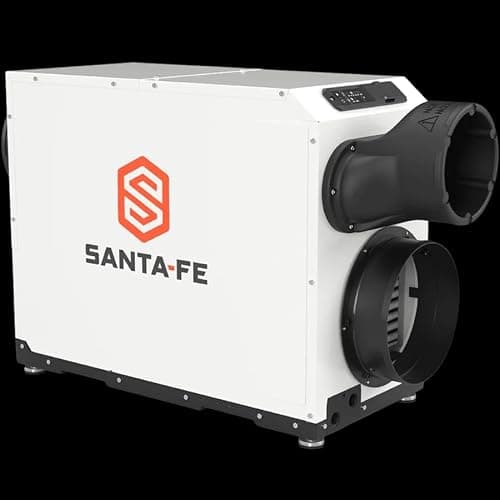
Santa Fe Ultra V100 Ventilating Dehumidifier: 100 pints/day at 80°F, 60% RH, a fresh-air port, and ENERGY STAR Most Efficient criteria met.

Key Specs

Capacity (stated)

100 pints/day at 80°F, 60% RH

ENERGY STAR data

85.62 pints/day and 2.45 L/kWh under the federal whole-home test (73°F, 60% RH); meets Most Efficient criteria (model 4047100)

Efficiency (stated)

6.4 pints per kWh at standard conditions

Ventilation

8-inch port mixes outdoor air with indoor air

Airflow

385 CFM blower for long 8-inch duct runs or several registers

Low-temperature operation (stated)

Auto defrost; works down to 34°F

Pros

  • On ENERGY STAR's certified list as read on 12 Oct 2026, meeting the Most Efficient criteria
  • Its listing attaches a test condition to the capacity figure, and ENERGY STAR's entry confirms a cooler-test number for the same model
  • The fresh-air port brings outdoor air in through the same machine, which the listing says helps a house meet ventilation standards
  • Stated to run down to 34°F, so a cold basement or attic does not shut it out

Cons

  • No Amazon buyer ratings yet, and the listing shows limited stock
  • A ducted, ventilating install is a job for an HVAC contractor, not a plug-in project
  • Drainage and pump details are not described in the listing's bullets

Suited to

A tight or newer house that needs whole-house humidity control and fresh air through ductwork

Our take

This machine is the clearest lesson on the page in how to read a pint figure. Santa Fe's listing states 100 pints a day at 80°F and 60% relative humidity. ENERGY STAR's certified list puts the same model at 85.62 pints under the federal whole-home test, which runs at 73°F and 60%. Same machine, cooler air, about 14% less water. Efficiency follows the same pattern: 6.4 pints per kWh on the listing, 2.45 liters per kWh, roughly 5.2 pints, on ENERGY STAR's list. Neither figure is wrong; they describe different air. The fresh-air port is the reason to pick this over a plain whole-house unit, since a tightly sealed house can hold stale air and moisture together. Budget for an HVAC contractor to run the ducts.

Check today's price on Amazon →

Affiliate link — commission at no extra cost to you

#3
Best for Large Basements with Duct Runs

Check price

on Amazon ↗

Listing verified 5 Nov 2026

Santa Fe Advance Dry110 Dehumidifier (Dual Exhaust Outlets, Ducting Options, Dew Point Cut-Out)See it on Amazon ↗

Quick Verdict

Santa Fe Advance Dry110: a ducted, dual-outlet basement machine whose listing states features but no capacity, so check the spec sheet first.

Key Specs

Exhaust

Dual exhaust outlets

Ducting

Ducting options, per the listing

Controls

Digital, with auto restart

Cold-weather control

Dew point cut-out

Coil

Patented capacity coil optimization, per Santa Fe

Base

Molded

Pros

  • Dual exhaust outlets and ducting options let one machine send dry air to more than one part of a large basement
  • Auto restart brings it back after a power cut without anyone going downstairs to reset it
  • Digital controls make the humidity target easier to read and set than a dial

Cons

  • The thinnest listing here: no capacity, size, weight or noise figure in its bullets
  • Only a single Amazon rating so far, so buyer evidence is close to nil
  • Not on ENERGY STAR's certified list as read on 12 Oct 2026

Suited to

A large finished or unfinished basement where dry air should reach more than one area through ducts

Our take

Buy this one from Santa Fe's spec sheet, not from the Amazon page. The listing names features without numbers: dual exhaust outlets, ducting options, digital controls with auto restart, a dew point cut-out and a molded base. Taken together, they describe a basement machine meant to be ducted, pushing dry air into two places at once, which is what a long or L-shaped basement needs. A dew point cut-out generally stops the compressor when the air holds too little water to be worth pulling, which saves running hours in cold, dry weather. Ask the seller three questions before ordering: the rated pints and the condition behind them, the drain route and whether a pump is needed, and the warranty terms.

Check today's price on Amazon →

Affiliate link — commission at no extra cost to you

#4
Best In-Wall Pick for Condos and Multi-Family

Check price

on Amazon ↗

Listing verified 5 Nov 2026

Santa Fe UltraMD33 In-Wall Dehumidifier (Up to 33 Pints/Day, Up to 1,200 Sq Ft, Drains to Plumbing)See it on Amazon ↗

Quick Verdict

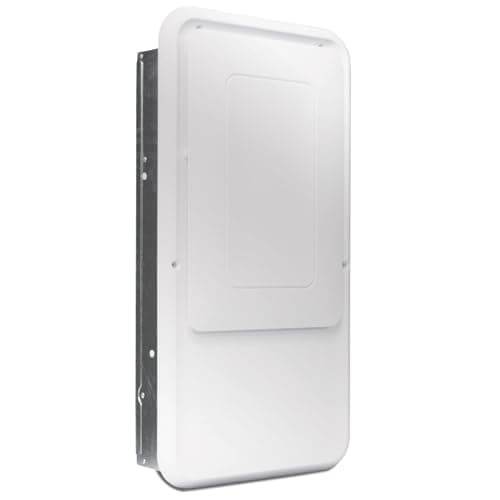
Santa Fe UltraMD33: an in-wall, plumbed dehumidifier for condos and finished spaces, up to 33 pints/day per the listing.

Key Specs

Type

In-wall; drains directly into a hub drain or plumbing line

Capacity (stated)

Up to 33 pints/day; test condition not stated

Coverage (stated)

Up to 1,200 sq ft

Controls

Digital RH control behind a tamper-proof cover

Power

Hardwired, or plugged into a 110 V outlet with the supplied cord

HVAC

Runs independent of the HVAC system

Pros

  • Drains straight into plumbing, so there is no tank to empty and no hose across the floor
  • A tamper-proof cover over the humidity control suits shared buildings, where a setting should not be turned down to the floor and forgotten
  • Works independently of the HVAC system, so it keeps drying in spring and fall when the air conditioner is off

Cons

  • Mounting a unit in a wall and tying its drain into plumbing is contractor work, and in a rental it is the owner's call
  • The 33-pint figure has no test condition attached on the listing
  • Limited stock and very few Amazon ratings

Suited to

A condo, apartment building or finished basement where the owner wants hands-off humidity control without a portable unit

Our take

The UltraMD33 solves the problem that sinks most portable dehumidifiers: somebody has to empty them. It sits inside a wall, drains into a hub drain or plumbing line, and keeps its humidity control behind a tamper-proof cover. Santa Fe aims it at multi-family buildings, and the listing says so. For a renter, this is something to suggest to the landlord, not something to install. Size it honestly. Up to 33 pints a day with no stated test condition, and coverage up to 1,200 square feet, fits one apartment or a finished lower level, not a wet basement. If the space has a leak or standing water, fix that first, because a wall unit dries air, not floors or wall cavities.

Check today's price on Amazon →

Affiliate link — commission at no extra cost to you

#5
If Not Santa Fe: Built-In Pump

Check price

on Amazon ↗

Listing verified 5 Nov 2026

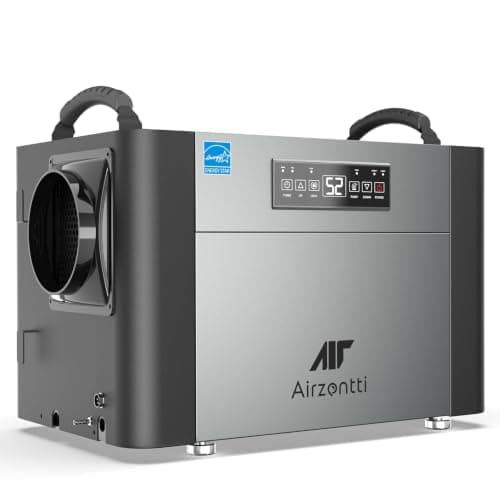
Airzentti 155 Pint Commercial Dehumidifier with Pump (70 Pints/Day AHAM, 16.4 ft Lift, ENERGY STAR)See it on Amazon ↗

Quick Verdict

Airzentti 155 Pint with Pump: 70 pints/day at AHAM and a 16.4 ft pump lift, for a space with no drain below the unit.

Key Specs

Capacity (stated)

70 pints/day at AHAM; 155 pints/day near saturation

Coverage (claimed)

Up to 7,500 sq ft

Drainage

Built-in pump lifts up to 16.4 ft; gravity drain through a 6.56 ft hose

Size and weight

24.3 x 14.2 x 15 in, 60 lb

Airflow

220 CFM; 6-inch duct collar

Protection

Auto defrost, auto drain, screen lock

Pros

  • A built-in pump lifts water up to 16.4 ft, so a crawl space or basement with no low drain is not a dead end
  • Gives an AHAM figure beside the saturation number, and the AHAM one is the fairer figure to set against Santa Fe's
  • A 6-inch duct collar allows a short duct run into a second space
  • Humidity setting and timer let it run set-and-forget through the included pump or gravity drain

Cons

  • At 60 lb and 15 in high, it sits on the ground or a platform rather than hanging between joists
  • The 7,500 sq ft coverage claim runs far ahead of 70 pints at AHAM in a damp space, so size from the AHAM figure
  • Listed with limited stock

Suited to

A crawl space or basement with no drain below the unit, where the water has to be pumped up and out

Our take

This pick is for the reader who likes the purpose-built approach but needs a pump in the box. None of the four Santa Fe listings above describes one, and a crawl space rarely has a drain lower than the machine. Airzentti's listing states a pump that lifts up to 16.4 ft plus a gravity outlet, and it gives two capacity figures: 155 pints near saturation and 70 pints at AHAM. Use the 70 when you compare it with Santa Fe's numbers. It is a heavier, boxier machine at 60 lb, so plan a level spot on the ground or a platform. Run the pump line to a sink, a standpipe or outdoors, and check the line after the first day of running.

Check today's price on Amazon →

Affiliate link — commission at no extra cost to you

Buyer's Guide

What to know before you buy.

Which Santa Fe Fits Which Space

Santa Fe builds for places, not for square footage alone, so start with where the machine will live. The Compact70 is the crawl space unit. The Ultra70, also listed on Amazon, is described as a compact whole-house ventilating dehumidifier for tight, low-clearance spots, with up to 70 pints a day, MERV-13 filtration and a cabinet that switches between vertical and horizontal discharge. The Ultra V100 is the larger ventilating model with a fresh-air port. The Advance Dry110 is a ducted basement machine with two exhaust outlets. The Classic, per its listing, is a vertical, flow-down unit for basements and finished spaces, with optional duct kits and condensate pumps. The UltraMD33 goes inside a wall and drains to plumbing. The Ultra70 and Classic listings showed limited stock and no buyer ratings on 12 Oct 2026, so they are described here rather than ranked.

Read Every Pint Figure with Its Test Condition

A dehumidifier pulls less water from cool air than from warm air, so a pint figure means little without the temperature and humidity behind it. Santa Fe's Ultra V100 listing states 80°F and 60% RH, a condition long used in AHAM ratings. The federal test behind ENERGY STAR's figures is cooler: 73°F and 60% for whole-home units and 65°F and 60% for portables. Many consumer listings quote 95°F and 90% humidity, which inflates the number further. For the V100, the gap between 100 pints at 80°F and 85.62 pints at 73°F is about 14%, and a crawl space in the 50s removes less again. ENERGY STAR also notes that frost can form on a coil when air drops below 65°F, which is why auto defrost and a stated low-temperature limit matter under a house.

Where Santa Fe Stands on ENERGY STAR's List

ENERGY STAR measures efficiency as an Integrated Energy Factor, the liters of water removed per kWh, and higher is better. On its certified dehumidifier list as read on 12 Oct 2026, four Santa Fe models appear: the Ultra V100, V125, V155 and V205, all meeting the Most Efficient criteria, at 2.45 to 3.26 liters per kWh. Those are the four highest figures on the entire list. For scale, no portable model on that list goes above 2.24, and the best of the other whole-home models reach 2.35. The Compact70, Advance Dry110 and UltraMD33 do not appear on the list as read that day, so treat any efficiency claim for them as the seller's to back up. Our Compact70 review covers the efficiency figures published for that model.

Drainage, Pumps and Filters Before You Order

Decide where the water goes before you choose the machine. None of the Compact70, Ultra V100, Advance Dry110 or UltraMD33 listings describes a built-in pump, and the Classic's listing names condensate pumps as an option, so a space with no drain below the unit needs a separate condensate pump or a different machine. The UltraMD33 is the exception by design, because it drains straight into a hub drain or plumbing line. Filters are the other running cost. Third-party 9 x 11 x 1 MERV 13 filters on Amazon are listed as compatible with the Compact70, Ultra70, Element, Compact2 and UA 65H, and those listings suggest replacing them every 6 to 12 months. Confirm your exact model before ordering, and write the filter size on the unit so the next replacement is easy.

Who Should Not Buy a Santa Fe

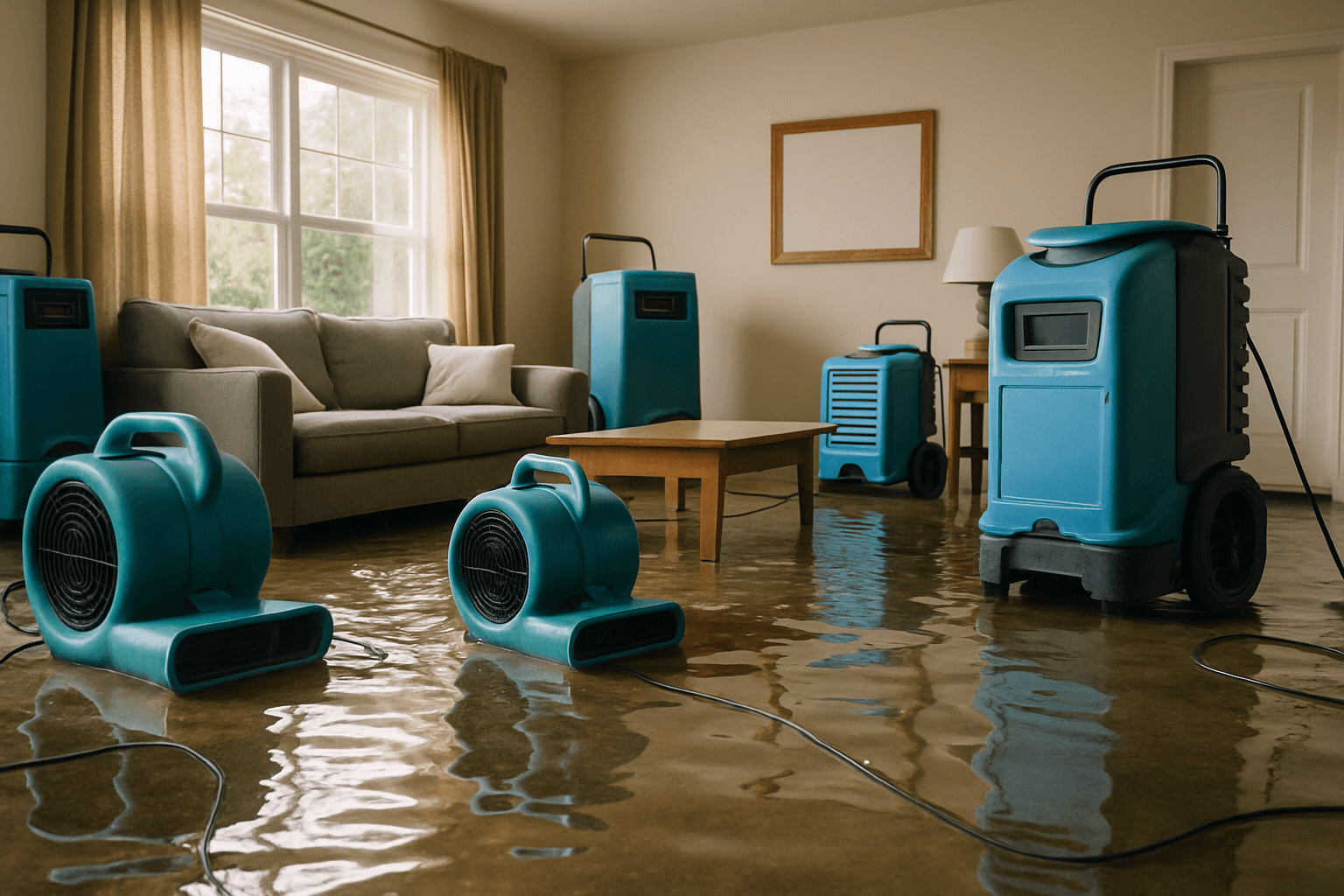
Skip this brand if the problem is one damp room; a portable unit sized by ENERGY STAR's room table does that job. ENERGY STAR suggests a whole-home dehumidifier for houses with central air where humidity stays above 55% throughout, so if only the basement is damp, a portable or a crawl space unit is the narrower fix. Renters should not buy an in-wall or ducted model at all; that decision and the install belong to the owner. Most of all, do not buy any dehumidifier to deal with standing water, a leaking pipe or water inside walls. A dehumidifier dries air. Wet framing, insulation and subfloor after a leak need restoration work done to the procedures IICRC S500 describes, which is a job for a restoration company with drying equipment, not a box that holds a humidity target.

What to Ask the Seller

Santa Fe is sold mostly through HVAC and restoration distributors, and the Amazon listings are short, so put four questions to whoever you buy from. First, the rated capacity and the exact test condition behind it, ideally the AHAM figure and the ENERGY STAR figure if one exists. Second, what ships in the box: a hang kit, a filter set, a condensate pump or a duct collar. Third, the warranty terms and whether registration is required. Fourth, the replacement filter part number and where to buy it. A seller who can answer those quickly is also the one who can source parts later. Keep the receipt and the model and serial numbers together, and photograph the rating plate before the unit goes into a crawl space where it is hard to read.

Frequently Asked Questions

Is Santa Fe a good dehumidifier brand?

YesFor the jobs it is built for: crawl spaces, basements and whole-house ventilation.

The strongest evidence is ENERGY STAR's own list, where Santa Fe's Ultra V models hold the four highest efficiency figures of any certified dehumidifier as read on 12 Oct 2026. The weak spot for shoppers is information, since the Amazon listings are short and carry little buyer feedback. Buy with the spec sheet in hand and the drain route planned.

Which Santa Fe dehumidifier do I need?

Match the model to the space. The Compact70 is for a crawl space with low clearance, the Ultra70 for a tight spot that needs a small ventilating whole-house unit, and the Ultra V100 for a whole house that also needs fresh air.

The Advance Dry110 suits a large ducted basement, and the UltraMD33 mounts inside a wall in a condo or finished space. Then check the capacity at its test condition against how damp the space is.

Is the Santa Fe Compact70 ENERGY STAR certified?

It does not appear on ENERGY STAR's certified dehumidifier list as read on 12 Oct 2026. The Santa Fe models on that list are the Ultra V100, V125, V155 and V205, all meeting the Most Efficient criteria.

Certification can change when a specification changes, as ENERGY STAR's dehumidifier specification did on October 1, 2025, so check the model number in ENERGY STAR's product finder before relying on a listing's claim.

What is the difference between the Santa Fe Compact70 and Ultra70?

The Compact70 is the crawl space kit, while the Ultra70 is a compact whole-house ventilating unit.

Per their listings, the Compact70 has a simple dial humidistat and runs down to 49°F with auto defrost, and the Ultra70 offers up to 70 pints a day with a cabinet that converts between vertical and horizontal discharge for tight installs. Third-party filter listings show both taking the same 9 x 11 x 1 MERV 13 filter.

Does a Santa Fe dehumidifier need a condensate pump?

It needs one whenever the unit sits lower than the nearest drain. The Compact70, Ultra V100 and Advance Dry110 listings do not describe a built-in pump, and the Classic's listing offers condensate pumps as an option.

A crawl space rarely has a drain below the machine, so plan for a pump there. The UltraMD33 is designed to drain directly into a hub drain or plumbing line instead.

Can a Santa Fe dehumidifier run in a cold crawl space?

YesWithin the limits on each listing. The Compact70's listing states operation down to 49°F with auto defrost, and the Ultra V100's states down to 34°F.

Expect much less water removal in cold air than any pint rating suggests, because every rating is taken in warmer air. ENERGY STAR notes that coils can frost below 65°F, so defrost control matters more than the headline capacity in a cold crawl.

Who do I call right now for water damage?

Call (888) 840-6512. The line is answered 24 hours a day, seven days a week, and connects you with an IICRC-certified water damage restoration company that serves your area. A recorded menu picks up first: choose water damage or mold, key in your 5-digit ZIP code, and hold through the short silence while the call is passed to the company.

Describe what you can see — where the water is coming from, how long it has been there, and whether it smells — the more specific you are, the faster the right company is on the line. If the source is a pipe or an appliance, shut the main water valve first. Have four things ready and the call goes quickly: the address, when the water started, what is wet now, and whether you have filed an insurance claim.

Still not sure which of these is your situation? (888) 840-6512 · toll-free · answered 24/7

Sources

  1. ENERGY STAR — Dehumidifiers
  2. ENERGY STAR — Most Efficient
  3. IICRC — ANSI/IICRC S500 Standard for Professional Water Damage Restoration
  4. ENERGY STAR — Dehumidifier Testing and Capacity

Methodology: How we source and verify data · Report an error

How we chose these picks

  • Every pick is a current listing. Stock, star ratings and rating counts are read from Amazon by script and carry the date they were read.
  • Nothing under 4.0 stars makes the list, and the top pick needs a large rating count, so one good week of reviews cannot put it there.
  • Specs are quoted from the listing or the maker, with the test condition behind the number where there is one, and sized against the job rather than the room on the box.
  • Each comparison is reviewed by Marcus Reed, an IICRC-certified Water Restoration Technician, against the IICRC drying standards and public guidance listed under Sources.

Free 2-day shipping

Amazon Prime members pay no shipping on restoration equipment

Dehumidifiers, air movers, and moisture meters qualify for free Prime delivery — bulk items that otherwise cost $15–$40 to ship.

Try Prime free →

Affiliate link — HearthDry earns a bounty if you sign up; costs you nothing extra.

Also Worth Comparing

Santa Fe Compact70 Review: What 70 Pints Means in a Real Crawl Space

The Santa Fe Compact70 is the horizontal, joist-hung dehumidifier most homeowners with a permanently damp crawl space end up buying. This review takes the numbers from the Amazon listing and the Sylvane product page, puts the headline pint rating next to the figure Energy Star actually confirmed, and compares the unit with the AprilAire E080 Pro and a consumer Waykar that costs a fraction as much.

Read the comparison

Best Crawl Space Dehumidifiers in 2026 — Compared at Crawl-Space Temperatures

A damp crawl space feeds mold and wood rot in the framing above it. These four crawl space dehumidifiers are ranked on published specifications, buyer records and how honestly each states its capacity for the cool, damp conditions under a house.

Read the comparison

Best Whole House Dehumidifiers in 2026 — Installed, Ducted and Sized to the Home

A whole house dehumidifier is installed, drains itself and, in most homes, is ducted into the heating and cooling system so it dries every room the air reaches. Three AprilAire E-series units carry the strongest buyer record in a category with far fewer ratings than portables, and one large portable is here for the open basement that does not need ducts.

Read the comparison

Best Dehumidifier for Basement Use in 2026 — Drain Hose, Built-In Pump and Honest Pint Ratings

Most basement dehumidifier disappointment comes from two numbers nobody reads properly: the pint rating, measured at warm test conditions a 60°F basement never reaches, and the drainage method. Five units are compared here on those two points first, from a garden-hose drain to a built-in pump with a stated 15 ft lift.

Read the comparison

Best Condensate Pumps in 2026 — For Furnaces, AC Coils and Dehumidifiers That Sit Below the Drain

A condensate pump collects the water a furnace, air conditioner coil or dehumidifier makes and pushes it up to a drain the water could not reach on its own. When one fails with no safety switch wired in, that water ends up on the floor or through a ceiling, so these picks are judged first on the switch, then on lift, flow and noise.

Read the comparison