
Quick answer
A soft spot in a floor almost always means the subfloor under it has been wet for a long time. Plywood delaminates and OSB swells and crumbles when a slow leak keeps feeding it, most often from a toilet wax ring, a tub or shower drain, a dishwasher, a fridge water line or a water heater. Probe the area from below if you have a basement or crawl space, take a moisture reading, and treat any softness in the joists themselves as a structural repair. Call (888) 840-6512 to reach a certified water damage restoration company in your area; the line is answered 24/7.
Written & reviewed by Marcus ReedIICRC WRT
Reviewed September 27, 2026· Next review Mar 2027
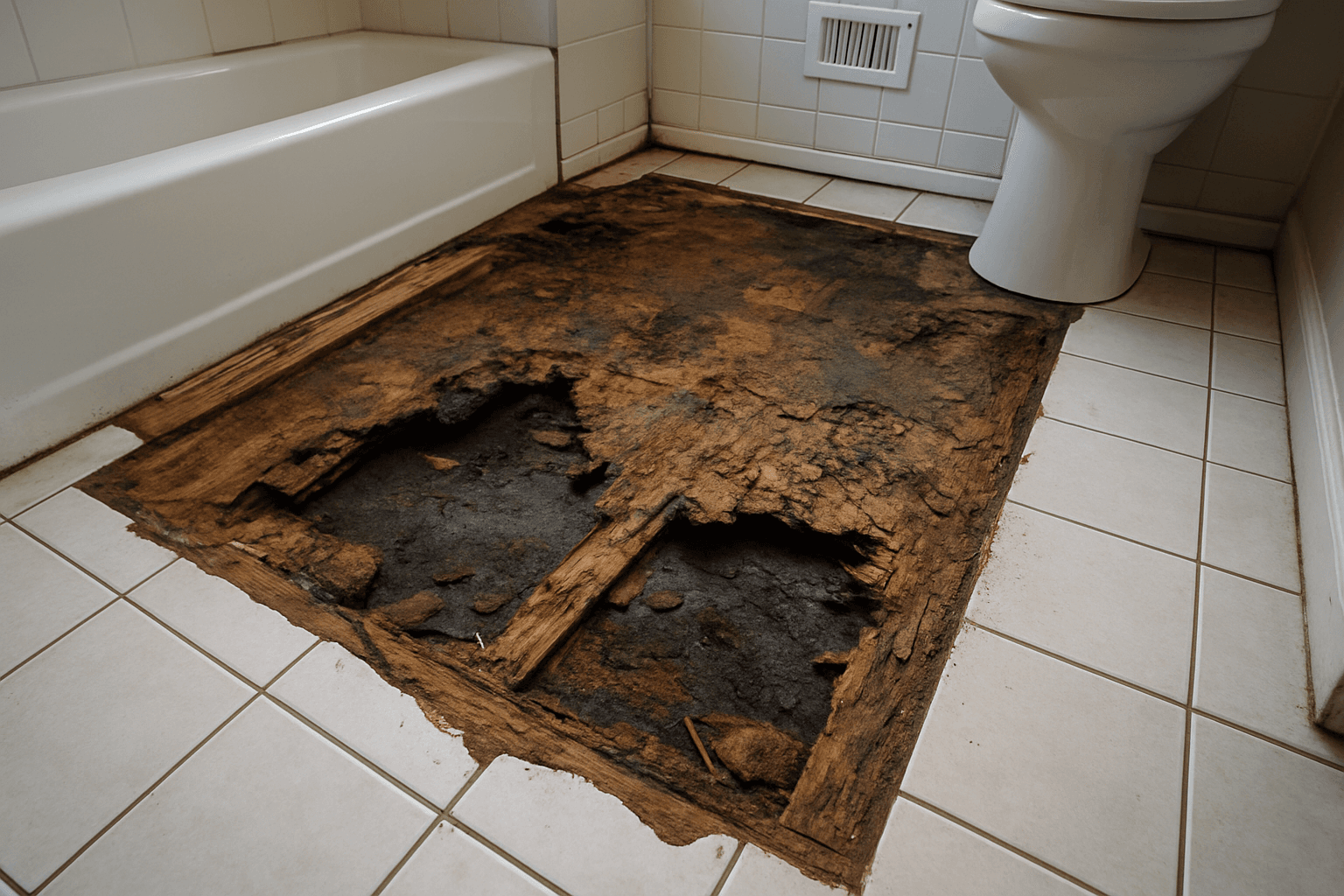
A floor that gives, bounces or dips in one place usually has a damaged subfloor under it, and the usual cause is a slow leak that went on for months. The panel under your finished floor has either delaminated (plywood) or swollen and broken down (OSB), and in bad cases the joist beneath has started to rot. The spot rarely fixes itself, and if it is next to a toilet, tub or appliance, the leak may still be running.
What Is Actually Soft
Most houses have a subfloor of plywood or oriented strand board screwed to the joists, with the finished floor on top. Plywood that stays wet loses the glue between its layers and starts to feel spongy. OSB swells at the edges and then crumbles. Either one keeps looking fine from above while it fails, because tile, vinyl or carpet hides it. By the time you feel it underfoot, the panel has usually been wet for weeks or longer.
A soft spot is a sign of a long leak, not a sudden one. That matters for the repair and, if you are thinking of a claim, for insurance, which treats slow leaks differently from sudden ones.
Where Soft Spots Come From
| Location | Usual source |
|---|---|
| Around the base of a toilet | Failed wax ring or loose flange, leaking a little every flush |
| In front of a tub or shower | Drain gasket, overflow, or a gap in the caulk at the tub edge |
| In front of the dishwasher | Door gasket, drain hose or supply connection |
| Behind or beside the fridge | Ice maker or water dispenser line |
| Next to the water heater | Relief valve discharge or a weeping tank |
| Under a window or exterior door | Rain getting past the sill or threshold |
The toilet is the most common by a wide margin. If your soft spot is right next to one, start with the toilet leaking at the base page. Tub and shower leaks have their own guide on subfloor damage from bathtub and shower leaks.
How to Check a Soft Spot
- 1Map the soft area from above. Walk it slowly in socks and press with your heel. Mark the edges with tape. A spot that is soft over a few inches is different from one that runs a couple of feet.
- 2Look at it from below if you can. In a house with a basement or accessible crawl space, find the spot from underneath using a measurement from a wall. Look for dark stains, white fuzz, a musty smell, and a subfloor that is flaking or sagging between joists. Push a screwdriver into the subfloor and the joist: sound wood resists; rotted wood lets the tip sink in easily.
- 3Take a moisture reading. A pin meter on the subfloor from below, or through a grout line or a lifted corner of the floor covering, tells you whether it is still wet. Compare it with a reading from a dry part of the same floor. A wet reading means the leak is active and has to be stopped first.
- 4Decide whether it is surface or structural. Softness only in the subfloor panel is a subfloor repair. A joist you can push a screwdriver into, a dip that runs along a joist line, or a floor that has visibly sunk is structural and needs a contractor to look at the framing before anyone lays a new floor.
Talk to a water damage pro now
Answered 24/7 · Toll-free · answered 24/7 · no obligation
(888) 840-6512- Describe the damage & give your ZIP
- You're routed to the on-call local crew
- They quote — you decide, no obligation
Soft Spot Under Carpet
Carpet hides a soft spot longer than any other floor. Pull back the carpet at the nearest corner with pliers, lift the pad and look at the subfloor. Dark staining, a sour or musty smell, or a pad that is damp or crumbling tells you the water reached the wood. The carpet, pad and subfloor drying decision page covers what can be dried and what has to go.
When a Soft Spot Is Dangerous
Most soft spots are not about to give way, but some are. Keep weight off the area and get it looked at soon if:
- you can push a screwdriver into the joist, not just the subfloor
- the soft area is larger than a floor tile and still growing
- a toilet rocks or a tub has dropped at one end
- there is a crack in the ceiling directly below
- the floor under a water heater or washing machine is soft
A toilet or water heater sitting on a rotted subfloor can shift and break its water connection.
What the Repair Involves
The leak gets fixed first, whether that is a new wax ring, a drain gasket or a supply line. Then the finished floor is lifted, the damaged subfloor is cut back to sound wood, and whatever is under it is dried and checked with a meter. Joists with surface rot can often be sistered (a new board fastened alongside); badly rotted ones are replaced. Only then does new subfloor go down, followed by the finished floor. If mold is present on the underside, it is cleaned or removed before the area is closed in, because mold grows on wet wood in about 24–48 hours and a slow leak gives it much longer than that.
Screwing a new board over the soft spot hides the problem. The wet wood underneath keeps rotting, and the new floor fails the same way.
If you have found the soft spot but not the leak, or the wood is still wet, the who to call for water under flooring page explains which trade comes first. A restoration company can meter the whole area, find where the water went, and dry what can be saved. (888) 840-6512 is answered 24/7 and connects you with a certified restoration company that serves your area; the company gives you an arrival window for your address on the call.
Reading to confirm what you already suspect?
Confirm it in two minutes instead — the pro on this line answers questions about YOUR situation all day: what it is, what it should cost, whether you even need service. If you want, they'll set the appointment on the same call.
Toll-free · no obligation · asking costs nothing
Frequently Asked Questions
What causes a soft spot in the floor of a house?
Usually a subfloor that has been wet for weeks or months from a slow leak. Plywood loses the glue between its layers and OSB swells and breaks down. Common sources are a toilet wax ring, a tub or shower drain, a dishwasher, a refrigerator water line, a water heater, and rain getting under a door or window.
What does a soft spot near the toilet mean?
Most often a failed wax ring or loose flange that has leaked a small amount with every flush. The water soaks the subfloor around the flange, which softens and can let the toilet rock. Fix the seal and have the subfloor checked and replaced if it is damaged before resetting the toilet.
How do I check a soft spot in the floor under carpet?
Pull back the carpet at the nearest corner, lift the pad and look at the subfloor. Dark staining, a musty or sour smell, or a damp or crumbling pad means water reached the wood. Press the subfloor with a screwdriver and take a moisture reading.
Is a soft spot in the floor dangerous?
Most are not about to collapse, but some are. Keep weight off it and have it checked if you can push a screwdriver into the joist, the soft area is growing, a toilet rocks or a tub has dropped, there is a crack in the ceiling below, or a water heater or washer sits on it.
How is a soft spot in the floor repaired?
The leak is fixed first. The finished floor is lifted, the damaged subfloor cut back to sound wood, the area dried and checked with a moisture meter, and any rotted joists sistered or replaced. New subfloor and flooring go down only after that. Screwing a board over the soft spot hides the rot.
Who do I call right now for water damage?
Call (888) 840-6512. The line is answered 24 hours a day, seven days a week, and connects you with an IICRC-certified water damage restoration company that serves your area. Describe what you can see — where the water is coming from, how long it has been there, and whether it smells — the more specific you are, the faster the right company is on the line.
If the source is a pipe or an appliance, shut the main water valve first. Have four things ready and the call goes quickly: the address, when the water started, what is wet now, and whether you have filed an insurance claim.
Still not sure which of these is your situation? (888) 840-6512 · toll-free · answered 24/7
Sources
- IICRC S500 Standard for Professional Water Damage Restoration
- EPA — A Brief Guide to Mold, Moisture and Your Home
- CDC — About Mold
Methodology: How we source and verify data · Report an error
Disclaimer: HearthDry is an independent educational resource. This article is for informational purposes only and does not constitute professional, legal, or insurance advice. Consult licensed professionals before making decisions about your property or insurance claims.
Free 2-day shipping
Amazon Prime members pay no shipping on restoration equipment
Dehumidifiers, air movers, and moisture meters qualify for free Prime delivery — bulk items that otherwise cost $15–$40 to ship.
Affiliate link — HearthDry earns a bounty if you sign up; costs you nothing extra.
Equipment
What each machine actually does
Removes the moisture the structure is still giving off — the machine that decides how long drying takes
See the picks →Moves air across wet surfaces so the dehumidifier has something to take out of the air
See the picks →Finds water behind walls and under floors, and tells you when a material is actually dry
See the picks →Alerts you the moment a leak starts — the cheapest thing on this list and the only preventive one
See the picks →Those pages carry affiliate links. As an Amazon Associate, HearthDry earns from qualifying purchases; it costs you nothing extra.
Our Amazon storefront →Advertisement
