Best Frost-Free Hose Bibs in 2026 — Sillcock Length, PEX or Copper Inlets, and the Connected Hose That Defeats Them

Best Frost-Free Hose Bibs in 2026

Sillcock Length, PEX or Copper Inlets, and the Connected Hose That Defeats Them

5 picks compared · prices, ratings and stock checked October 12, 2026

Our Top Pick

For most homes, the SharkBite 24636LF 12 in Frost Free Sillcock, whose push-to-connect inlet takes PEX, copper or CPVC and which has a built-in vacuum breaker. For a copper line you plan to solder, the Eastman 80222 10 in Frost Free Sillcock. Whichever you fit, take the hose off every fall.

4.5 on Amazon · 3,037 ratings

Quick answer

The best frost-free hose bib is one whose stem is long enough to put the valve inside the heated part of your wall; for most homes, buy the SharkBite 24636LF 12 in Frost Free Sillcock, rated 4.5 stars across 3,037 Amazon ratings, because its 1/2 in push-to-connect inlet fits PEX, copper and CPVC without solder. If your line is copper and you will solder it, choose the Eastman 80222 10 in Frost Free Sillcock instead. Measure the wall from the outside face to the warm side of the insulation and add about 2 in of margin. Slope it slightly down toward the outside, and remove the hose every fall.

Our Picks at a Glance

Every pick below is currently stocked — ratings and stock read from Amazon on 12 October 2026.

How this page was made: we compare the current Amazon listings, the makers' published specs and what verified buyers report, then rank by fit for the job. Ratings, review counts and stock are read from Amazon and dated. We earn a commission on purchases through our links; it does not change the order. Reviewed by Marcus Reed, IICRC-certified Water Restoration Technician.

Full Reviews

Each pick in detail: what the listing states, what buyers report, and where it falls short.

#1
Best Overall

Check price

on Amazon ↗

Listing verified 13 Oct 2026

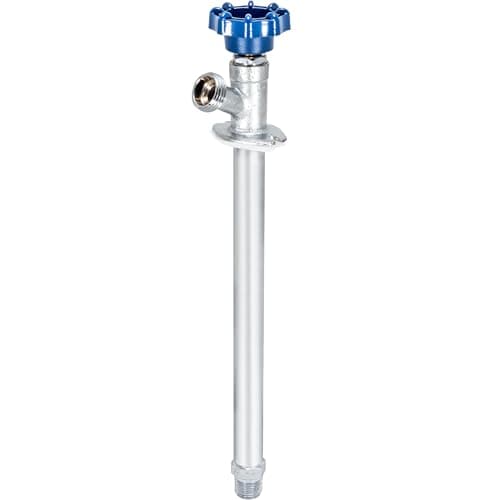
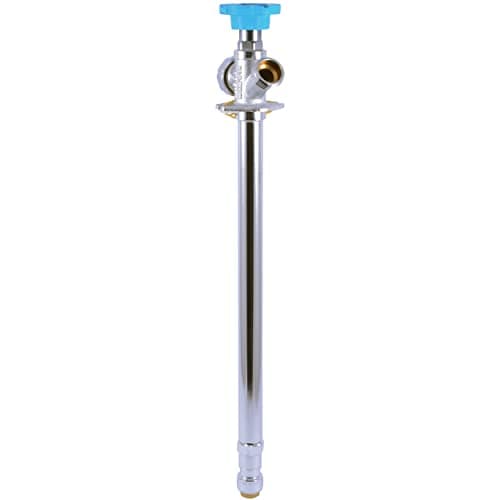
SharkBite 24636LF 12 in Frost Free Sillcock (1/2 in Push-to-Connect x 3/4 in MHT)See it on Amazon ↗

Quick Verdict

SharkBite 24636LF 12 in Frost Free Sillcock: a long stem and a push-fit inlet that takes five pipe types, with a vacuum breaker built in.

Key Specs

Length

12 in; the same sillcock is listed in 4, 8 and 10 in

Inlet (stated)

1/2 in push-to-connect for PEX, copper, CPVC, PE-RT and SDR-9 HDPE

Outlet (stated)

3/4 in garden hose thread (MHT)

Backflow (stated)

Integrated vacuum breaker

Mounting (stated)

Mounting flange

Approval (stated)

Approved for behind-the-wall use with no access panel

Pros

  • One inlet fits five pipe types with no solder, glue or crimping, per the listing
  • Can go onto a wet line, per the listing, which helps when the old spigot keeps dribbling
  • Clears the framing of most walls with room to spare, thanks to the 12 in stem
  • Built-in vacuum breaker and a flange to fix it to the wall

Cons

  • A push-fit joint only holds if the pipe is cut square, deburred and pushed in to full depth
  • No pressure rating or warranty term on the listing
  • Taking it off later needs SharkBite's disconnect clip or tongs

Suited to

Replacing a standard or failed outdoor spigot on a framed wall, whatever pipe feeds it

Our take

SharkBite's 24636LF suits most homes for two reasons. A 12 in stem reaches past the framing of a typical wall with margin to spare, and the 1/2 in push-to-connect inlet takes PEX, copper, CPVC, PE-RT or SDR-9 HDPE, so the same part fits whatever pipe reaches the wall. No torch is involved, and SharkBite says it can be fitted to a wet line. Push-fit joints are only as good as the prep, though: cut the pipe square, deburr it and mark the insertion depth so you can see it went fully home. A built-in vacuum breaker and a mounting flange are stated, along with approval for use behind a wall with no access panel. There is no pressure rating or warranty term.

Check today's price on Amazon →

Affiliate link — commission at no extra cost to you

Compare elsewhere

These open a search for this model. We quote prices only where we can verify them — Amazon, Sylvane and eBay.

#2
Best for Copper Lines

Check price

on Amazon ↗

Listing verified 13 Oct 2026

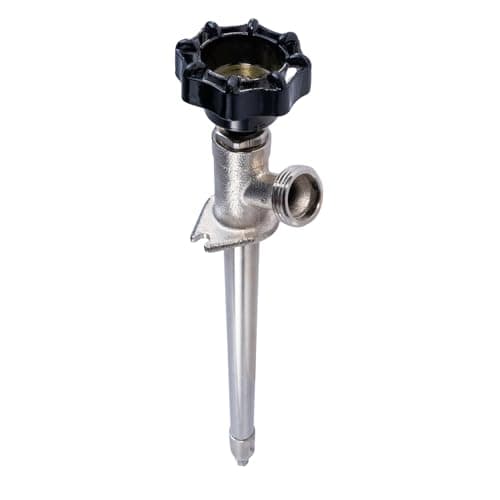
Eastman 80222 10 in Frost Free Sillcock (1/2 in MIP x 1/2 in Sweat)See it on Amazon ↗

Quick Verdict

Eastman 80222 10 in Frost Free Sillcock: a certified brass sillcock for a soldered copper line, with a thread option if plans change.

Key Specs

Length (stated)

10 in; Eastman also lists 4, 6 and 12 in versions

Inlet (stated)

1/2 in MIP x 1/2 in sweat

Backflow (stated)

Vacuum breaker

Handle (stated)

Large wheel handle

Mounting (stated)

Notched flange for siding

Body (stated)

Heavy-duty brass

Pros

  • Two ways in: solder 1/2 in copper into the sweat end, or thread a fitting onto the 1/2 in male thread
  • UPC and CSA certification stated on the listing
  • A large wheel handle that is easy to turn with gloves on

Cons

  • Soldering beside framing and siding takes skill and a heat shield
  • Hose thread size and pressure rating are not stated

Suited to

A copper supply line where you or your plumber will solder the joint

Our take

Eastman's 80222 is the traditional choice for a copper supply line. Its inlet is a 1/2 in sweat socket inside a 1/2 in male thread, so a plumber can solder 1/2 in copper straight in or thread on an adapter for another pipe type. That matters when you replace an old sillcock and do not know what the pipe will look like once it is cut. UPC and CSA certification, a vacuum breaker, a large wheel handle and a notched flange shaped for siding are all on the listing. Missing are the hose thread size and any pressure rating. If you solder it, leave the sillcock open so heat does not damage the washer at the inlet end. At 10 in it suits a typical framed wall; a thicker wall calls for the 12 in version (80223).

Check today's price on Amazon →

Affiliate link — commission at no extra cost to you

#3
Best for PEX Lines

Check price

on Amazon ↗

Listing verified 13 Oct 2026

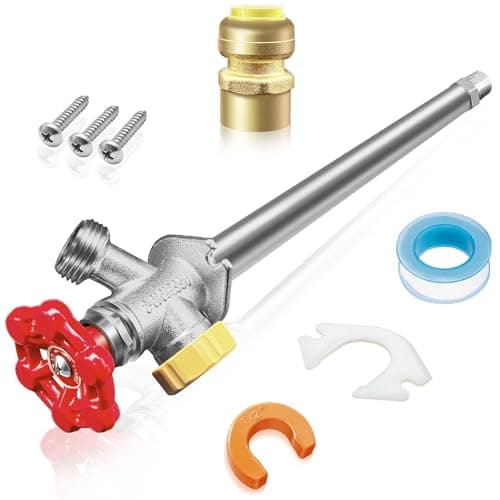
Midline Valve 10 in Frost-Free Sillcock (1/2 in PEX Inlet x 3/4 in MHT, Chrome-Plated Brass)See it on Amazon ↗

Quick Verdict

Midline Valve 10 in Frost-Free Sillcock: a direct PEX inlet and clear certifications, but check the joint type and add a vacuum breaker if needed.

Key Specs

Length (stated)

10 in

Inlet (stated)

1/2 in PEX; the joint type (crimp, clamp or expansion) is not stated

Outlet (stated)

3/4 in male hose thread

Body (stated)

Brass with chrome-plated finish

Certification (stated)

UPC approved; certified lead-free for potable water

Design (stated)

Keeps the valve seat inside heated wall space

Pros

  • Goes straight onto a PEX line with no adapter
  • UPC approval and lead-free certification for drinking water, per the listing
  • Chrome-plated brass body for a clean finish on the wall

Cons

  • Which PEX joint the inlet takes is never stated, and each needs different tools
  • No vacuum breaker is mentioned, so you may need a screw-on one for the hose thread
  • Pressure rating and warranty term are missing

Suited to

A PEX-plumbed house where you already own the matching PEX tools

Our take

Midline's 10 in sillcock goes onto a PEX line directly, and its listing explains the frost-free principle in plain terms: the valve seat stays inside heated wall space. Chrome-plated brass, UPC approval and lead-free certification for drinking water are all stated. Two gaps need checking before you order. First, the listing never says which PEX joint the inlet takes, crimp, clamp or expansion, and those need different rings and tools. Second, nothing on the listing mentions a vacuum breaker. If the photos or packaging do not show one, add a screw-on hose-thread vacuum breaker so water from a hose left in a bucket or a sprayer bottle cannot be drawn back into the house. Expect no pressure rating either.

Check today's price on Amazon →

Affiliate link — commission at no extra cost to you

#4
Best Push-Fit Alternative

Check price

on Amazon ↗

Listing verified 13 Oct 2026

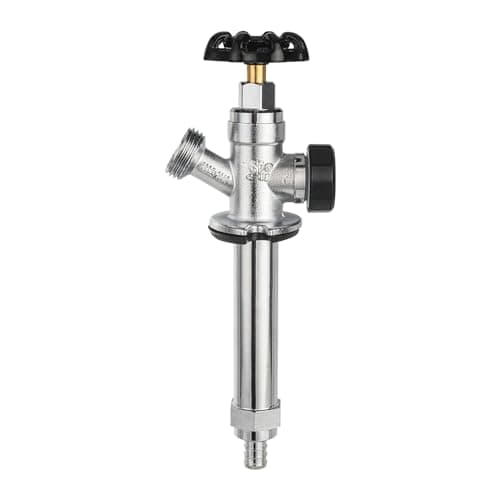
Young Dance 12 in Anti-Siphon Frost Free Sillcock (1/2 in Push-to-Fit, Converts to 1/2 in NPT)See it on Amazon ↗

Quick Verdict

Young Dance 12 in Anti-Siphon Frost Free Sillcock: a 12 in stem with push-fit or threaded connection, on a listing short of certifications.

Key Specs

Length (stated)

12 in stem

Inlet (stated)

1/2 in push-to-fit; with the push-fit removed, a 1/2 in NPT male thread

Pipe types (stated)

1/2 in PEX, CPVC, PE-RT and copper

Outlet (stated)

3/4 in garden hose thread

Backflow (stated)

Anti-siphon backflow preventer

Body (stated)

Lead-free brass, chrome plated

Pros

  • Its 12 in stem is long enough for most framed walls
  • Two inlet options: push-fit, or remove it for a 1/2 in NPT male thread
  • Anti-siphon backflow protection stated on the listing

Cons

  • Listing text is garbled in places and names no certification body
  • Unlike SharkBite's, the listing does not say the push-fit joint is approved behind a wall with no access panel
  • Silent on pressure rating and warranty

Suited to

A push-fit install where you want a threaded fallback if the pipe end is not what you expected

Our take

Young Dance's sillcock earns its place with a 12 in stem and an inlet that works two ways. Out of the box it is a 1/2 in push-to-fit connection for PEX, CPVC, PE-RT or copper. Take the push-fit insert off and, per the listing, it becomes a 1/2 in NPT male thread that accepts a standard threaded fitting. That makes it a sensible fallback when the pipe you find behind the old spigot is not what you expected. Lead-free, chrome-plated brass and anti-siphon backflow protection are stated. The paperwork is weaker: parts of the bullet text are garbled, no certification body is named, there is no pressure rating, and the listing does not claim behind-the-wall approval for the push-fit joint.

Check today's price on Amazon →

Affiliate link — commission at no extra cost to you

#5
Best for Thin Walls

Check price

on Amazon ↗

Listing verified 13 Oct 2026

EFIELD SILLCOCK024 4 in Anti-Siphon Frost Free Sillcock (1/2 in PEX Crimp x 3/4 in Hose)See it on Amazon ↗

Quick Verdict

EFIELD SILLCOCK024 4 in Anti-Siphon Frost Free Sillcock: a well-documented PEX crimp sillcock, but only for walls thin enough for a 4 in stem.

Key Specs

Length (stated)

4 in

Inlet (stated)

1/2 in PEX crimp; ends conform to ASTM F1807

Outlet (stated)

3/4 in hose bibb

Backflow (stated)

Anti-siphon design

Handle (stated)

Multi-turn large handwheel

Certification (stated)

ANSI/NSF Standard 61-9 and 372

Pros

  • The fullest spec sheet here: crimp standard, NSF standards and a pressure rating
  • Anti-siphon protection stated on the listing
  • A short body for a wall where the warm side is only a few inches in

Cons

  • 4 in is too short for most framed walls and can leave the valve in the cold
  • A crimp joint needs a PEX crimp tool and rings
  • Body metal under the chrome is not named

Suited to

A pipe that passes straight through an uninsulated rim joist into a heated basement

Our take

EFIELD's listing reads like a spec sheet: 1/2 in PEX crimp ends that conform to ASTM F1807, NSF/ANSI 61-9 and 372 certification, a 125 psi cold working pressure and an anti-siphon design. The catch is the 4 in length. It only works where the wall is thin and the warm side is close, such as a pipe passing straight through an uninsulated rim joist into a heated basement. In a framed 2x4 or 2x6 wall, a 4 in stem can leave the valve seat in the cold outer part of the wall, which defeats the point of buying frost-free. Crimp joints also need a PEX crimp tool and rings. Measure your wall before you choose this one.

Check today's price on Amazon →

Affiliate link — commission at no extra cost to you

Buyer's Guide

What to know before you buy.

How a Frost-Free Hose Bib Works

A standard hose bib has its valve right behind the handle, outside the wall, so the water sitting in it meets every freezing night. A frost-free hose bib, also sold as a frost-free sillcock or spigot, moves that valve to the far end of a long barrel. The handle outside turns a rod running back through the barrel to a washer that seals at the inlet, inside the heated part of the house. Shut it off and the water stops at the inlet, while what was left in the barrel drains out of the spout. Midline's listing describes the idea well: the valve seat stays inside heated wall space. The American Red Cross names outdoor hose bibs among the pipes that freeze most often, which is the whole reason this part exists.

Length: Measure the Wall, Not the Old Spigot

Stem length is the decision that matters most. The valve seat has to finish inside heated space, past the siding, sheathing, framing and any insulation. Some typical layers help with the arithmetic. A rim joist is 1.5 in thick, so a spigot going through it into a heated basement may need only 4 to 6 in, unless the joist bay is stuffed with insulation, which moves the warm side further in. A 2x4 wall has 3.5 in of framing plus sheathing, siding and drywall; a 2x6 wall has 5.5 in plus the same. Brick veneer adds the brick and an air gap. Measure through the hole from the outside face to the warm side, then add a couple of inches. SharkBite lists this sillcock in 4, 8, 10 and 12 in, and Eastman sells 4, 6, 10 and 12 in versions.

Slope, Flange and Vacuum Breaker

Drainage depends on a slight downward slope toward the outside. Set level, or tipped back toward the house, it holds water in the barrel, and that water freezes on the first hard night. Screw the flange to the wall so the slope cannot shift and turning the handle does not twist the pipe inside, then seal the gap around the flange so rain cannot run into the wall. Check for backflow protection too. Plumbing codes across most of the US call for a vacuum breaker or similar device on hose connections, so dirty water from a hose cannot be siphoned back into the house supply. SharkBite and Eastman state an integrated vacuum breaker, and Young Dance and EFIELD describe anti-siphon designs. Midline's listing does not mention one.

The Hose That Defeats It

A connected hose undoes the whole design. With a hose on, the barrel cannot drain, so water sits in the stem outside the heated space and freezes. The split that follows usually opens inside the wall, out of sight, and it tends to show up in spring: the first time someone turns the handle, water runs into the framing or the basement ceiling rather than the garden. The Red Cross list for outdoor faucets starts the same way, with removing, draining and storing hoses used outdoors. If your sillcock also has an inside shutoff, close it and open the outside spigot to drain, as the Red Cross describes for hose bibs. A splitter or timer left on the spout can trap water the same way. In a cold region, an insulated cover over the head adds a windbreak, which our outdoor faucet cover review compares.

Push-Fit, Sweat, Crimp or Thread

The inlet decides who can install it. Push-to-connect inlets, such as SharkBite's and Young Dance's, need a pipe cut square, deburred and pushed in to a marked depth, with no torch or crimp tool. A sweat inlet like Eastman's is soldered onto copper, which means an open flame inches from framing and siding and a heat shield behind the joint. Eastman's 1/2 in male thread also lets you screw on a threaded adapter instead. EFIELD's inlet is a PEX crimp end to ASTM F1807, so it needs a crimp tool and rings. Midline names a 1/2 in PEX inlet without saying which PEX joint, so confirm before buying. Every one of these joints ends up inside a wall or basement ceiling, where a slow drip can soak wood for months. If you have not made that kind of joint before, hire a plumber.

Who Should Not Buy One, and When to Call a Plumber

A frost-free hose bib protects the valve, not the pipe that feeds it. If that pipe runs through an unheated garage, crawl space or outside wall cavity, it can freeze before it reaches the sillcock, and it needs insulation, heat cable or rerouting instead, which our pipe insulation review covers. In areas that rarely freeze, a standard spigot with the hose taken off during cold snaps is usually enough. When your current frost-free spigot only drips from the spout or leaks behind the handle, a repair kit matched to its brand may fix it without cutting into the wall. Water inside the wall or basement after you turn it on means the barrel split: shut off the water feeding it, call a plumber and start drying. EPA says wet materials dried within 24 to 48 hours will, in most cases, not grow mold.

Frequently Asked Questions

How does a frost free hose bib work?

It puts the shutoff at the inside end of a long barrel, where the heated house keeps it above freezing. The handle outside turns a rod that presses a washer against a seat at the inlet.

Once it is shut, the water left in the barrel runs out of the spout, so nothing stays in the cold part of the wall. That draining only works with the hose removed and the sillcock sloped slightly toward the outside.

What size frost free sillcock do I need?

One whose stem puts the valve seat past the wall into heated space, plus a couple of inches of margin. Measure from the outside face of the siding, through the hole, to the warm side of the framing and insulation.

A pipe through a rim joist into a heated basement may need 4 to 6 in, and a framed wall usually needs 8 to 12 in. All five sillcocks here have 1/2 in inlets, and the four that state an outlet size give 3/4 in hose thread.

Can a frost free spigot freeze?

YesThe usual causes are a hose left connected, which stops the barrel draining; a sillcock set level or sloping back toward the house; a stem too short to reach heated space; and a supply pipe running through a cold cavity.

The damage usually shows in spring, as water in the wall or basement when the handle is first opened. Take the hose off every fall and check the slope.

Do you need to turn off a frost free spigot from inside in winter?

Not usually, if it has the right length and slope and the hose is off. Many frost-free sillcocks have no separate inside valve at all.

If yours does, closing it and then opening the outside spigot to drain adds a layer of protection, matching the American Red Cross steps for outdoor hose bibs. Leave the outside handle open afterward so any water still in the pipe has room to expand.

Can you repair a frost free spigot instead of replacing it?

Often, if the leak is at the spout or the handle. A drip from the spout when it is shut usually means a worn washer at the inside end of the stem.

A leak behind the handle points to worn packing or an O-ring, and water spitting from the top points to the vacuum breaker. Repair kits are brand-specific, so pull the old stem and match it. Water inside the wall means a split barrel, which needs a new sillcock.

Can I install a frost free hose bib myself?

YesIf you can make the joint its inlet needs and reach the pipe from inside.

A push-to-connect model such as the SharkBite 24636LF 12 in Frost Free Sillcock needs only a square cut, deburring and a depth mark. Soldering a sweat inlet next to wood, or crimping PEX without the right tool, is where home installs go wrong. The joint ends up hidden in a wall or ceiling, so if you are unsure, hire a plumber.

Who do I call right now for water damage?

Call (888) 840-6512. The line is answered 24 hours a day, seven days a week, and connects you with an IICRC-certified water damage restoration company that serves your area. A recorded menu picks up first: choose water damage or mold, key in your 5-digit ZIP code, and hold through the short silence while the call is passed to the company.

Describe what you can see — where the water is coming from, how long it has been there, and whether it smells — the more specific you are, the faster the right company is on the line. If the source is a pipe or an appliance, shut the main water valve first. Have four things ready and the call goes quickly: the address, when the water started, what is wet now, and whether you have filed an insurance claim.

Still not sure which of these is your situation? (888) 840-6512 · toll-free · answered 24/7

Sources

  1. American Red Cross — Frozen Pipes
  2. EPA — A Brief Guide to Mold, Moisture, and Your Home

Methodology: How we source and verify data · Report an error

How we chose these picks

  • Every pick is a current listing. Stock, star ratings and rating counts are read from Amazon by script and carry the date they were read.
  • Nothing under 4.0 stars makes the list, and the top pick needs a large rating count, so one good week of reviews cannot put it there.
  • Specs are quoted from the listing or the maker, with the test condition behind the number where there is one, and sized against the job rather than the room on the box.
  • We do not run lab or field tests. Where a spec matters, we say what it is measured under and what it cannot tell you.

Free 2-day shipping

Amazon Prime members pay no shipping on restoration equipment

Dehumidifiers, air movers, and moisture meters qualify for free Prime delivery — bulk items that otherwise cost $15–$40 to ship.

Try Prime free →

Affiliate link — HearthDry earns a bounty if you sign up; costs you nothing extra.

Also Worth Comparing

Best Outdoor Faucet Covers for Winter in 2026 — Insulated Socks, Hard Shells and What a Cover Cannot Do

An outdoor faucet cover insulates the spigot and blocks the wind, which lowers the odds of a frozen hose bib splitting the pipe inside the wall, where the real water damage happens. It cannot do that job alone, so every pick here comes with the steps that matter more: hose off, inside valve shut and the line drained.

Read the comparison

Best Pipe Insulation and Heat Tape for Water Pipes in 2026 — Stop Burst Pipes Before They Start

A burst frozen pipe is one of the most expensive kinds of winter water damage, and preventing it costs a small fraction of the repair. This guide pairs the two tools that stop it, foam insulation that slows heat loss and heat tape that adds heat, with the sealant that closes the drafts in between.

Read the comparison

Best Pipe Repair Clamps and Leak Kits in 2026 — Clamps, Tape, Epoxy Putty and Slip Couplings Matched to the Leak

A pipe repair clamp, a wrap of self-fusing tape or a lump of epoxy putty can stop a leaking pipe within the hour, but only after the main valve is off and only until the damaged section is properly replaced. These picks are matched to the kind of damage, the pipe material and the size, using each listing's own pressure and temperature figures and noting what it leaves unsaid.

Read the comparison

Best Automatic (Smart) Water Shut-Off Valves in 2026 — YoLink vs Flo by Moen vs Frizzlife

A smart water shutoff closes the supply when it detects a leak, so a burst pipe does not run for hours while nobody is home. The four systems here split into two designs: leak sensors that close the valve you already have, and valves on the main line that watch the flow itself.

Read the comparison

Best Heat Tape for Pipes in 2026 — Self-Regulating vs Constant-Wattage Cable, How Much to Buy, and What a Heat Cable Cannot Protect

Heat tape is a plug-in cable that warms a water pipe in a crawl space, garage or unheated cabinet so the water inside cannot freeze. These picks are compared on cable type, thermostat settings, pipe materials and insulation as each listing states them, along with the draining and shutoff jobs that no cable replaces.

Read the comparison

SharkBite Fittings Review 2026 — Max Couplings, Elbows, a Ball Valve and an Adapter Compared From Their Listings, and the Burst-Pipe Repair They Are Bought For

SharkBite fittings push onto PEX, copper, CPVC, PE-RT or HDPE pipe and seal without solder, glue or a crimp tool, which is why one lives in so many basements next to the main shutoff. This comparison of the SharkBite Max coupling, elbow, ball valve and threaded adapter, plus one brass alternative, is built from the Amazon listings, SharkBite's published specs and buyer ratings, not from our own installs.

Read the comparison