
Written & reviewed by Marcus ReedIICRC WRT
Reviewed August 1, 2026· Next review Feb 2027
Quick answer
Water damage repair cost varies most by room. Bathrooms typically run $1,000–$4,000, kitchens $1,500–$8,000 because of cabinetry, bedrooms $1,000–$3,500, and basements $3,000–$15,000 as the highest-cost room due to volume, contents and finishing. Ceilings add $350–$1,500. The water category and how long it sat move these figures more than square footage does. Call (888) 840-6512 to reach a certified water damage restoration company in your area; the line is answered 24/7.
Sound like your situation? Confirm it in one call instead of ten more minutes of reading — (888) 840-6512 · toll-free · no obligation
Why Cost Follows the Room, Not Just the Square Footage
Two rooms can take the same volume of water and cost wildly different amounts to restore. The variable is what the water touched: a bedroom loses carpet and pad, a kitchen loses cabinetry that costs more than the rest of the job combined. Here is what each room actually runs.
The Room-by-Room Table
| Room | Typical repair cost | What drives it |
|---|---|---|
| Basement | $1,500 – $10,000+ | Largest area, finished vs unfinished, often Category 2/3 water |
| Kitchen | $1,500 – $5,000 | Cabinetry is the swing factor — full replacement runs $5,000–$15,000 alone |
| Bathroom | $1,000 – $4,000 | Small area, but toilet overflows bring Category 2/3 protocols |
| Living room | $1,200 – $4,500 | Flooring and drywall; hardwood pushes the top of the range |
| Bedroom | $1,000 – $3,000 | Usually the least expensive — carpet, pad, drywall, contents |
| Whole-home average | ~$3,867 (most pay $1,383 – $6,384) |
Basement: The Expensive One
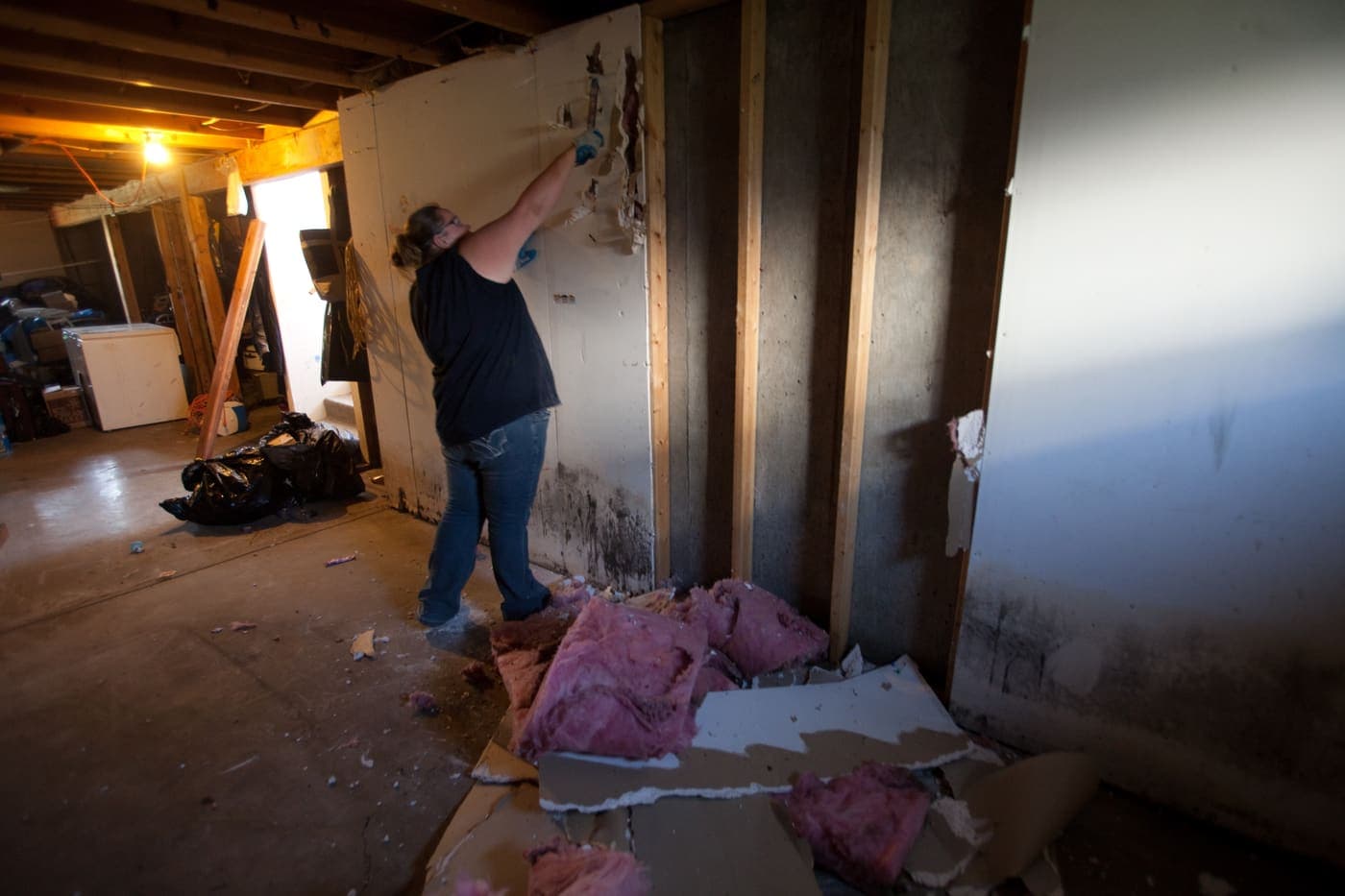
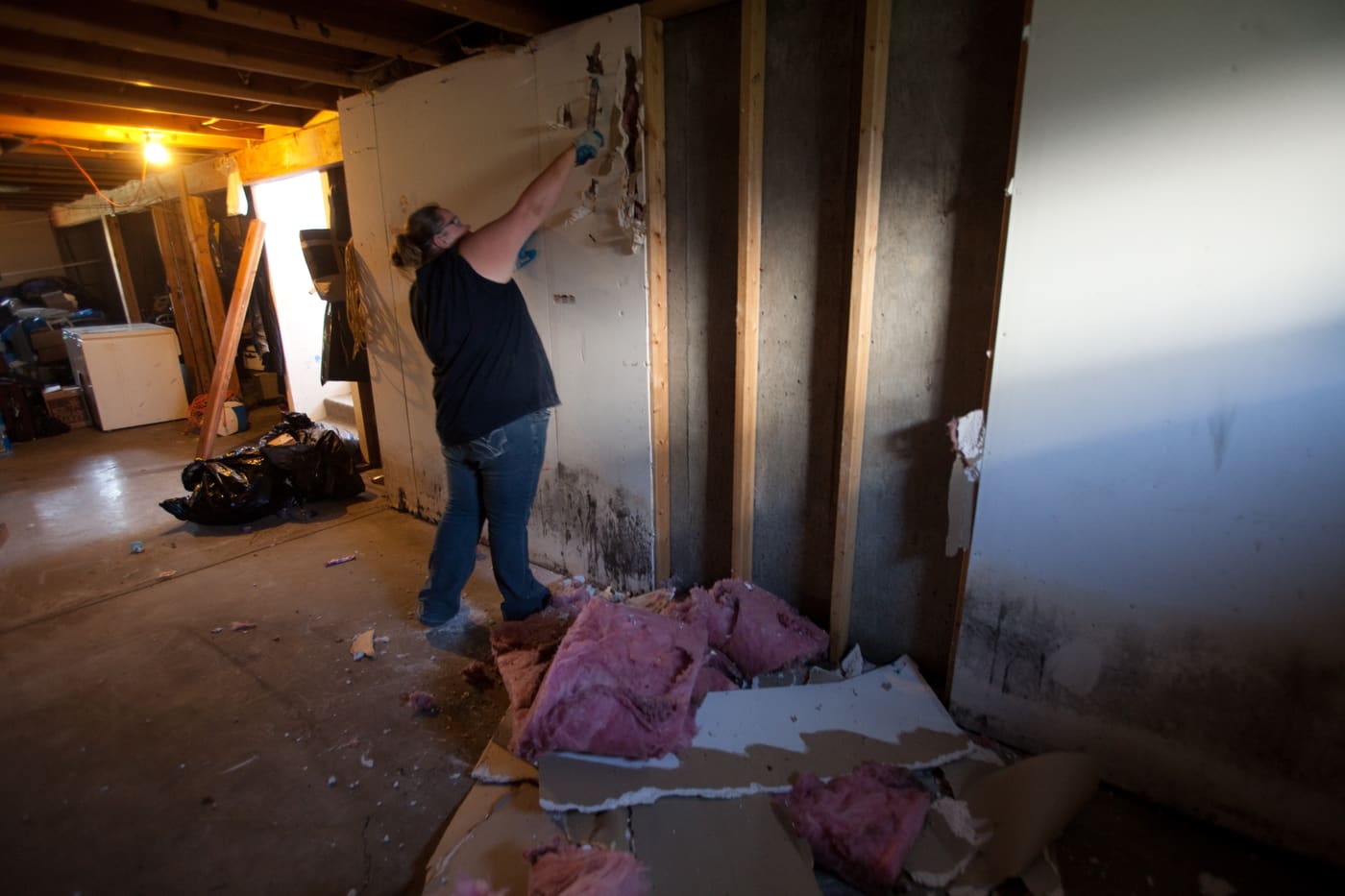
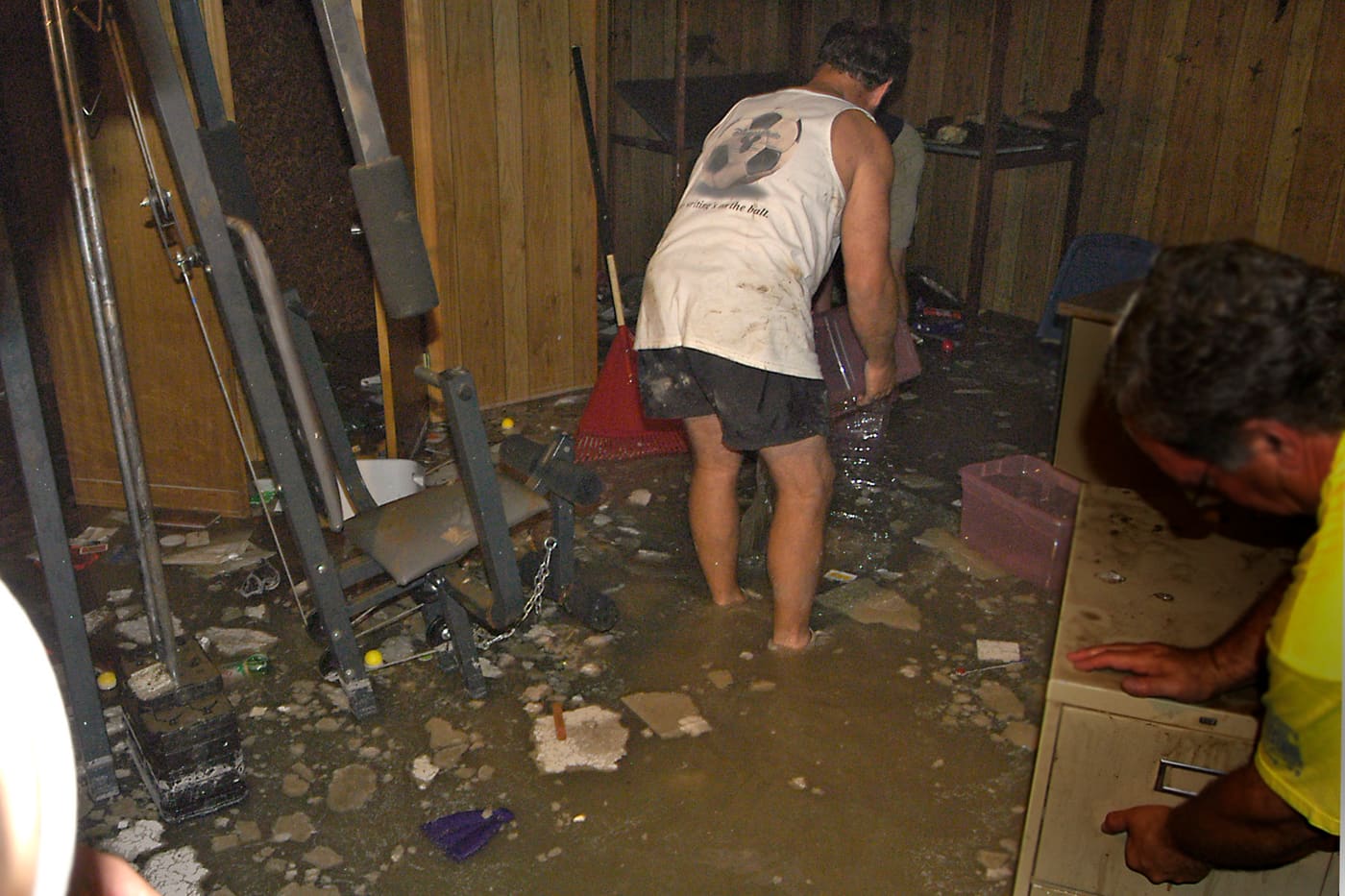
Basements top the list for two reasons. They are usually the largest continuous area, and they are where water goes — so a leak upstairs eventually becomes a basement problem too.
The finished/unfinished split is the biggest single variable. Unfinished concrete with a floor drain may need extraction and drying only. Finished basements lose drywall (which wicks water upward and rarely dries in place), carpet and pad, baseboards, and often contents. Add groundwater seepage — which standard policies exclude — and the same physical damage can cost you everything out of pocket.
Kitchen: Cabinetry Is the Whole Story
A kitchen where water stayed on tile and was extracted quickly might cost $1,500. The same kitchen where water sat under the toe-kick for a week can pass $10,000, because particle-board cabinet bases wick moisture and swell permanently. They are not dried; they are replaced.
This is why dishwasher leaks and refrigerator line failures get expensive quietly — both discharge under cabinets where nothing is visible for weeks.
Already have a quote? Compare it
National brands price from a franchise rate card. A local IICRC-certified crew often scopes the same job differently — you keep whichever quote is better.
(888) 840-6512- Tell them the scope you were quoted
- A local certified crew prices the same work
- Compare line by line — no obligation either way
Bathroom: Small Room, Bigger Category
Bathrooms are small, which caps extraction and drying cost. What raises the bill is water *category*: a supply line is Category 1 (clean), but a toilet overflow or sewage backup is Category 2 or 3, which means porous materials come out rather than getting dried, plus antimicrobial treatment and disposal.
The other bathroom multiplier is location — an upstairs bathroom leak becomes a ceiling job in the room below, and now you are paying for two rooms.
Bedroom and Living Areas
The least expensive rooms to restore, because the loss is usually carpet, pad, baseboards and lower drywall. The exception is hardwood: cupped or buckled boards can sometimes be dried and sanded, but replacement of a continuous hardwood run often means replacing far more floor than got wet, for the sake of matching.
What the Room Numbers Do Not Include
Three costs sit outside the per-room figures:
- Mold remediation if drying started late — $1,800–$6,000+ on top
- The source repair — plumber, roofer or appliance, billed separately
- Contents — furniture, electronics, documents, priced as their own scope
Getting a Real Number
Room averages are for budgeting, not for accepting. Actual pricing comes from square footage, water category, drying days and what materials must be removed — which is why contractors estimate in Xactimate against an inspection. Our full restoration cost guide breaks down the per-square-foot math, and the cost calculator gives you a baseline before anyone quotes.
Bottom Line
Budget by room and by what the water touched: basements $1,500–$10,000+, kitchens $1,500–$5,000 (cabinetry decides), bathrooms $1,000–$4,000 (category decides), bedrooms $1,000–$3,000. Then get two written quotes against an inspection — room averages tell you whether a quote is plausible, not whether it is right.
Reading to confirm what you already suspect?
Confirm it in two minutes instead — the pro on this line answers questions about YOUR situation all day: what it is, what it should cost, whether you even need service. If you want, they'll set the appointment on the same call.
Toll-free · no obligation · asking costs nothing
Frequently Asked Questions
How much does it cost to repair water damage in a kitchen?
Kitchen water damage repair typically costs between $2,000 and $15,000, depending on the extent of damage, materials involved, and whether mold remediation is required. At the low end, a minor appliance leak caught within 24 hours may affect only vinyl flooring and a small drywall section, costing $2,000–$4,000 to dry and repair. At the high end, a significant supply line failure that saturates custom cabinetry, tile flooring, granite countertops, and subfloor assemblies can reach $15,000 or more when cabinetry replacement, plumbing repairs, and mold remediation are included.
The kitchen is one of the most expensive rooms to remediate because it contains high-value, difficult-to-replace components: semi-custom cabinetry averages $150–$650 per linear foot to replace, and matching discontinued tile can be impossible. Labor costs in kitchens are also elevated because restoration crews must disconnect plumbing and appliances before any drying equipment can reach affected structural materials.
What does bathroom water damage repair typically cost?
Bathroom water damage repair typically costs between $1,500 and $12,000. Minor toilet overflow or supply line leaks caught early — with damage limited to vinyl flooring and a small section of drywall — often fall in the $1,500–$3,000 range. More significant events, such as a shower valve failure that saturates floor systems and adjacent wall cavities, typically cost $4,000–$8,000 once drying, tile removal and replacement, drywall repair, and painting are complete.
Costs approach $12,000 when the bathroom is on an upper floor and water migrates through the subfloor into the ceiling below, creating a multi-room scope of work. Tile replacement is a particular cost driver in bathrooms: custom tile matching is expensive, and labor to remove, set, and regrout bathroom tile runs $10–$25 per square foot. Shower surrounds requiring structural waterproofing membrane replacement beneath the tile add $3,000–$8,000 to the total.
How expensive is basement water damage restoration?
Basement water damage has the widest cost range of any room — from as little as $500 for a minor humidity issue addressed with a dehumidifier, to $85,000 or more for a finished basement requiring full demolition, structural waterproofing, foundation repair, and complete reconstruction. Unfinished basement flooding from a sump pump failure typically costs $1,500–$8,000: water extraction, structural drying, concrete block drying, and preventive antimicrobial treatment.
A finished basement with carpet, drywall, ceiling tile, and stored personal property typically costs $10,000–$40,000 because all finish materials must be removed to dry the concrete slab and stud wall cavities. If the flooding source was a sewage backup or storm floodwaters (Category 3 water), all porous materials must be demolished and disposed of as contaminated waste, adding 30–50% to the base restoration cost. Foundation waterproofing or crack repair to prevent recurrence adds $3,000–$25,000 depending on the method and perimeter length involved.
What is the average cost of bedroom water damage repair?
Bedroom water damage repair typically costs between $500 and $8,000, making it one of the lower-cost rooms when the cause is a clean-water event caught relatively quickly. A small roof leak that saturates a ceiling section and carpet may cost $500–$2,000 to dry, patch, repaint, and re-carpet if addressed within 24–48 hours. A more significant event — such as a failed HVAC condensate line that saturates the subfloor and wall cavities — typically costs $3,000–$6,000 once structural drying, drywall replacement, and flooring replacement are complete.
Costs approach $8,000 or more when hardwood flooring is involved: cupping, buckling, and staining after significant saturation typically require full replacement at $6–$15 per square foot installed. Ceiling costs in two-story homes can double the expected expense when a second-floor bathroom leak migrates through the ceiling assembly into the bedroom below, requiring repairs in both spaces simultaneously.
What factors most affect the total cost of water damage repair?
Six factors drive the majority of cost variation in water damage repair regardless of room. First, water category: clean water (Category 1) is least expensive to remediate; gray water (Category 2) adds biocide treatment; black water (Category 3 — sewage or floodwater) requires demolition of all porous materials and dramatically increases cost. Second, duration of exposure: every 24 hours of saturation increases mold probability, turning a mitigation project into a remediation project.
Third, construction type: wood-framed walls and floors retain water longer than concrete or CMU construction, extending drying times and cost. Fourth, finish quality: high-end tile, custom cabinetry, hardwood flooring, and plaster walls are more expensive to remove and replace than standard materials. Fifth, multi-floor migration: water migrating through floor assemblies into the space below doubles the affected scope. Sixth, geographic location: restoration labor rates vary 30–50% between major metro areas and rural markets, affecting all cost estimates significantly.
Does homeowners insurance typically cover room-by-room water damage repair?
Homeowners insurance covers water damage repair when the cause is sudden and accidental — a burst pipe, appliance leak, or roof damage from a covered windstorm — regardless of which room is affected. Coverage applies to structural components (drywall, flooring, cabinetry, and built-in fixtures) and, with personal property coverage, to damaged contents as well. However, several conditions frequently reduce or eliminate coverage. Gradual leaks — a slow drip behind a cabinet causing cumulative damage over months — are excluded as maintenance issues.
Flood damage from external surface water requires a separate flood policy. Mold resulting from water damage may be subject to a sublimit, often $1,000–$10,000, that is insufficient for significant remediation. Your deductible offsets the first portion of any repair cost, so for lower-cost repairs under $2,000–$3,000, it may not be worth filing a claim given the premium impact. Document all damage thoroughly before cleanup begins, regardless of claim intent.
How much does it cost to repair ceiling water damage?
Ceiling repairs typically run $350–$1,500: drywall patching or panel replacement, sealing, and repainting.
The ceiling is rarely the whole bill, though — the stain means water came from somewhere above, so budget for the roof, plumbing, or HVAC fix that caused it, plus verification that insulation above the ceiling dried out rather than molding quietly.
Who do I call right now for water damage?
Call (888) 840-6512. The line is answered 24 hours a day, seven days a week, and connects you with an IICRC-certified water damage restoration company that serves your area. Describe what you can see — where the water is coming from, how long it has been there, and whether it smells — the more specific you are, the faster the right company is on the line.
If the source is a pipe or an appliance, shut the main water valve first. Have four things ready and the call goes quickly: the address, when the water started, what is wet now, and whether you have filed an insurance claim.
Still not sure which of these is your situation? (888) 840-6512 · toll-free · answered 24/7
Sources
- IICRC S500 — Standard for Professional Water Damage Restoration(retrieved 2026-07-15)
- Angi — Water Damage Restoration Cost Guide(retrieved 2026-07-15)
- EPA — Mold Resources and Remediation Guidance(retrieved 2026-07-15)
- Insurance Information Institute — How to File a Homeowners Insurance Claim(retrieved 2026-07-15)
Methodology: How we source and verify data · Report an error
Disclaimer: HearthDry is an independent educational resource. This article is for informational purposes only and does not constitute professional, legal, or insurance advice. Consult licensed professionals before making decisions about your property or insurance claims.
Equipment
What each machine actually does
Removes the moisture the structure is still giving off — the machine that decides how long drying takes
See the picks →Moves air across wet surfaces so the dehumidifier has something to take out of the air
See the picks →Finds water behind walls and under floors, and tells you when a material is actually dry
See the picks →Alerts you the moment a leak starts — the cheapest thing on this list and the only preventive one
See the picks →Those pages carry affiliate links. As an Amazon Associate, HearthDry earns from qualifying purchases; it costs you nothing extra.
Advertisement
