
Quick answer
Water stains are flat, dry and usually yellow to brown, with darker ring-shaped edges where minerals were left as the water dried. Mold is raised or fuzzy, appears as scattered black, green or gray spots, spreads over time, and smells musty. The most reliable check is a moisture meter: a stain that reads the same as the surrounding surface is old and dry, while one that reads wet has an active source. A stain can still hide mold on the back of the drywall or ceiling. Call (888) 840-6512 to reach a certified water damage restoration company in your area; the line is answered 24/7.
Written & reviewed by Marcus ReedIICRC WRT
Reviewed September 27, 2026· Next review Mar 2027
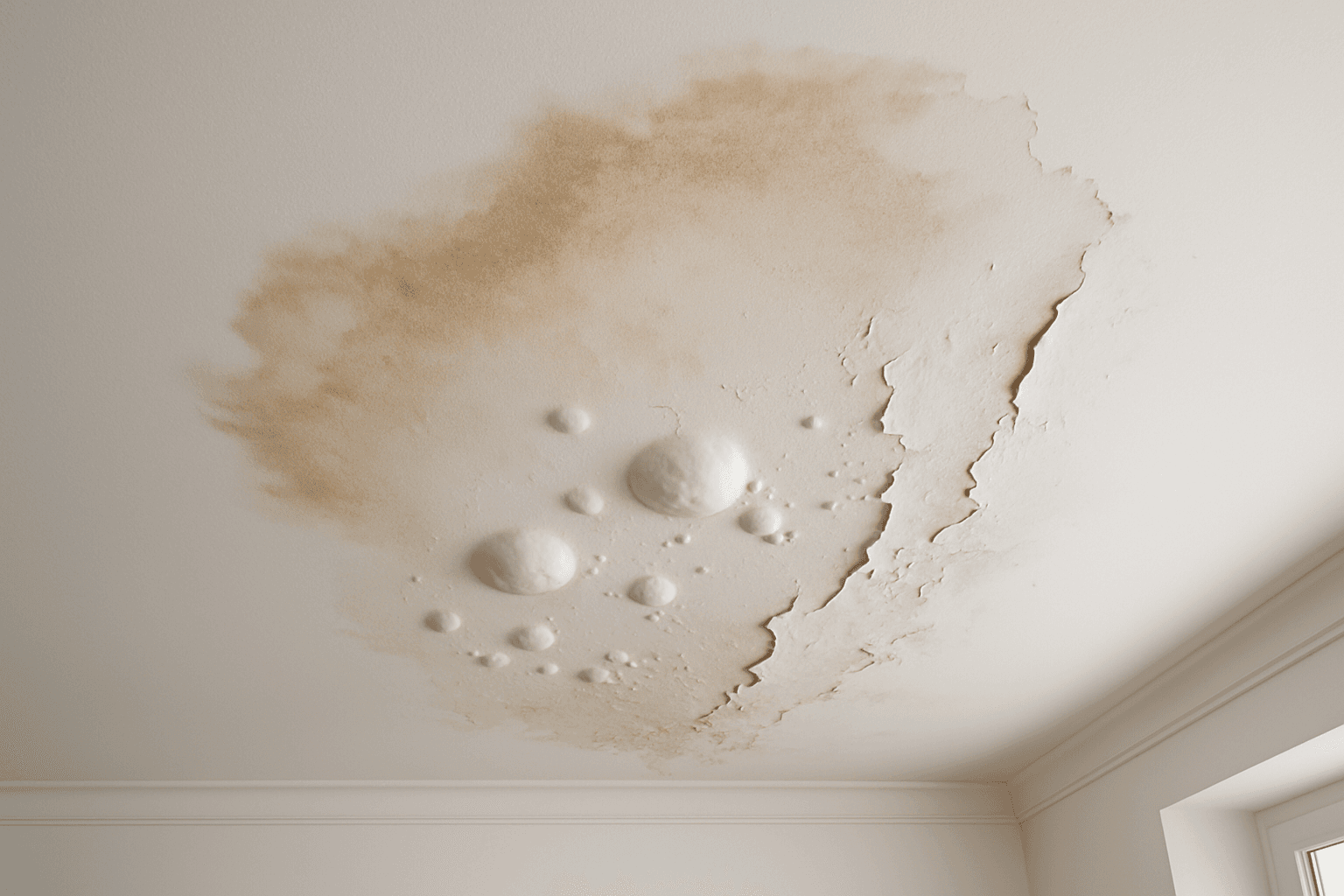
A water stain is flat and dry to the touch, with a tide-line edge; mold has texture, grows in spots or fuzz, and smells musty. A stain records where water was, mold is something alive and growing on the surface. The catch is that a stain on the room side of a ceiling or wall can have mold growing on the side you cannot see, so the real question is whether the material behind it is still wet.
How to Tell Them Apart
| Water stain | Mold | |
|---|---|---|
| Texture | Flat, part of the paint or surface | Raised, fuzzy, powdery or slimy; can smudge when wiped |
| Shape | Rings with a darker outer edge, like a coffee cup mark | Scattered spots or clusters, often irregular |
| Color | Yellow, tan, brown, sometimes gray at the edges | Black, green, gray, white, sometimes pink or orange |
| Does it change? | Stays the same unless the leak returns | Spreads outward over days or weeks |
| Smell | Usually none, unless the material is still wet | Musty, earthy |
| Surface feel | Dry, sometimes a little stiff | Can be damp, soft, or dusty |
The rings are the giveaway for a stain. As water spreads through drywall or a ceiling tile it carries dissolved minerals and tannins from wood to the edge of the wet area. When it dries, they are left in a ring. Several nested rings mean the area got wet more than once, which means the leak is intermittent and probably still there. The brown spots on ceiling guide reads those stains in more detail.
Mold rarely makes neat rings. It shows up as specks that grow into patches, often thickest where the surface stays wettest.
On a Ceiling, on Drywall, on Wood
Ceiling. Most ceiling stains are from a roof, a bathroom above, or an attic condensation or AC drain problem. Brown and ringed is a stain. Gray or black speckling spreading out from a stain, or growth in a bathroom's corners where steam collects, is mold. A stain that is soft to a gentle press, or sags at all, is holding water and needs attention now.
Drywall. Paper-faced drywall grows mold readily when it stays wet, because the paper is food. A stain with small dark dots appearing inside it is turning into mold. Paint bubbling over a stain means water was trapped under the paint.
Wood. Water on wood leaves dark gray or black stains when it reacts with the tannins in the wood, especially oak. Those are flat and go into the grain. Mold on wood sits on top of the grain and is often fuzzy or powdery. The wood mold guide covers cleaning either.
Talk to a water damage pro now
Answered 24/7 · Toll-free · answered 24/7 · no obligation
(888) 840-6512- Describe the damage & give your ZIP
- You're routed to the on-call local crew
- They quote — you decide, no obligation
Four Checks That Settle It
- 1Look at the texture and edges. Use a flashlight held flat against the surface, so it throws shadows. Stains disappear into the paint; mold throws a tiny shadow because it sits on top. Tide-line edges point to a stain, fuzzy or scattered edges to mold.
- 2Take a moisture reading. Press a pinless moisture meter against the center of the spot, then against the same surface a few feet away. If they match, the area is dry and you are looking at an old stain. If the spot reads much higher, water is still there, and whatever it looks like today, it will grow mold. The moisture meter guide explains what the numbers mean.
- 3Do a careful dab test. Put a drop of diluted household bleach (about one part bleach to ten parts water) on a cotton swab and touch it to the spot. If the spot lightens within a minute or two or comes back quickly after cleaning, it is likely mold. If it stays exactly the same, it is more likely a stain. This test has limits: bleach also lightens some stains, it will damage colored paint and wood, it tells you nothing about what is behind the surface, and it is not a way to remove mold. Wear gloves and never mix bleach with ammonia or other cleaners.
- 4Check the back side. For a ceiling, look from the attic with a flashlight if you can reach it safely. For a wall, pull the baseboard or the cover off an outlet on that wall (breaker off first) and look into the cavity. Staining on the front with mold on the back is common, especially when the water came from above or inside the wall.
Why "It's Just a Stain" Is Sometimes Wrong
A stain is only harmless if the water that made it is gone. Drywall and wood that stay wet begin growing mold within 24–48 hours, and in a ceiling or wall cavity that growth is on the back of the drywall, the insulation and the framing, where there is no light and no airflow. The front shows only a stain, because the paint and the drywall's front face dry out first.
So the stain's appearance does not settle it; the moisture reading does. An old, dry stain can be sealed with a stain-blocking primer and painted, and the mold stains guide covers removing the discoloration mold leaves behind. A stain that reads wet, keeps growing, or comes back after painting has an active source and probably hidden growth.
What to Do Next
- Dry stain, no smell, meter reads normal: find and confirm the old source was fixed, then prime with a stain-blocking primer and paint.
- Small patch of surface mold on a dry surface: clean it with detergent and water, and dry it. Under about 10 square feet is a homeowner job by EPA guidance.
- Stain or mold that reads wet, or sags, or keeps spreading: stop the source first (plumber for pipes, roofer for the roof), then have the ceiling or wall opened and dried by someone who meters it.
That last case needs a water damage and mold professional, because it involves cutting out wet material, drying the cavity and removing growth you cannot see. Remediating one contained area typically costs $1,500–$3,500. If you want that assessed, (888) 840-6512 is answered 24/7 and connects you with an IICRC-certified restoration company that serves your area; the company gives you an arrival window for your address on the call.
Reading to confirm what you already suspect?
Confirm it in two minutes instead — the pro on this line answers questions about YOUR situation all day: what it is, what it should cost, whether you even need service. If you want, they'll set the appointment on the same call.
Toll-free · no obligation · asking costs nothing
Frequently Asked Questions
How can you tell the difference between a water stain and mold?
A water stain is flat, part of the surface, and forms rings with a darker edge. Mold sits on the surface, looks fuzzy, powdery or speckled, spreads over time and smells musty. A moisture meter reading on the spot compared with nearby surface shows whether it is still wet.
Is a water stain on the ceiling mold?
Not by itself. A brown ring on a ceiling is usually a water stain from minerals left behind as water dried. But if the ceiling stayed wet, mold can be growing on the back side in the attic or cavity. Dark speckles appearing inside the stain, softness or a musty smell suggest mold.
Does bleach tell you if it's mold or a water stain?
A dab of diluted bleach often lightens mold within a minute or two while a water stain changes little, but the test is not reliable: bleach also lightens some stains, damages paint and wood, and says nothing about what is behind the surface. A moisture meter is more useful.
How do you tell water stains from mold on wood?
Water stains on wood are flat and soak into the grain, often dark gray or black where water reacted with tannins. Mold sits on top of the grain and looks fuzzy, powdery or spotty, and can often be wiped or brushed off the surface.
Can you paint over a water stain?
Only once the source is fixed and the area reads dry with a moisture meter. Use a stain-blocking primer, then paint. Painting over a stain that is still wet or has mold on the back hides the problem while it keeps growing.
Who do I call right now for water damage?
Call (888) 840-6512. The line is answered 24 hours a day, seven days a week, and connects you with an IICRC-certified water damage restoration company that serves your area. Describe what you can see — where the water is coming from, how long it has been there, and whether it smells — the more specific you are, the faster the right company is on the line.
If the source is a pipe or an appliance, shut the main water valve first. Have four things ready and the call goes quickly: the address, when the water started, what is wet now, and whether you have filed an insurance claim.
Still not sure which of these is your situation? (888) 840-6512 · toll-free · answered 24/7
Sources
- EPA — A Brief Guide to Mold, Moisture and Your Home
- CDC — About Mold and Your Health
- IICRC S520 Standard for Professional Mold Remediation
Methodology: How we source and verify data · Report an error
Disclaimer: HearthDry is an independent educational resource. This article is for informational purposes only and does not constitute professional, legal, or insurance advice. Consult licensed professionals before making decisions about your property or insurance claims.
Free 2-day shipping
Amazon Prime members pay no shipping on restoration equipment
Dehumidifiers, air movers, and moisture meters qualify for free Prime delivery — bulk items that otherwise cost $15–$40 to ship.
Affiliate link — HearthDry earns a bounty if you sign up; costs you nothing extra.
Equipment
What each machine actually does
Removes the moisture the structure is still giving off — the machine that decides how long drying takes
See the picks →Moves air across wet surfaces so the dehumidifier has something to take out of the air
See the picks →Finds water behind walls and under floors, and tells you when a material is actually dry
See the picks →Alerts you the moment a leak starts — the cheapest thing on this list and the only preventive one
See the picks →Those pages carry affiliate links. As an Amazon Associate, HearthDry earns from qualifying purchases; it costs you nothing extra.
Our Amazon storefront →Advertisement
