
Quick answer
For a dishwasher leak, close the valve under the sink and switch the machine off, then decide by where the water went. The machine itself is an appliance technician's job (door gasket, pump, inlet valve) or a plumber's if the supply line or drain connection failed. Water that ran under the unit into the cabinet base, subfloor or flooring is a water damage restoration company's job, because it has to be metered and dried, not wiped. Call your insurer the same day if anything beyond the machine is wet. Call (864) 806-2818 to reach a certified water damage restoration company in your area; the line is answered 24/7.
Enter your 5-digit ZIP when asked. The line goes quiet for about half a minute while it connects — that is normal, stay on. If it does not connect, call once more: companies taking calls change minute to minute.
 Serving US homesCertified US companiesCall nowLine answered 24/7

Water moves fast. What you do first decides if it stays a drying job.
Do this first
- Shut off the mainNear the meter or where the line enters.
- Kill power to wet roomsFlip the breaker before you step in.
- Photograph everythingBefore you move or throw anything out.

Written & reviewed by Marcus ReedIICRC WRT
Reviewed October 12, 2026· Next review Apr 2027
A dishwasher leak produces three possible phone calls, and the one most people make first is the wrong one for the damage. The appliance technician fixes the machine, the plumber fixes the pipes feeding and draining it, and neither of them dries the cabinet base and subfloor the water ran into. Which call comes first depends on two things you can check in about ten minutes: where the water is coming from, and where it has already gone.
Close the Valve Under the Sink and Cut the Power
Cancel the cycle first. Then open the cabinet under the sink and find the dishwasher's supply: it is usually a small shutoff valve teed off the hot water stop, feeding a braided or copper line that disappears through the cabinet wall toward the machine. Turn it clockwise until it stops. If the handle is seized, or you cannot tell which valve is which, close the main water shutoff for the house instead and sort it out later.
Now the power. Many dishwashers plug into an outlet under the sink or in the neighboring cabinet; unplug it if the plug and your hands are dry. If it is hardwired, or the outlet is wet, switch off the kitchen appliance breaker at the panel. Do not stand in water to do either. A dishwasher that has been leaking onto its own wiring can trip a breaker or worse, so this step is not optional even if the puddle looks small.
Pull the Kick Plate and Check the Cabinet Base
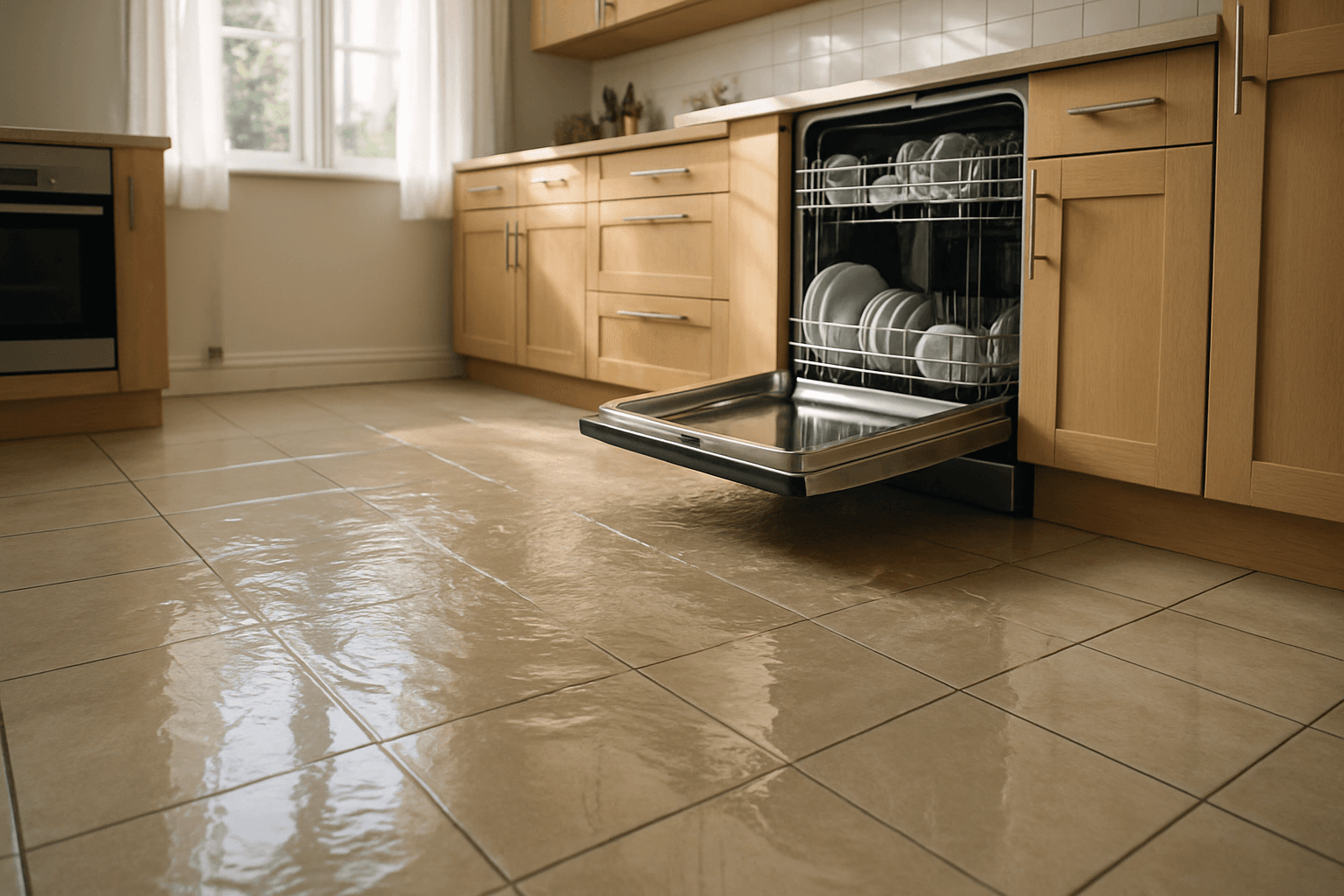
This is the ten minutes that decides who you call. The kick plate is the panel below the dishwasher door, held by two screws. Take it off and shine a flashlight under the machine. You are looking for standing water, a wet or sagging insulation blanket, rust on the frame or the floor, and whether the floor under the unit is wet or merely damp.
Then check what is next to it. Press on the floor of the sink base and the cabinets either side of the dishwasher. Particleboard that gives under your thumb, has swollen at the edges or shows a dark tide line has been wet, and often for longer than today. Walk the floor in front of the machine: cupping boards, laminate lifting at the seams, vinyl that feels soft, or grout that has darkened all mean water went under the flooring. If there is a basement or a room below the kitchen, look at its ceiling for a stain or a bulge.
Photograph all of it before you wipe anything, including the water itself, the kick plate space, the cabinet floors and whatever part failed. If a hose or clamp let go, keep it. The dishwasher leak guide covers the inspection in more detail, and water damage under the kitchen sink explains how to tell a dishwasher leak from a sink leak when both share the same cabinet.
Call the Trade That Matches Where the Water Is
| What you see | Likely source | Who to call |
|---|---|---|
| Water at the front, below the door, during a cycle | Door gasket, overfilling, suds from the wrong detergent, an unlevel machine | Appliance technician; some of these are do-it-yourself fixes |
| Water from under the machine, only while it runs | Drain hose, pump seal, inlet valve, tub seam | Appliance technician |
| A drip at the shutoff valve or supply line under the sink, even with the machine off | Supply line, stop valve, compression fitting | Plumber |
| Water at the drain hose connection to the disposal or sink drain, or from the air gap | Loose clamp, split hose, clogged air gap | Plumber, or the technician if already coming |
| Cabinet base soft or swollen, floor cupping, musty smell, ceiling stain below | Water has been going under the unit for a while | Water damage restoration company, plus whichever of the above fixes the source |
Appliance technician or plumber?
The dividing line is the point where the house's plumbing hands over to the machine. The plumber owns the shutoff valve, the supply line, the drain connection at the disposal or the sink tailpiece, and the air gap on the counter. The appliance technician owns everything inside the dishwasher: door gasket, float switch, inlet valve, pump, tub and the drain hose that runs from it. The test is simple. Turn the machine off and leave the supply valve open for an hour. If it still drips, it is plumbing. If it only leaks mid-cycle, it is the machine. The GE dishwasher leak guide shows how to tell a door leak from a base leak by watching one cycle, and it applies to most brands; a technician visit commonly runs $150–$300.
When it is a restoration job
The repair call fixes the next load of dishes. It does nothing for the water already in the kitchen. Call a water damage restoration company as well as the repair trade when any of these is true:
- The cabinet base under the sink or beside the dishwasher is soft, swollen or stained.
- The floor under the unit or in front of it is wet, and the flooring is wood, laminate or anything over a wood subfloor.
- A ceiling below the kitchen is stained or sagging.
- The water came from the drain side (the drain hose or the disposal connection), which is gray water, Category 2 under the IICRC S500 standard, and treated differently from clean supply water.
- The leak had clearly been running before you found it.
What the restoration company does that a towel cannot: it meters the subfloor, the cabinet bases and the wall behind the machine to find the edge of the wet area, removes the toe-kicks and sometimes the cabinet base to get air underneath, lays drying mats on hardwood, runs air movers and a dehumidifier until daily readings match dry material elsewhere in the house, and gives you the log. The EPA's guidance is to dry water-damaged areas within 24–48 hours to prevent mold, and it names the back side of drywall and the underside of flooring materials as the places hidden mold grows, which is exactly where dishwasher water sits. Clean-water mitigation generally runs $3–$7 per square foot of affected area and gray water $4–$8; most residential incidents land around $2,000–$6,000 all in. The water under flooring guide explains which floors can be saved.
If the kick plate check put you in that list, (864) 806-2818 is answered 24/7 and connects you to an IICRC-certified water damage restoration company taking calls in your ZIP; there is no charge for the referral.
Serving US homesCertified US companiesCall nowLine answered 24/7Who to Call for a Dishwasher Leak, in Order
- 1Close the valve under the sink and cut the powerCancel the cycle, turn the dishwasher's supply valve under the sink clockwise until it stops, and unplug the unit or switch off its breaker.
- 2Pull the kick plate and check the cabinet baseRemove the toe-kick panel and look under the machine with a flashlight, then press the floor of the sink base and the cabinets on either…
- 3Call the trade that matches where the water isLeak only during a cycle: appliance technician.
- 4Open the claim the same day if the floor or cabinets are wetReport a sudden leak to your insurer once the water is off and photographed, keep the failed part, and start drying without waiting for…
What the restoration company does in your home

1.Finds the water you can't see
Moisture meters and a thermal camera at baseboards, under flooring and behind drywall.
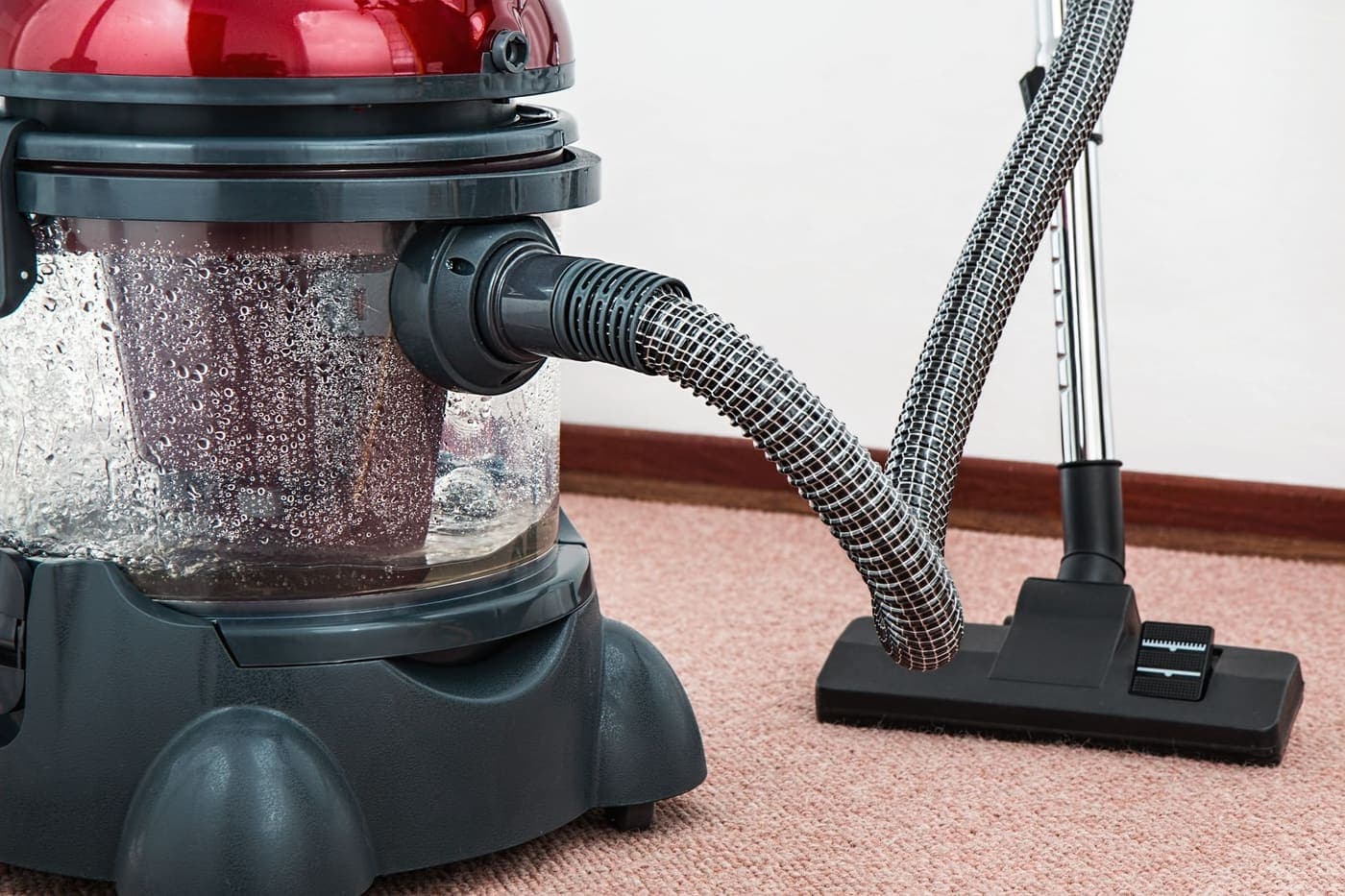
2.Pulls out the standing water
Extraction first, then anything soaked that cannot be dried is removed.
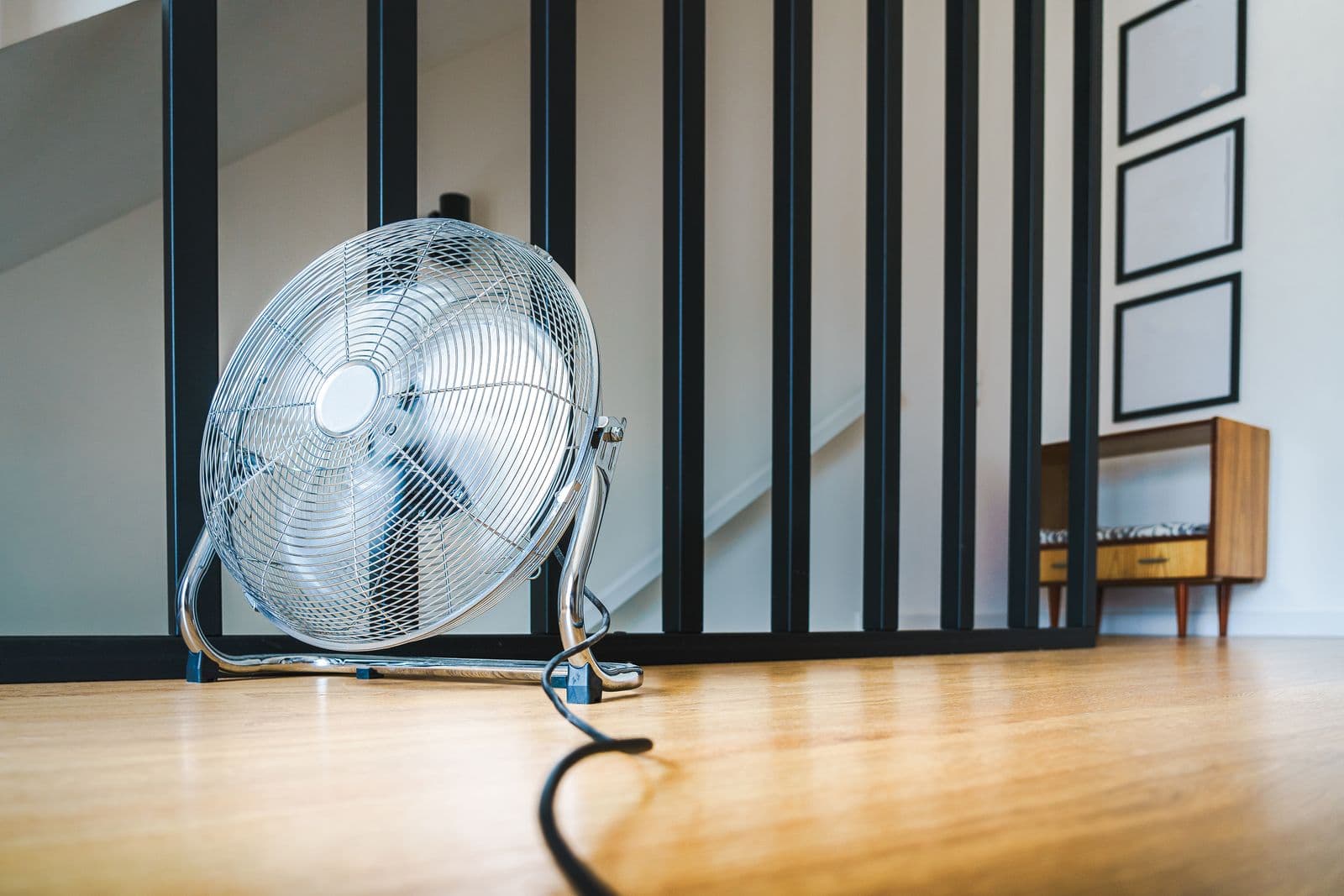
3.Dries it and logs the readings
Air movers and dehumidifiers run until the meter says dry, with a log your insurer can read.
Talk to a water damage pro now
Answered 24/7 · Toll-free · no obligation
(864) 806-2818Mold can establish within 24–48 hours of water exposure — drying started today stays a drying job.
- Enter your ZIP when asked
- Stay on through the short quiet while it connects
- A local certified company explains the job and price
Open the Claim the Same Day if the Floor or Cabinets Are Wet
A standard HO-3 homeowners policy lists accidental discharge or overflow of water from within a household appliance as a covered peril, and it includes the cost to tear out and replace part of the building when that is necessary to repair the appliance. Two limits follow directly from the same form. It does not cover the appliance the water escaped from, so the dishwasher is yours to repair or replace. And most policies exclude water that seeped for weeks or months, which is the argument an adjuster reaches for when a dishwasher leak is found late, because dishwashers hide their leaks under cabinets until the floor cups.
That is why the order on this page matters to the claim as much as to the house. Photographs dated the day you found it, the failed part, and a restoration company's first moisture readings showing a fresh, active wet area are what establish a sudden loss. The form also makes protecting the property from further damage one of your duties after a loss, so starting drying before the adjuster visits is expected, not risky; keep every invoice. Does insurance cover a dishwasher or washing machine leak goes through the covered and excluded cases, and the documentation guide has the shot list.
The Order of Calls, Summarized
- 1You. Cancel the cycle, close the supply valve under the sink, unplug the machine or cut the breaker.
- 2Nobody yet. Pull the kick plate, check the cabinet bases and the floor, photograph everything.
- 3The repair trade. Appliance technician if it only leaks when running; plumber if it drips with the machine off.
- 4The restoration company. If the cabinet base, subfloor, flooring or a ceiling below is wet, the same day.
- 5Your insurer. The same day, once the water is off and photographed, if anything beyond the machine is damaged.
If two people are home, make calls 3 and 4 at the same time. The repair can usually wait until tomorrow with the valve closed; the wet subfloor cannot.
What Happens When You Call
(864) 806-2818 is a referral line. You hear a short automated menu: enter the 5-digit ZIP of the house with the leak. The line goes quiet for about half a minute while it connects you to a certified restoration company taking calls in that ZIP; that silence is normal, so stay on. When someone answers, say that a dishwasher leaked, whether the water is off, what is wet, and whether the water came from the supply side or the drain side. The company gives you an arrival window for your address on the call, and scope and price are between you and them, so ask how they meter and whether you get the readings.
The appliance leak emergency page and the kitchen flooding page cover the first hour for other appliances, and who to call for water damage has the general order for any source.
Mistakes That Make a Dishwasher Leak Worse
- Running one more cycle to see if it does it again. It will, and the second load goes under the floor too.
- Pushing the machine back and screwing the kick plate on. The space under a dishwasher is dark, enclosed and the last place in the kitchen to dry.
- Pointing a fan at the floor and calling it dry. Surface readings drop in a day; the subfloor and the cabinet bases do not.
- Ignoring the ceiling below. Water follows the drain line down through the floor and shows up a room away.
- Throwing away the failed hose or clamp. It is the evidence that the loss was sudden.
Reading to confirm what you already suspect?
Confirm it in two minutes instead — the pro on this line answers questions about YOUR situation all day: what it is, what it should cost, whether you even need service. If you want, they'll set the appointment on the same call.
Toll-free · no obligation · asking costs nothing
Frequently Asked Questions
Who do I call if my dishwasher is leaking?
Start with nobody: close the supply valve under the sink and switch the machine off. Then match the call to the water. A leak that only happens while the dishwasher runs is the machine, so an appliance technician.
A drip at the supply line or shutoff valve with the machine off is plumbing, so a plumber. A soft cabinet base, a cupped floor or a stain on the ceiling below means the water has been going under the unit, and that is a water damage restoration company's job on top of the repair.
Should I call a plumber or an appliance repair technician for a dishwasher leak?
A plumber owns everything up to the machine: the shutoff valve under the sink, the supply line, the drain connection at the disposal or sink tailpiece and the air gap.
An appliance technician owns the machine: door gasket, float switch, inlet valve, pump seals, tub and drain hose. Turn the dishwasher off and watch for an hour; if it still drips, it is the plumber. If it only leaks mid-cycle, it is the technician.
Is a leaking dishwasher an emergency?
It is urgent rather than catastrophic, because closing one valve stops it. What makes it an emergency is where the water has gone: dishwashers sit on the subfloor beneath cabinets, so water spreads under the kitchen floor and up the cabinet sides before it appears in front of the door.
The EPA advises drying wet materials within 24–48 hours to prevent mold, so a cabinet base or subfloor that is wet today needs equipment on it this week, not next.
Will homeowners insurance pay for floor damage from a dishwasher leak?
Usually, when the leak was sudden. The standard HO-3 form covers accidental discharge or overflow of water from within a household appliance, and it pays to tear out and replace parts of the building when that is needed to repair the appliance.
It does not pay for the dishwasher itself, and most policies exclude leaks that seeped for weeks or months. Photograph the failure the day you find it and keep the broken part; the date and fresh moisture readings are what separate sudden from gradual.
How do I know if the dishwasher leak got under the floor?
Pull the kick plate and shine a light under the unit; look for water, a wet insulation blanket or rust on the frame. Press the floor of the sink base and the cabinets on either side; particleboard that gives, swells or has a dark stain has been wet.
Walk the floor in front: cupped boards, lifting laminate seams or vinyl that feels spongy mean the subfloor is wet. If there is a room below, check its ceiling for a stain.
Can a dishwasher leak cause mold?
YesAnd in the places you cannot see.
The EPA lists the back side of drywall, the underside of carpet and pad, and areas inside walls around leaking pipes as the places hidden mold grows, and the space under a dishwasher and inside a cabinet base is dark, enclosed and slow to dry. A musty smell at the sink base, black spotting on the toe-kick or a cabinet floor that stays damp after the repair are the signs to act on.
Do I need a restoration company for a small dishwasher leak?
Not if the leak was caught during the cycle, the water stayed on a tile or vinyl floor in front of the machine, and the cabinet base and the floor under the unit are dry when you check with the kick plate off.
You do if any of those is wet, if the flooring is wood or laminate, if there is a ceiling below, or if the leak had been going on for a while, because drying under cabinets takes equipment and readings.
Who do I call right now for water damage?
Call (864) 806-2818. The line is answered 24/7, and connects you with an IICRC-certified water damage restoration company that serves your area. A recorded prompt picks up first: key in your 5-digit ZIP code, and hold through the short silence while the call is passed to the company.
Describe what you can see — where the water is coming from, how long it has been there, and whether it smells — the more specific you are, the faster the right company is on the line. If the source is a pipe or an appliance, shut the main water valve first. Have four things ready and the call goes quickly: the address, when the water started, what is wet now, and whether you have filed an insurance claim.
Still not sure which of these is your situation? (864) 806-2818 · toll-free · answered 24/7
Sources
- Insurance Information Institute — sample ISO HO 00 03 form (accidental discharge from a household appliance; tear-out; duties after loss)
- EPA — A Brief Guide to Mold, Moisture and Your Home
- ANSI/IICRC S500 Standard for Professional Water Damage Restoration
Methodology: How we source and verify data · Report an error
Disclaimer: HearthDry is an independent educational resource. This article is for informational purposes only and does not constitute professional, legal, or insurance advice. Consult licensed professionals before making decisions about your property or insurance claims.