Best Water Heater Anode Rods in 2026 — Powered, Magnesium and Aluminum-Zinc Rods Compared, and the Rusted-Through Tank They Exist to Prevent

Best Water Heater Anode Rods in 2026

Powered, Magnesium and Aluminum-Zinc Rods Compared, and the Rusted-Through Tank They Exist to Prevent

5 picks compared · prices, ratings and stock checked October 13, 2026

Our Top Pick

For most 40 to 89 gallon tanks, the Corro-Protec Powered Anode Rod: a titanium rod with a stated 20-year warranty that is not consumed and is claimed to clear sulfur smell within 24 hours. For a plain replacement under a low ceiling, the yrjns 44 in Flexible Magnesium Anode Rod, hinged into four segments under 12 in each.

4.7 on Amazon · 7,990 ratings

Quick answer

The best water heater anode rod for most homes is a powered one, because it is not used up and does not need checking: the Corro-Protec Powered Anode Rod for 40 to 89 gallon tanks, rated 4.7 stars across 7,990 Amazon ratings, fits the dedicated anode port on most brands except Bradford White. If you want a plain sacrificial rod, buy magnesium for the most protection or aluminum-zinc if your hot water smells of rotten eggs, and choose a 44 in segmented rod when there is under 4 ft of clearance above the tank. Read the heater manual first; some makers name the rod type their warranty expects.

Our Picks at a Glance

Every pick below is currently stocked — ratings and stock read from Amazon on 13 October 2026.

Best Overall: Powered
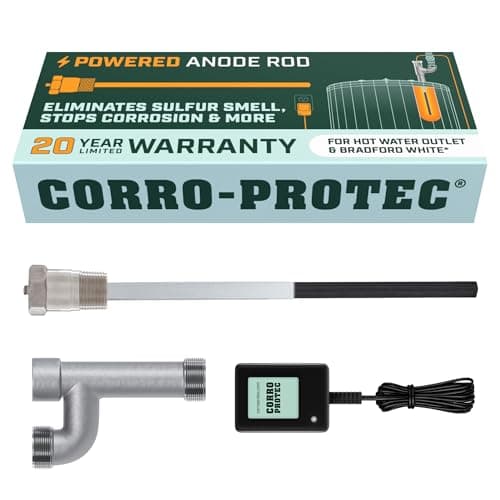
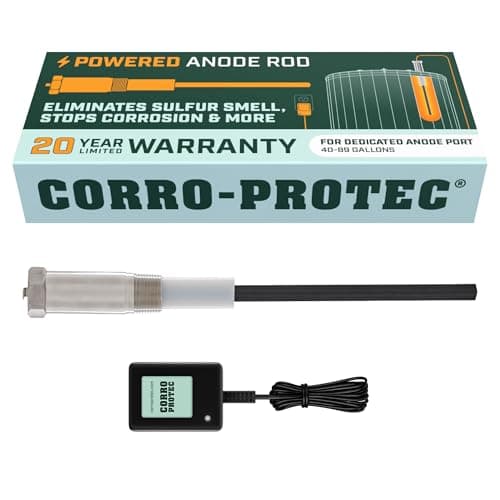
Corro-Protec Powered Anode Rod for Water Heater, 40 to 89 Gallon (Titanium, Dedicated Anode Port, 20-Year Stated Warranty)
4.7 from 7,990 Amazon ratings · checked 13 OctAmazon's Choice

Best for: Any 40 to 89 gallon tank with an anode port and an outlet nearby, above all on softened or smelly well water

Type:
Powered titanium mixed-metal-oxide rod fed by a plug-in power supply
Tank size (stated):
40 to 89 gallon tanks; a 10 to 39 gallon model is listed separately

Listing verified 13 Oct 2026

Best for Rotten-Egg Smell Without Power
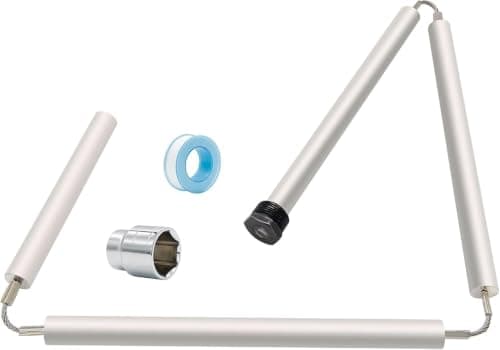
Eau 44 in Flexible Aluminum-Zinc Anode Rod Kit (Rotten-Egg Smell, Socket and PTFE Tape Included)
4.8 from 537 Amazon ratings · checked 13 OctAmazon's Choice

Best for: A tank whose hot water smells of rotten eggs, on hard or municipal water, where a powered rod is not wanted

Type:
Sacrificial aluminum-zinc alloy rod
Length:
44 in, hinged into four parts under 12 in each; can be cut shorter with a hacksaw, per the listing

Listing verified 13 Oct 2026

Best for Bradford White or a Seized Rod
Corro-Protec Powered Anode Rod for Bradford White and Hot Water Outlet (10 to 120 Gallon, 3/4 in NPT, Wye Fitting Included)
4.5 from 677 Amazon ratings · checked 13 OctAmazon's Choice

Best for: Bradford White tanks, heaters with no anode port, and any tank whose old rod is seized

Type:
Powered titanium rod that installs in the hot water outlet instead of an anode port
Tank size (stated):
10 to 120 gallon

Listing verified 13 Oct 2026

How this page was made: we compare the current Amazon listings, the makers' published specs and what verified buyers report, then rank by fit for the job. Ratings, review counts and stock are read from Amazon and dated. We earn a commission on purchases through our links; it does not change the order. Reviewed by Marcus Reed, IICRC-certified Water Restoration Technician.

Full Reviews

Each pick in detail: what the listing states, what buyers report, and where it falls short.

#1
Best Overall: Powered

Check price

on Amazon ↗

Listing verified 13 Oct 2026

Corro-Protec Powered Anode Rod for Water Heater, 40 to 89 Gallon (Titanium, Dedicated Anode Port, 20-Year Stated Warranty)See it on Amazon ↗

Quick Verdict

Corro-Protec Powered Anode Rod, 40 to 89 gallon: the rod that is not used up, for tanks with an anode port and an outlet within 12 ft.

Key Specs

Type

Powered titanium mixed-metal-oxide rod fed by a plug-in power supply

Tank size (stated)

40 to 89 gallon tanks; a 10 to 39 gallon model is listed separately

Fit (stated)

Installs in the dedicated hex-head anode port on top of the heater; all brands except Bradford White

Tools (stated)

1-1/16 in and 1-3/16 in sockets required; 12 ft power cord included

Claims (stated)

Permanent corrosion protection at any water hardness including softened water; sulfur or rotten-egg smell gone within 24 hours; reduced sediment

Warranty (stated)

20 years; the listing says it is compatible with the heater warranty under US Magnuson-Moss law

Pros

  • Not consumed, so there is no 2-year inspection to forget
  • Claims protection in softened water, which eats a magnesium rod fastest
  • States the socket sizes you need and ships a 12 ft cord, so you know before opening the box whether it will reach an outlet
  • The 20-year stated warranty is longer than most tanks last

Cons

  • Needs an outlet near the heater and stays plugged in; if the power is off, so is the protection
  • Will not fit a Bradford White tank or a heater with no dedicated anode port; the outlet model below covers those
  • Removing the old rod is the same stuck-bolt job as any anode swap

Suited to

Any 40 to 89 gallon tank with an anode port and an outlet nearby, above all on softened or smelly well water

Our take

A sacrificial rod protects the tank by dissolving; this one protects it by passing a small current through a titanium rod that does not dissolve, which is why the listing can promise 20 years. For a homeowner the practical gain is that nothing needs checking every 2 years. The listing names the two cases where it earns its keep: softened water, which it calls more corrosive and which uses up magnesium fast, and sulfur smell, which it claims to clear within 24 hours. Before ordering, look at the top of your heater for a hex head, measure the clearance to the ceiling, and find an outlet within 12 ft. Then read your heater's manual: Corro-Protec says the rod is compatible with the tank warranty under Magnuson-Moss, but the manual is where your maker states what it expects.

Check today's price on Amazon →

Affiliate link — commission at no extra cost to you

Compare elsewhere

These open a search for this model. We quote prices only where we can verify them — Amazon, Sylvane and eBay.

#2
Best Magnesium for Low Clearance

Check price

on Amazon ↗

Listing verified 13 Oct 2026

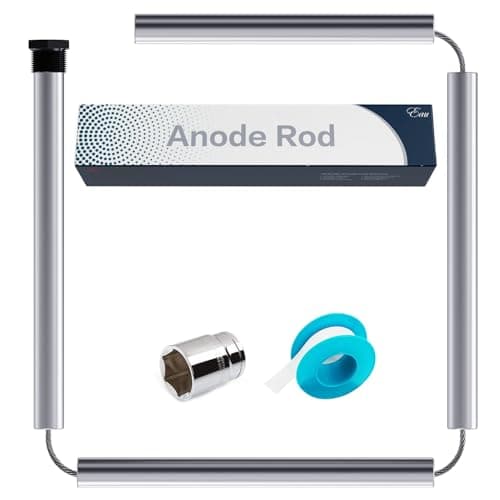
yrjns 44 in Flexible Magnesium Anode Rod (Four Hinged Segments Under 12 in, 3/4 in NPT)See it on Amazon ↗

Quick Verdict

yrjns 44 in Flexible Magnesium Anode Rod: a segmented magnesium replacement for tanks under a low ceiling, checked every 2 years.

Key Specs

Type

Sacrificial magnesium rod

Length

44 in, hinged into four segments each under 12 in

Thread (stated)

3/4 in NPT; fits A.O. Smith, Rheem, Reliance, Richmond, Kenmore, State, GE and others with the standard port

Socket (stated)

1-1/16 in

Inspection interval (stated)

Inspect and change every 2 years

Included

The rod only; tape and socket are not listed

Pros

  • Bends through four joints, so it goes in under a ceiling or duct that a one-piece 44 in rod cannot clear
  • Magnesium gives the most protection of the sacrificial metals, which suits soft water
  • States the socket size and the thread, the two facts you need to buy once

Cons

  • A little-known brand, and the listing says nothing about the magnesium grade or a warranty
  • Magnesium is used up faster than aluminum-zinc, so set a reminder to check it
  • No tape or socket in the box, unlike the Eau kit below

Suited to

A standard replacement on a tank with a 3/4 in NPT port and less than 4 ft of clearance above it

Our take

This is the plain replacement rod, the kind your heater most likely shipped with, in a form that fits a low basement. A one-piece 44 in rod needs 44 in of clear space above the hex head to come out and go in; under a 7 ft ceiling, a tank about 5 ft tall leaves roughly 2 ft, which is why the four segments matter. Magnesium is the metal to choose when protection comes first: it is more active than aluminum, so it draws corrosion to itself more strongly, and it is consumed faster for the same reason. The listing's own advice is to inspect and change it every 2 years. Wrap the threads in PTFE tape and use a 1-1/16 in socket on a long breaker bar; if the old rod will not move, stop there rather than crack a fitting.

Check today's price on Amazon →

Affiliate link — commission at no extra cost to you

#3
Best for Rotten-Egg Smell Without Power

Check price

on Amazon ↗

Listing verified 13 Oct 2026

Eau 44 in Flexible Aluminum-Zinc Anode Rod Kit (Rotten-Egg Smell, Socket and PTFE Tape Included)See it on Amazon ↗

Quick Verdict

Eau 44 in Flexible Aluminum-Zinc Anode Rod Kit: the sacrificial fix for rotten-egg smell, with socket and tape included.

Key Specs

Type

Sacrificial aluminum-zinc alloy rod

Length

44 in, hinged into four parts under 12 in each; can be cut shorter with a hacksaw, per the listing

Thread (stated)

3/4 in NPT; fits A.O. Smith, Rheem, Reliance, Richmond, Kenmore, State, GE and others

Included (stated)

Rod, PTFE sealing tape and a 27 mm socket

Smell claim (stated)

Formulated to eliminate rotten-egg smell

Inspection interval (stated)

Inspect and change every 2 years

Pros

  • The alloy the listing offers for sulfur smell, with no outlet needed
  • Ships with the socket and tape, so the job needs only a breaker bar from your own toolbox
  • Aluminum-zinc is consumed more slowly than magnesium, so it suits hard water

Cons

  • Gives less protection than magnesium in soft water, and the listing does not state the alloy mix
  • The smell fix depends on the cause; sulfur from the well itself needs water treatment, not a rod
  • Cutting the rod shorter removes metal that was there to be used up

Suited to

A tank whose hot water smells of rotten eggs, on hard or municipal water, where a powered rod is not wanted

Our take

Rotten-egg smell in hot water commonly comes from bacteria in the tank reacting with the magnesium rod. Swapping to an aluminum-zinc rod is the usual fix, and this listing is built around it, with the smell claim up front and the socket and tape in the box. The trade is protection: aluminum is less active than magnesium, so it is consumed more slowly but also draws corrosion less strongly, which is why it is the common choice for hard water and a poor one for soft or softened water. If the cold water smells too, the problem is the well, not the tank, and no rod will fix it. The listing says the rod can be cut with a hacksaw to fit; do that only as a last resort, since every inch cut off is metal that would have protected the tank.

Check today's price on Amazon →

Affiliate link — commission at no extra cost to you

#4
Best for Bradford White or a Seized Rod

Check price

on Amazon ↗

Listing verified 13 Oct 2026

Corro-Protec Powered Anode Rod for Bradford White and Hot Water Outlet (10 to 120 Gallon, 3/4 in NPT, Wye Fitting Included)See it on Amazon ↗

Quick Verdict

Corro-Protec Hot Water Outlet model: the powered rod for Bradford White or a seized anode, at the cost of re-piping the hot line.

Key Specs

Type

Powered titanium rod that installs in the hot water outlet instead of an anode port

Tank size (stated)

10 to 120 gallon

Fit (stated)

Any standard 3/4 in NPT hot outlet; standard for Bradford White, and most other brands except Buderus

Included (stated)

Stainless steel Wye fitting to redirect the hot water pipe; 12 ft power cord; instructions

Claims (stated)

Permanent corrosion protection at any water hardness including softened water; removes rotten-egg smell

Warranty (stated)

20 years

Pros

  • The route to a powered rod on a Bradford White tank, whose anode sits in the hot outlet nipple
  • Also the answer when an old anode is seized in its port and will not come out
  • Same stated 20-year warranty and softened-water claim as the standard model

Cons

  • You have to cut into and re-route the hot water line, which is plumbing, not a rod swap
  • The listing itself notes the stainless Wye parts can be hard to tighten
  • On a stuck-rod tank the dead anode stays in place beside the new one

Suited to

Bradford White tanks, heaters with no anode port, and any tank whose old rod is seized

Our take

Bradford White puts the anode inside the hot water outlet nipple rather than in its own port, so a standard replacement rod does not fit, and plenty of other tanks end up in the same place when the old rod seizes. This model fits a 3/4 in NPT hot outlet, and the included Wye fitting lets the hot water pipe reconnect beside the rod. That is the catch: the hot line has to be disconnected, re-routed and sealed, and on a gas heater or a soldered copper system that is work most homeowners should hand to a licensed plumber, who will also know whether your local code wants a permit for it. Take the listing's own note about the Wye parts being hard to tighten seriously. Done right, you get the same 20-year stated warranty and the same softened-water and smell claims as the standard rod.

Check today's price on Amazon →

Affiliate link — commission at no extra cost to you

#5
For RV Water Heaters Only

Check price

on Amazon ↗

Listing verified 13 Oct 2026

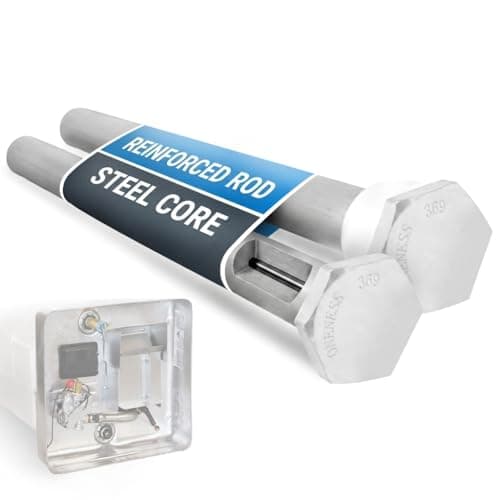
ONENESS 369 RV Water Heater Anode Rod, 2-Pack (Magnesium, 9.25 in x 3/4 in NPT, Suburban Tanks)See it on Amazon ↗

Quick Verdict

ONENESS 369 RV Anode Rod 2-Pack: the right rod for a Suburban RV heater and the wrong one for a house.

Key Specs

Type

Sacrificial magnesium rod, AZ31 alloy per the listing

Size (stated)

9.25 in x 3/4 in NPT, for Suburban RV water heaters; Atwood tanks take a 4.5 in x 1/2 in NPT rod instead

Pack

Two rods

Nut (stated)

Galvanized, for mineral-rich water

Threads (stated)

PTFE tape pre-applied

Warranty (stated)

2 years

Pros

  • A clear sizing note on the listing for Suburban versus Atwood heaters
  • Two rods, so the spare lives in the RV tool kit
  • Pre-taped threads save a step in a cramped access panel

Cons

  • A 9.25 in rod does nothing for a 40 gallon home tank, which needs a 44 in rod; do not buy this for the house
  • Magnesium, so it is consumed quickly on the road's changing water
  • Only fits Suburban-pattern tanks; check the heater label first

Suited to

A Suburban RV water heater, and nothing else

Our take

This RV part is sold under the same search phrase as home rods, and a reader shopping for the house could buy it by mistake, which is why it is here. A Suburban RV heater holds a few gallons and takes a short 9.25 in rod on a 3/4 in NPT thread; a 40 or 50 gallon home tank takes a rod about 44 in long, and a short rod in a tall tank leaves most of the steel unprotected. For the RV it is a sound choice on the listing's terms: pure magnesium, a galvanized nut for mineral-rich campground water, pre-taped threads and a second rod for the kit. Check the heater's label for Suburban or Atwood before ordering, since the listing says Atwood tanks take a 4.5 in by 1/2 in rod instead.

Check today's price on Amazon →

Affiliate link — commission at no extra cost to you

Buyer's Guide

What to know before you buy.

What the Anode Rod Does, and What Happens When It Is Gone

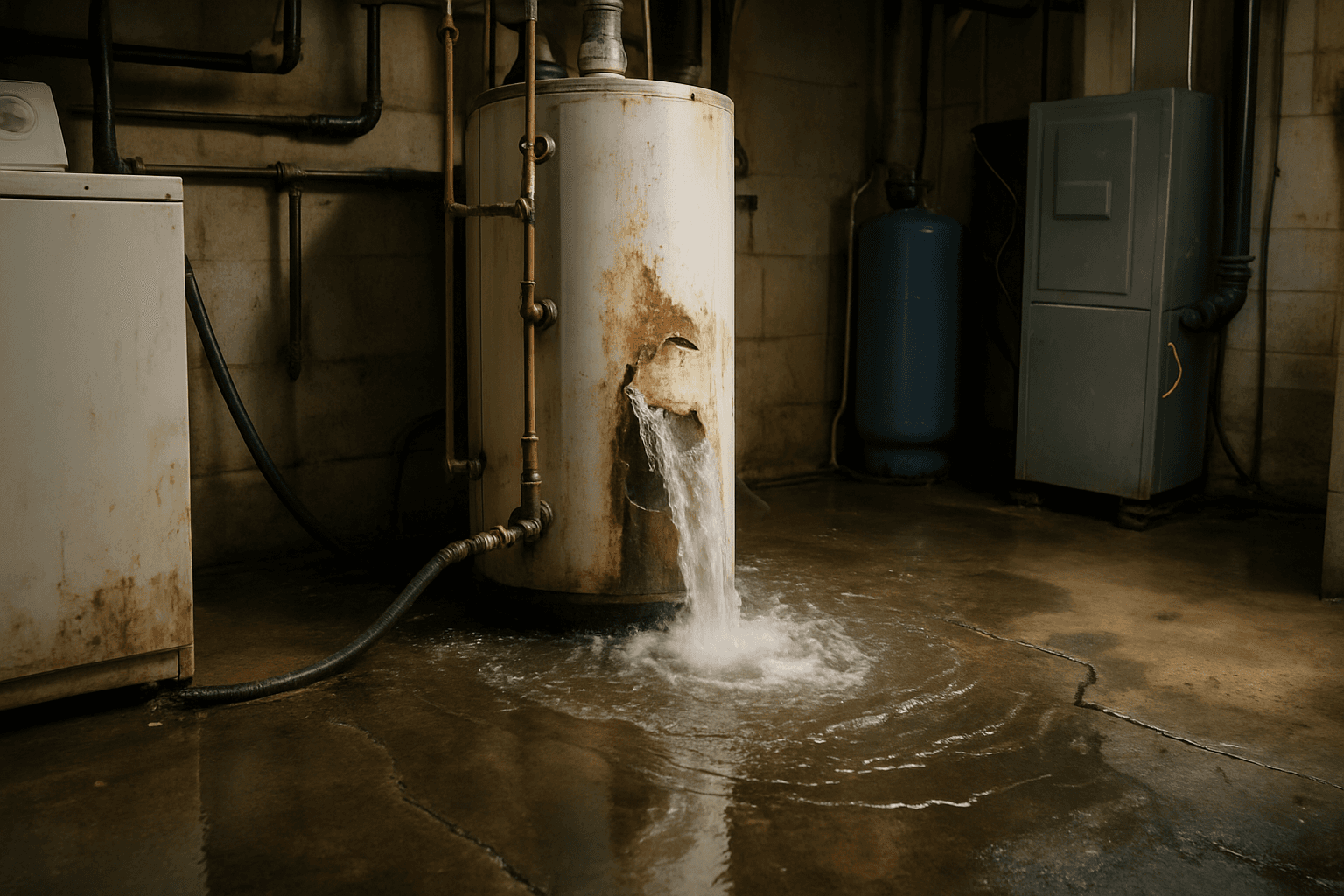
A tank water heater is a steel cylinder with a thin glass lining, and the lining is never perfect. The anode rod, a magnesium or aluminum rod screwed into the top of the tank, is a more active metal than steel, so water corrodes the rod instead of the tank. That is the whole job, and the rod is meant to be used up. Once it is gone, the steel starts to go, and the tank you find weeping at the base one morning has usually been rusting from the inside for years. A failed tank releases its 40 or 50 gallons plus whatever the supply line keeps feeding until someone closes a valve, which is why the water heater sits beside the washing machine on the list of indoor floods. EPA's advice for any leak is to dry wet materials within 24 to 48 hours, and a rod that costs a fraction of a tank is how you avoid needing that advice.

Magnesium, Aluminum-Zinc or Powered: Which Rod to Buy

Magnesium is the most active of the three, so it protects best and is consumed fastest; it suits soft water and is the rod most tanks ship with. Aluminum-zinc is consumed more slowly, suits hard water, and is the sacrificial answer to rotten-egg smell, since that smell often comes from bacteria in the tank reacting with a magnesium rod. A powered rod is a titanium electrode that carries a small current from a plug-in adapter; it is not consumed, and the Corro-Protec listings claim protection in softened water and smell gone within 24 hours. Softened water decides the question for many homes: softening makes water harder on a magnesium rod, so either plan to check a magnesium rod often or go powered. Whatever you choose, read the heater's manual first. Some makers name the rod type their warranty expects, and Corro-Protec's claim of warranty compatibility under Magnuson-Moss is its statement, not your maker's.

Fit and Clearance: The Arithmetic Before You Order

Three facts decide fit. The thread is 3/4 in NPT on every home rod here, and the hex head on top of the tank takes a 1-1/16 in socket, which the yrjns listing names and Corro-Protec's listing pairs with a 1-3/16 in size. The length is about 44 in for a one-piece or segmented rod, and that length has to pass straight up out of the tank: measure from the hex head to the ceiling, a duct or a joist, and if it is under 44 in, buy a segmented rod whose four sections, each under 12 in, bend through the gap. The port is the third fact. Most brands put a dedicated anode port on top; Bradford White puts the anode in the hot water outlet, so it takes the outlet-mounted Corro-Protec and a re-piped hot line. Then check tank size on the label: Corro-Protec sells one model for 10 to 39 gallons and another for 40 to 89.

Checking and Replacing a Rod Without Flooding the Floor

The rod listings here say to inspect every 2 years; your heater's manual may say otherwise, and softened water shortens the interval. To check, turn off the power at the breaker or set a gas heater to pilot, close the cold inlet valve, open a hot tap to relieve pressure, and drain a few gallons so water does not rise out of the port. Break the hex head loose with a long breaker bar, and have someone brace the tank so it does not twist on its pipes. A rod worn to bare core wire, or thickly crusted, is finished. Wrap the new rod's threads in PTFE tape, start it by hand, and snug it with the socket. Refill with a hot tap open until the air is out before restoring power, because an electric element run dry burns out in seconds. A drain pan with a sensor under the tank catches the leak this whole page is about.

When a Licensed Plumber Is the Right Call

An anode swap is within reach of a careful homeowner on an electric tank with a free port and clearance. It stops being that in four cases. On a gas heater, anything beyond setting the control to pilot, and any work near the gas valve, flue or burner, belongs to a licensed plumber. The hot-water-outlet model means cutting and re-routing the hot line, which in many places is permitted plumbing work. A rod that will not break loose after a soak and a breaker bar is better left stuck than snapped, and a plumber has the impact tools for it. A tank already weeping at a seam or the base is past saving: no rod reverses rust that has reached the outside, and the job is a new heater, with a pan and an expansion tank if the plumber recommends them. This site's referral line reaches water-damage restoration companies, not plumbers, so for the heater itself call a licensed plumber directly.

Who Does Not Need an Anode Rod

A tankless heater has no tank to protect and no anode; if yours is tankless, the maintenance is a descaling flush, not a rod. A heater already leaking from the tank body needs replacing, and a new rod would be money spent on a tank that is finished. A new heater under warranty usually came with a magnesium rod that is fine for years on untreated water, and the only job is to put a date on the calendar to check it. If your worry is the flood rather than the tank's life, the rod is only one layer: a drain pan piped to a drain, a leak sensor at the base and a shutoff valve on the cold inlet are the layers that limit the damage when a tank fails anyway. And if the rotten-egg smell is in the cold water too, the fix is water treatment at the well, not anything inside the heater.

Frequently Asked Questions

How often should a water heater anode rod be replaced?

Check it every 2 years, which is the interval the yrjns and Eau listings give, and replace it when it is worn to the core wire or heavily crusted; your heater's manual may set a different schedule.

Softened water and hot, soft well water use a magnesium rod up faster. A powered rod such as the Corro-Protec is not consumed, so its listing calls it maintenance-free; it still needs its power supply plugged in.

Magnesium or aluminum anode rod: which is better?

Magnesium protects better and is used up faster; aluminum-zinc lasts longer and is the usual fix for rotten-egg smell.

Choose magnesium for soft water and the strongest protection, aluminum-zinc for hard water or a smelly tank, and check the heater manual, since some makers name the type they expect. Softened water is hard on either, which is where a powered rod earns its place.

What does a powered anode rod do?

A powered rod replaces the dissolving metal with a titanium electrode fed a small current from a plug-in adapter, so the tank gets its protection from electricity and the rod is not consumed.

Corro-Protec's listing claims permanent corrosion protection at any hardness including softened water, sulfur smell gone within 24 hours, and less sediment, backed by a stated 20-year warranty. It needs an outlet within the 12 ft cord and stays plugged in.

How do I know if my anode rod is bad?

Pull it and look: a rod worn down to the steel core wire, or crusted thick with calcium, is finished.

Signs from outside the tank are hot water that smells of rotten eggs, rusty hot water, or a heater past 5 years old that has never had its rod checked. A tank already leaking from its body is past the anode stage and needs replacing, not a new rod.

Can I replace a water heater anode rod myself?

YesOn an electric tank with a free anode port and clearance above it, if you shut off the power, close the cold inlet, relieve pressure at a hot tap and drain a few gallons first.

The hex head takes a 1-1/16 in socket and usually a breaker bar. Call a licensed plumber for gas-side work, for the hot-water-outlet model's re-piping, or when the old rod will not break loose.

Does the anode rod cause a rotten egg smell in hot water?

Often, yes: the smell commonly comes from bacteria in the tank reacting with a magnesium rod.

If only the hot water smells, swap to an aluminum-zinc rod such as the Eau kit, or fit a powered rod, which Corro-Protec's listing claims clears the smell within 24 hours. If the cold water smells too, the sulfur is in the supply and needs treatment at the well.

Who do I call right now for water damage?

Call (888) 840-6512. The line is answered 24 hours a day, seven days a week, and connects you with an IICRC-certified water damage restoration company that serves your area. A recorded menu picks up first: choose water damage or mold, key in your 5-digit ZIP code, and hold through the short silence while the call is passed to the company.

Describe what you can see — where the water is coming from, how long it has been there, and whether it smells — the more specific you are, the faster the right company is on the line. If the source is a pipe or an appliance, shut the main water valve first. Have four things ready and the call goes quickly: the address, when the water started, what is wet now, and whether you have filed an insurance claim.

Still not sure which of these is your situation? (888) 840-6512 · toll-free · answered 24/7

Sources

  1. EPA — A Brief Guide to Mold, Moisture, and Your Home

Methodology: How we source and verify data · Report an error

How we chose these picks

  • Every pick is a current listing. Stock, star ratings and rating counts are read from Amazon by script and carry the date they were read.
  • Nothing under 4.0 stars makes the list, and the top pick needs a large rating count, so one good week of reviews cannot put it there.
  • Specs are quoted from the listing or the maker, with the test condition behind the number where there is one, and sized against the job rather than the room on the box.
  • We do not run lab or field tests. Where a spec matters, we say what it is measured under and what it cannot tell you.

Free 2-day shipping

Amazon Prime members pay no shipping on restoration equipment

Dehumidifiers, air movers, and moisture meters qualify for free Prime delivery — bulk items that otherwise cost $15–$40 to ship.

Try Prime free →

Affiliate link — HearthDry earns a bounty if you sign up; costs you nothing extra.

Also Worth Comparing

Best Water Heater Drain Pans in 2026 — Sized to the Tank, Matched to Gas or Electric, Paired With a Leak Alarm

A drain pan sits under a tank water heater and catches drips from valves, fittings and a seeping tank, carrying them to a drain instead of across the floor. These picks are sized against the tank, matched to gas or electric heaters by what each listing states, and paired with an alarm and an automatic shutoff for the leak a pan cannot hold.

Read the comparison

Best Water Heater Expansion Tanks in 2026 — Sized to the Heater and House Pressure, Charged to Match, and Held Up Properly

When a check valve or pressure-reducing valve closes your plumbing, the water a heater expands has nowhere to go, and house pressure spikes after every heating cycle. These expansion tanks are compared on size, stated pre-charge, pressure and temperature ratings and mounting, with the air-charge step most installs skip.

Read the comparison

Best Water Leak Detectors in 2026 — Wi-Fi and Smart Sensors That Alert Your Phone

Most homeowners do not discover a leak until it has soaked into subfloor and drywall. A Wi-Fi water leak detector sends the alert to your phone while the water is still on the floor, whether or not anyone is home to hear a siren.

Read the comparison

Best Automatic (Smart) Water Shut-Off Valves in 2026 — YoLink vs Flo by Moen vs Frizzlife

A smart water shutoff closes the supply when it detects a leak, so a burst pipe does not run for hours while nobody is home. The four systems here split into two designs: leak sensors that close the valve you already have, and valves on the main line that watch the flow itself.

Read the comparison

Best Water Softener in 2026 — Salt-Based Softeners Sized by Grain Capacity, the Salt-Free Option That Does Not Soften, and the Drain Line That Can Leak

Hard water leaves scale inside water heaters, valves and appliances, and a whole-house softener is the fix that actually removes the minerals behind it. These picks compare salt-based softeners on grain capacity, certification and controls, plus one salt-free conditioner whose own listing says it does not soften, with the sizing arithmetic and the drain and brine connections that need careful installation.

Read the comparison

Best Tankless Water Heaters in 2026 — Electric and Gas Units Judged by Flow at Your Winter Temperature Rise, the Wiring or Venting They Need, and the Leaks They Can Still Have

A tank water heater stores 40 or 50 gallons that end up on the floor when the tank rusts through, and a tankless unit takes that stored water away. These picks are electric and gas models compared on flow at your winter temperature rise, the breakers or venting each listing asks for, and the flushing that hard water adds.

Read the comparison